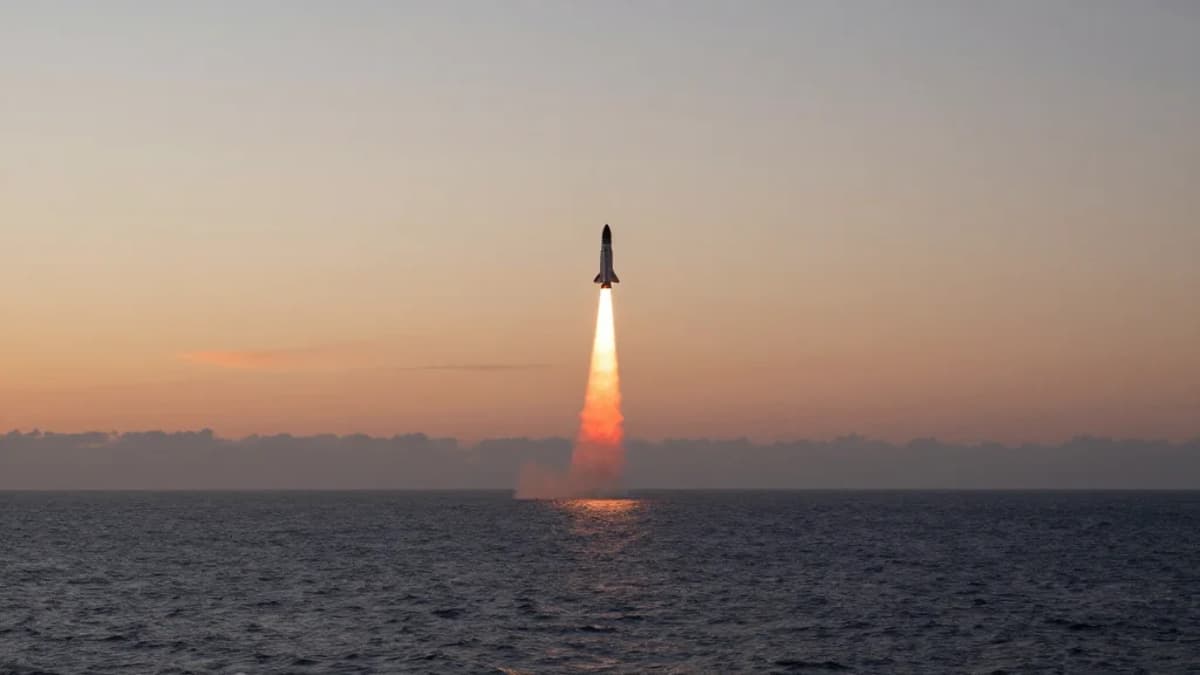
NASA Space Probe Expected to Reenter the Atmosphere with a Chance of Raining Debris
•March 10, 2026
0
Why It Matters
The event underscores growing challenges of managing uncontrolled satellite re‑entries and highlights how solar activity can accelerate orbital decay, affecting future mission planning and debris mitigation policies.
Key Takeaways
- •Probe A re-entered March 11, burned over Pacific Ocean.
- •One‑in‑4,200 chance of debris harming people.
- •Early decay caused by unusually active solar cycle.
- •Mission revealed hidden radiation belt, advancing space weather science.
- •No targeted recovery zone; most debris expected to vaporize.
Pulse Analysis
The Van Allen Probes, launched in 2012, were a cornerstone of Earth’s radiation‑belt research, delivering unprecedented measurements that led to the discovery of a previously unknown belt and refined models of space‑weather dynamics. Their sophisticated instrumentation set a benchmark for future scientific satellites, and the data continue to inform satellite operators about the hazardous environment that can degrade electronics and endanger astronauts.
When Probe A re‑entered on March 11, NASA’s risk assessment highlighted a one‑in‑4,200 probability of debris reaching populated areas—a figure that, while low, illustrates the broader issue of uncontrolled re‑entries. The probe’s earlier decay, driven by an unusually vigorous solar cycle, demonstrates how heightened solar activity can increase atmospheric drag, shortening satellite lifespans and prompting earlier de‑orbit events. This incident reinforces the need for robust tracking, transparent communication, and international coordination to mitigate potential hazards from space debris.
Looking ahead, the Van Allen Probe’s legacy will shape policy and engineering decisions. Agencies are likely to adopt more conservative end‑of‑life plans, including active de‑orbit mechanisms or controlled re‑entries, to reduce uncertainty. Additionally, the scientific community will leverage the mission’s findings to improve predictive models of orbital decay, ensuring that future spacecraft can better anticipate and manage the risks associated with an increasingly crowded near‑Earth environment.
NASA space probe expected to reenter the atmosphere with a chance of raining debris
0
Comments
Want to join the conversation?
Loading comments...