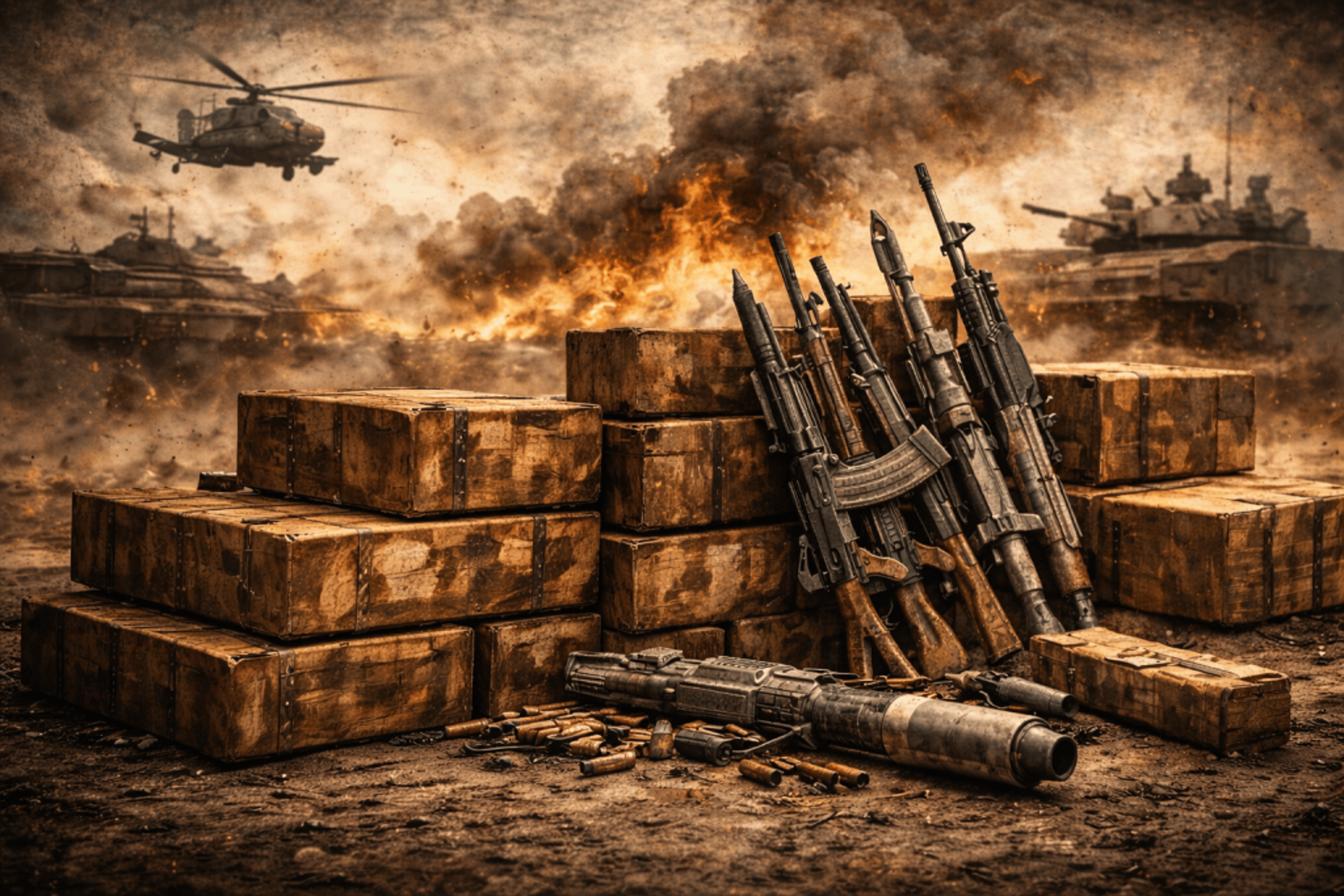
Competitive Intervention, Proxy War, and Military Assistance: Anderson, Eyre, and Kuhlman
•February 6, 2026
0
Why It Matters
External military aid directly influences conflict length and outcome, making it a critical variable for governments and analysts shaping security policy in an increasingly multipolar arena.
Key Takeaways
- •75% of post‑WWII civil wars receive external aid
- •Competitive aid halves conflict termination odds
- •Weapon transfers dominate external support
- •Multipolarity fuels rise in proxy wars
- •Donors balance escalation to sustain conflicts
Pulse Analysis
The prevalence of external military assistance in civil wars has surged since World War II, with three‑quarters of such conflicts drawing foreign support. Scholars attribute this trend to the strategic value of proxy forces, allowing states to pursue geopolitical goals while limiting direct exposure. Weapon transfers, training, and logistical aid constitute the bulk of this assistance, creating a supply chain that can quickly alter a conflict’s balance of power. Understanding these patterns is essential for analysts who track conflict escalation and for investors monitoring regional stability risks.
Competitive intervention—where rival powers back opposing factions—introduces a distinct escalation dynamic. Empirical evidence shows that when two or more external actors supply military aid, the probability of a negotiated settlement drops by about 50 percent, extending war duration and increasing civilian casualties. Donor states often calibrate support to avoid decisive victory, preferring a stalemate that preserves strategic influence. This calculated prolongation raises profound ethical questions, as prolonged conflicts exacerbate humanitarian crises while serving the interveners’ geopolitical interests.
Looking ahead, the shift toward a multipolar international system suggests that competitive interventions and proxy wars will become more common. Emerging powers are eager to test their military capabilities and expand influence through indirect means, prompting a diversification of weapons and tactics in civil wars. Policymakers must therefore develop nuanced frameworks that balance strategic objectives with the moral costs of conflict prolongation. Strategies such as escalation control mechanisms, transparent aid reporting, and multilateral oversight could mitigate the destabilizing effects of external assistance while preserving legitimate security interests.
Competitive Intervention, Proxy War, and Military Assistance: Anderson, Eyre, and Kuhlman
Episode 146 examines the impact of external military assistance on civil wars.
Summary
This conversation delves into the complexities of competitive intervention in civil wars, exploring the types of military aid provided, how external support influences conflict dynamics, and implications for practitioners and policymakers. The discussion highlights the prevalence of external interventions, the escalation dynamics involved, and the moral dilemmas faced by intervening states. Our guests emphasize the need for a nuanced understanding of these interventions, particularly in the context of an increasingly multipolar world where we anticipate competitive intervention and proxy wars will increase.
Takeaways
-
Competitive intervention is characterized by opposing military assistance from different states.
-
75% of civil wars since WWII have experienced external military assistance. This is very common.
-
Weapons transfers are the most common form of external support in conflicts.
-
External aid significantly impacts the duration and dynamics of civil wars.
-
Competitive interventions are associated with a 50% decline in the likelihood of conflict termination.
-
Ethnic dynamics can complicate civil war outcomes but do not universally determine conflict duration.
-
Non-state actors are increasingly involved in providing support in civil conflicts.
-
The rise of multipolarity may lead to increased competitive interventions.
-
Escalation dynamics complicate the nature of military support in conflicts. Specifically escalation concerns will lead donors to give enough support to keep the conflict going, but not enough to enable a decisive victory.
-
Policymakers should consider the moral implications of prolonging conflicts through intervention.
-
Future conflicts will require a diverse range of military capabilities and strategies.
General (retired) Wayne Eyre served as Chief of the Defence Staff in the Canadian Armed Forces from 2021 to 2024, Canada’s highest-ranking military officer. With more than 40 years of service, he commanded at multiple levels, including operational deployments in Afghanistan and Bosnia. He is currently a Senior Fellow and Visiting Professor at the University of Ottawa.
Dr. Noel Anderson is an Associate Professor in the Department of Political Science at the University of Toronto and author of Wars Without End: Competitive Intervention, Escalation Control, and Protracted Conflict. The book examines why contemporary wars so often resist clear endings. He holds a Ph.D. in Political Science from the Massachusetts Institute of Technology.
Lieutenant Colonel (Dr.) Matthew Kuhlman is a U.S. Army officer, military scholar, and the current Managing Editor at the Irregular Warfare Initiative – where he helps curate written practitioner and scholar insights for the irregular warfare community.
Kyle Atwell is the host for episode 146. Please reach out to him with any questions about the episode or IWI.
The Irregular Warfare Podcast is a production of the Irregular Warfare Initiative (IWI). We are a team of volunteers dedicated to bridging the gap between scholars and practitioners to support the community of irregular warfare professionals. IWI generates written and audio content, coordinates events for the IW community, and hosts critical thinkers in the field of irregular warfare as IWI fellows. You can follow and engage with us on Facebook, Twitter, Instagram, YouTube, or LinkedIn.
Subscribe to our monthly newsletter for (always free!) access to our written content, upcoming community events, and other resources.
All views expressed in this episode are the personal views of the participants and do not represent those of any government agency or of the Empirical Studies of Conflict Project.
Intro music: “Unsilenced” by Ketsa
Outro music: “Launch” by Ketsa
Photo: Cover image generated using AI-assisted digital art tools.

0
Comments
Want to join the conversation?
Loading comments...