16 Air Assault Demos AI-Enabled Air Manoeuvre Strike
•February 20, 2026
0
Why It Matters
The rollout signals NATO’s shift toward AI‑driven, high‑tempo operations, boosting rapid‑response deterrence and joint interoperability. It also highlights the growing reliance on autonomous systems in conventional forces.
Key Takeaways
- •AI links reconnaissance to strike in seconds
- •Brigade maintains very high readiness for global deployment
- •Interoperability pursued with US 82nd and French 11e
- •Demonstration underscores NATO rapid‑response modernization
- •New hardware, software, procedures tested in Colchester
Pulse Analysis
The 16 Air Assault Brigade’s AI‑enabled air manoeuvre strike marks a pivotal step in the British Army’s digital transformation. By fusing advanced sensors, autonomous drones and rapid‑fire decision‑support software, the unit can close the gap between spotting a target and delivering a precision strike in minutes rather than hours. This capability aligns with the UK’s broader defence modernization agenda, which prioritises network‑centred warfare and the integration of artificial intelligence across land, air and sea domains.
From a NATO perspective, the demonstration underscores a collective push toward interoperable, high‑readiness forces capable of responding to crises at a moment’s notice. The brigade’s ongoing collaboration with the U.S. 82nd Airborne Division and France’s 11e Brigade Parachutiste ensures that AI‑driven tactics, data standards and communication protocols can be synchronized across allied air‑borne units. Such alignment not only accelerates joint planning but also enhances deterrence by presenting a unified, technologically sophisticated front.
Looking ahead, the successful integration of AI into reconnaissance‑strike cycles raises both opportunities and challenges. While autonomous systems can reduce decision latency and improve survivability, they also demand robust cybersecurity, clear rules of engagement and extensive training for operators and technicians. Defence contractors are likely to see increased demand for modular AI kits, secure data links and resilient edge‑computing platforms, shaping the next wave of procurement and doctrinal development across NATO’s rapid‑response formations.
16 Air Assault demos AI-enabled air manoeuvre strike
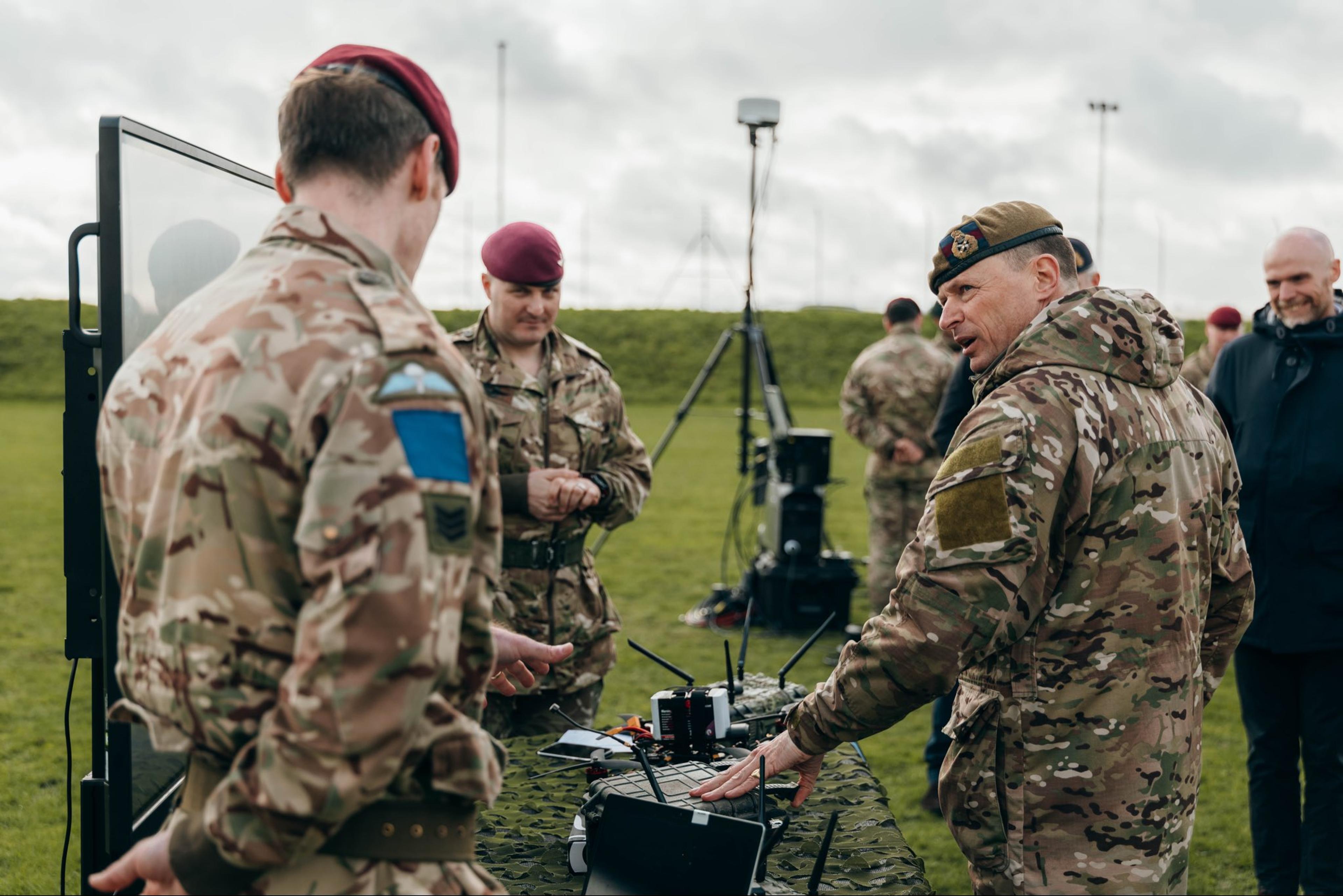
The British Army’s 16 Air Assault Brigade Combat Team (BCT) has showcased AI-enabled recce-strike capabilities during a visit by the Chief of the General Staff, highlighting how the UK’s high-readiness force is integrating new technology to reinforce NATO at short notice.
In posts published on 13 and 16 February, General Sir Roly Walker said he witnessed “tacticians and technicians working in lockstep to integrate transformative technology into air manoeuvre,” describing the result as a more lethal force ready to reinforce NATO at short notice.
Visiting @16AirAssltBCT in Colchester this week, I witnessed the future of Airborne forces – tacticians and technicians working in lockstep to integrate transformative technology into air manoeuvre.
The result: a more lethal force ready to reinforce NATO at a moment’s notice. pic.twitter.com/qCP2uS8wds
— The Chief of the General Staff (@ArmyCGS) February 13, 2026
The brigade said it demonstrated how it is introducing new hardware, software and procedures to conduct AI-enabled reconnaissance-strike operations delivered by air manoeuvre. The capability is intended to link target acquisition and strike functions more rapidly, supporting future high-tempo operations.
16 Air Assault Brigade Combat Team is the British Army’s Global Response Force, held at very high readiness and trained to deploy by parachute, helicopter and airlanding. Based in Colchester, Essex, the brigade maintains and commands the Air Manoeuvre Task Force, comprising infantry and aviation battlegroups able to deploy globally across the full spectrum of operations.
Its headquarters integrates Army and Royal Air Force personnel to plan and execute air manoeuvre operations. The brigade is also developing interoperability with the U.S. Army’s 82nd Airborne Division and the French Army’s 11e Brigade Parachutiste.
Recent operational deployments have included the evacuation of Kabul in August 2022, the provision of medical support in Turkey following the February 2023 earthquake, and the evacuation of Sudan in April 2023.
From drones to diggers, soldiers have learnt about the specialist skills, kit, and capabilities that come together to form the #GlobalResponseForce.
1st Bn The Royal Gurkha Rifles Battlegroup started its validation on Ex Haraka Storm in Kenya with a showcase of its capabilities. pic.twitter.com/lNF1r5YLv1
— 16 Air Assault Brigade Combat Team (@16AirAssltBCT) February 19, 2026
The post 16 Air Assault demos AI-enabled air manoeuvre strike first appeared on UK Defence Journal.
0
Comments
Want to join the conversation?
Loading comments...