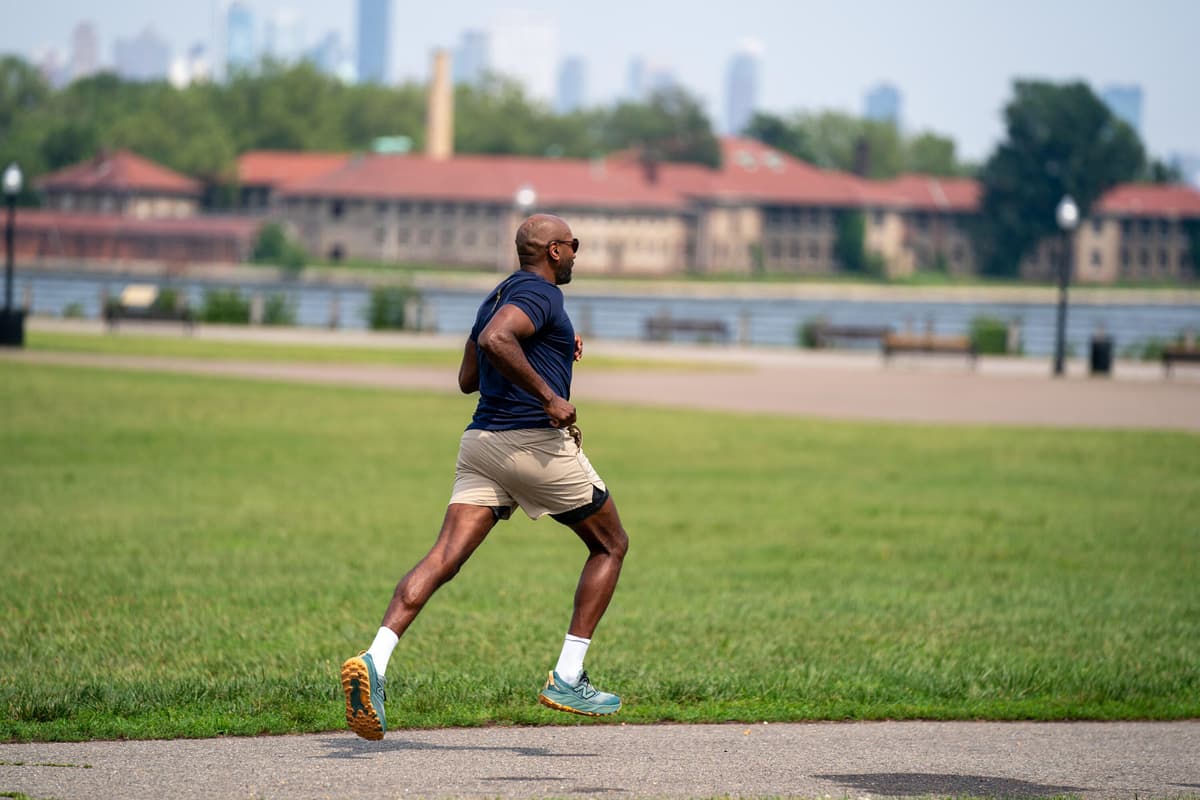
6 Signs of Weak Calves in Runners. Plus, the 3 Best Exercises to Strengthen Them.
Why It Matters
Strong calves protect the kinetic chain, boost running efficiency, and prevent costly overuse injuries that sideline athletes.
Key Takeaways
- •25 single‑leg heel raises signal optimal calf strength
- •Weak calves increase risk of plantar fasciitis and Achilles pain
- •Calf power directly correlates with sprint speed and endurance
- •Twice‑weekly calf work for six weeks yields noticeable gains
Pulse Analysis
Calf muscles act as the engine behind every stride, absorbing impact and delivering the propulsive force that pushes runners forward. When the gastrocnemius or soleus falters, the load shifts to adjacent structures—feet, ankles, Achilles, and knees—creating a cascade of overuse injuries that can derail training plans. Understanding the biomechanical role of the calves helps runners appreciate why seemingly minor tightness or fatigue often signals deeper weakness, prompting early intervention before chronic conditions develop.
Scientific research underscores the performance payoff of robust calf development. A 2018 study in *Research in Sports Medicine* found a strong, statistically significant link between maximal calf strength and sprint times over 30 meters, confirming that powerful calves are a prerequisite for explosive speed. Beyond short bursts, stronger calves improve running economy by enhancing push‑off efficiency, allowing athletes to maintain pace with less perceived effort. This translates into longer, more comfortable runs and a reduced likelihood of fatigue‑related form breakdown, which is a common precursor to injury.
For runners seeking measurable improvement, a focused calf‑strength regimen is essential. Experts advise two dedicated sessions per week, combining straight‑leg heel raises (targeting the gastrocnemius) with bent‑leg variations (engaging the soleus), single‑leg balance drills, and split‑squat with isometric heel raises to load the Achilles and surrounding stabilizers. Consistency over a six‑week cycle typically yields noticeable gains in strength and endurance. Complementary daily stretching—such as two‑minute slant‑board holds—maintains flexibility, ensuring the calves can generate power without excessive tightness. Integrating these practices into a broader training plan equips runners to run faster, farther, and injury‑free.
6 Signs of Weak Calves in Runners. Plus, the 3 Best Exercises to Strengthen Them.
Comments
Want to join the conversation?
Loading comments...