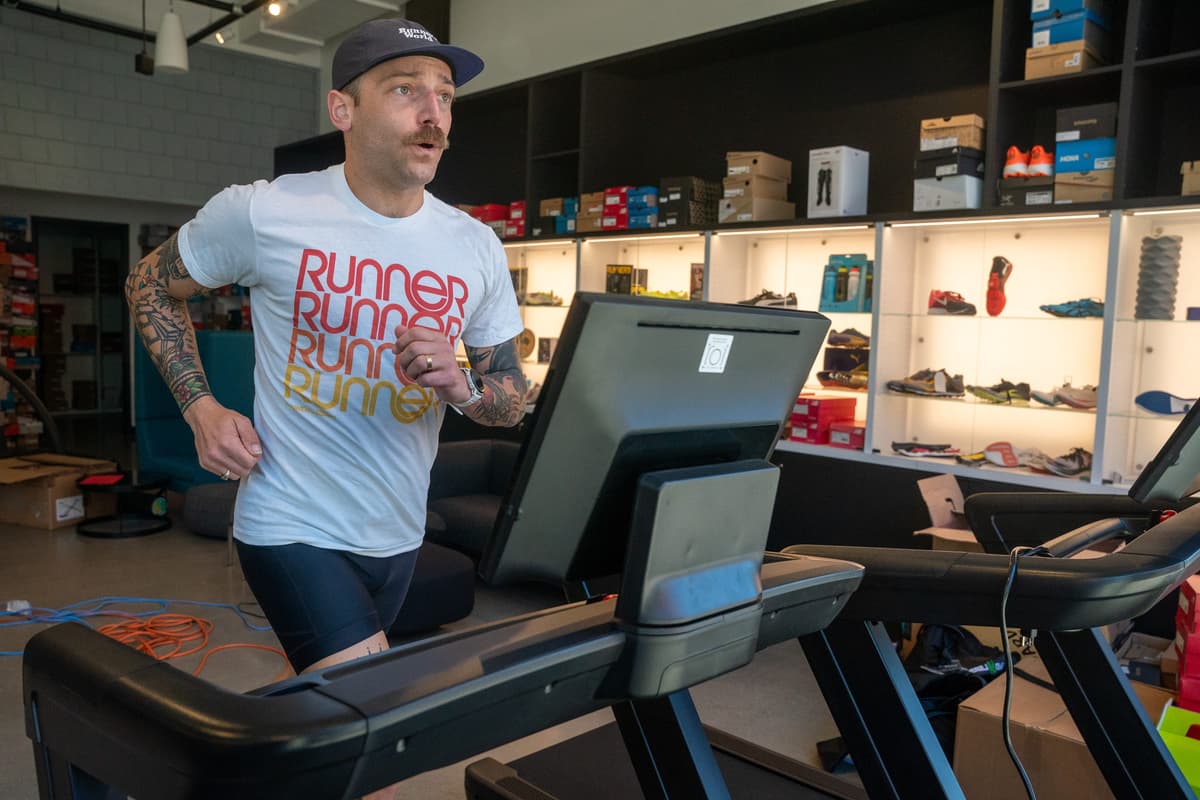
Should You Change Your Form When Running on the Treadmill Vs. Outdoors?
Why It Matters
Consistent biomechanics across indoor and outdoor sessions prevent bad habits that can lead to injury and sub‑optimal training gains, crucial for runners seeking performance improvements.
Key Takeaways
- •Treadmill and outdoor running form should stay fundamentally identical
- •Slightly more upright posture on treadmill due to moving belt
- •Common mistakes: shortened stride, upward push, low cadence
- •Target cadence above 155 steps per minute to protect joints
- •Focus on driving the belt backward, not lifting, for efficiency
Pulse Analysis
Running on a treadmill isn’t a separate discipline; it’s an extension of outdoor running that shares the same biomechanical foundations. Coaches Ng and Henwood stress continuity because the nervous system learns movement patterns, and abrupt shifts can create inefficiencies. The moving belt reduces the need for a pronounced forward lean, prompting a naturally more upright torso, but this subtle change doesn’t require conscious adjustment. Understanding this nuance helps runners maintain form fidelity, ensuring that mileage logged indoors translates directly to outdoor performance.
The treadmill, however, introduces three frequent form pitfalls. New users often crouch, shortening their stride out of fear of falling, which diminishes forward momentum. Others mistakenly push upward, treating the belt like a hill, wasting energy that should propel the body backward. A third error is dropping cadence below 155 steps per minute, increasing joint impact and injury risk. Each mistake stems from the machine’s predictability and the runner’s instinct to over‑compensate for perceived instability.
To harness the treadmill’s benefits, runners should treat it as a cadence‑building tool. Setting a steady pace and consciously focusing on a quick, light foot strike encourages a cadence above the low‑cadence threshold, improving running economy. Maintaining an upright posture while actively pushing the belt backward replicates outdoor propulsion without extra vertical oscillation. By correcting stride length, emphasizing backward drive, and sustaining a higher cadence, athletes can use the treadmill not only for convenience but also as a precision instrument for form refinement and injury‑prevention.
Should You Change Your Form When Running on the Treadmill vs. Outdoors?
Comments
Want to join the conversation?
Loading comments...