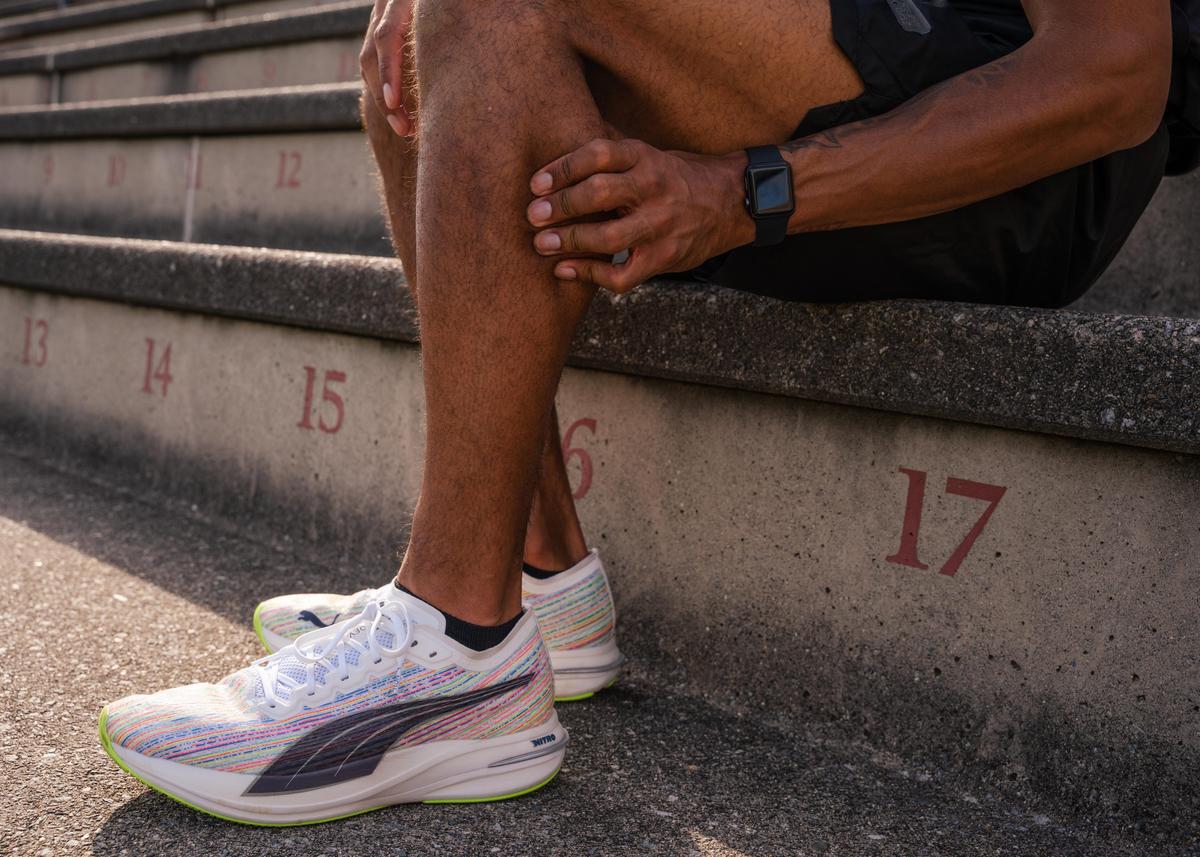
This Quick Test Reveals If Weak Calves Are Holding You Back From Faster Speeds
Why It Matters
Calf weakness limits stride power and increases injury risk, directly affecting performance and training ROI for serious runners and the broader fitness market.
Key Takeaways
- •25‑30 single‑leg heel raises indicate solid calf strength
- •Reps below target trigger a progressive calf‑raise program
- •Ankle roll inward suggests foot or hip instability
- •Ankle roll outward points to weak adductors
- •Weekly lower‑body sessions improve running economy
Pulse Analysis
Running performance hinges on the kinetic chain, and the calves are the final propulsive link. While elite athletes often prioritize plyometrics and VO2 max, the average recreational runner may overlook calf conditioning, leading to sub‑optimal stride length and early fatigue. The single‑leg heel‑raise test offers a quick, equipment‑free diagnostic that quantifies muscular endurance, allowing runners to tailor strength protocols with data‑driven precision. By establishing a baseline of 25‑30 reps, athletes can chart incremental progress, reducing the likelihood of overuse injuries that cost time and medical expenses.
Beyond the calves, ankle mechanics reveal deeper biomechanical imbalances. An inward roll often flags weak intrinsic foot muscles or hip stabilizers, prompting the inclusion of towel scrunches, glute bridges, and lateral band walks. Conversely, an outward roll highlights adductor deficiencies, best addressed with Copenhagen planks and single‑leg deadlifts. Integrating these complementary exercises creates a holistic lower‑body program that not only fortifies the calves but also stabilizes the kinetic chain, translating into smoother mechanics as fatigue sets in. For coaches and physical therapists, prescribing such nuanced regimens enhances client retention and differentiates services in a crowded wellness market.
The commercial implications are notable. As running participation climbs—projected to exceed 70 million U.S. enthusiasts by 2028—demand for evidence‑based training tools and specialty footwear rises in tandem. Brands that embed calf‑strength assessments into apps or smart shoes can capture valuable user data, fostering personalized product recommendations and upsell opportunities. Meanwhile, gyms and boutique studios that offer targeted calf‑strength classes can command premium pricing, leveraging the clear link between stronger calves and faster race times. In short, a simple five‑minute test unlocks a cascade of performance gains, injury mitigation, and revenue streams for the broader fitness ecosystem.
This Quick Test Reveals If Weak Calves Are Holding You Back From Faster Speeds
Comments
Want to join the conversation?
Loading comments...