Aphelion Preview: An Emotionally Intense Space Mystery
•February 19, 2026
0
Why It Matters
The game signals Dontnod's strategic move into a high‑growth sci‑fi niche, leveraging its narrative pedigree to attract both story fans and stealth gamers. Its ESA collaboration adds scientific credibility, potentially broadening appeal beyond traditional gaming audiences.
Key Takeaways
- •Dontnod ventures into sci‑fi stealth with Apollion
- •Dual protagonists offer distinct gameplay styles
- •Minimal UI enhances immersion via diegetic cues
- •ESA collaboration boosts scientific authenticity
- •Early preview shows strong narrative, visual fidelity
Pulse Analysis
Dontnod’s reputation for emotionally resonant narratives—built on titles like Life is Strange—has long resonated with players seeking depth over pure mechanics. With Apollion, the studio pivots toward the sci‑fi stealth segment, a market currently dominated by franchises such as Dishonored and System Shock. This strategic diversification aligns with broader industry trends where narrative‑heavy experiences are increasingly packaged within genre‑specific frameworks, allowing developers to capture both story‑driven and gameplay‑focused audiences while mitigating genre fatigue.
Apollion distinguishes itself through several design choices that reinforce immersion. The dual‑protagonist structure forces players to adapt to contrasting movement systems, from Ariane’s climbing and environmental navigation to Thomas’s oxygen‑management challenges. By eschewing traditional HUD elements and instead visualizing status through diegetic cues—like a backpack’s diminishing oxygen—the game reduces on‑screen clutter, fostering a more cinematic experience. Moreover, the partnership with the European Space Agency injects authentic scientific detail into world‑building, elevating the visual fidelity of Persephone’s frozen landscapes and lending credibility that can attract educational and simulation enthusiasts.
From a business perspective, Apollion’s blend of narrative depth, stealth mechanics, and scientific partnership positions it to capture a niche yet lucrative segment of the market. Early impressions suggest a concise ten‑hour campaign that prioritizes story progression, appealing to players who favor complete experiences over sprawling open worlds. If the final release delivers on its promise, Dontnod could set a new benchmark for narrative‑centric stealth titles, potentially influencing future collaborations between game studios and research institutions while expanding its brand beyond traditional adventure gaming.
Aphelion Preview: An Emotionally Intense Space Mystery
Shane Limbaugh (He/Him) · Contributor, DualShockers · Published Feb 19, 2026, 4:30 PM EST
Aphelion is an intriguing new Stealth story game from the very popular DON'T NOD, the developers behind Life is Strange, Tell Me Why, and Jusant. The studio is looking to bring its skillful storytelling to a new genre in a whole new setting. It’s an interesting change‑up from their usually grounded stories as they delve into the world of sci‑fi.
I didn’t get a whole lot of time with Aphelion – only two chapters of the entire game – but it did provide me with a good understanding of the general mechanics and the overall story. On top of that, I got a chance to sit down with some of the developers in an interview where we talked about the game, among other things.
Overall, Aphelion seems like it’ll be something with a lot of emotion behind it, and from what I played, the gameplay will be more than enough to keep players engaged. I’ll go over a lot of what I saw and some of the things that really stuck with me, though not everything was perfect.
What is Aphelion?
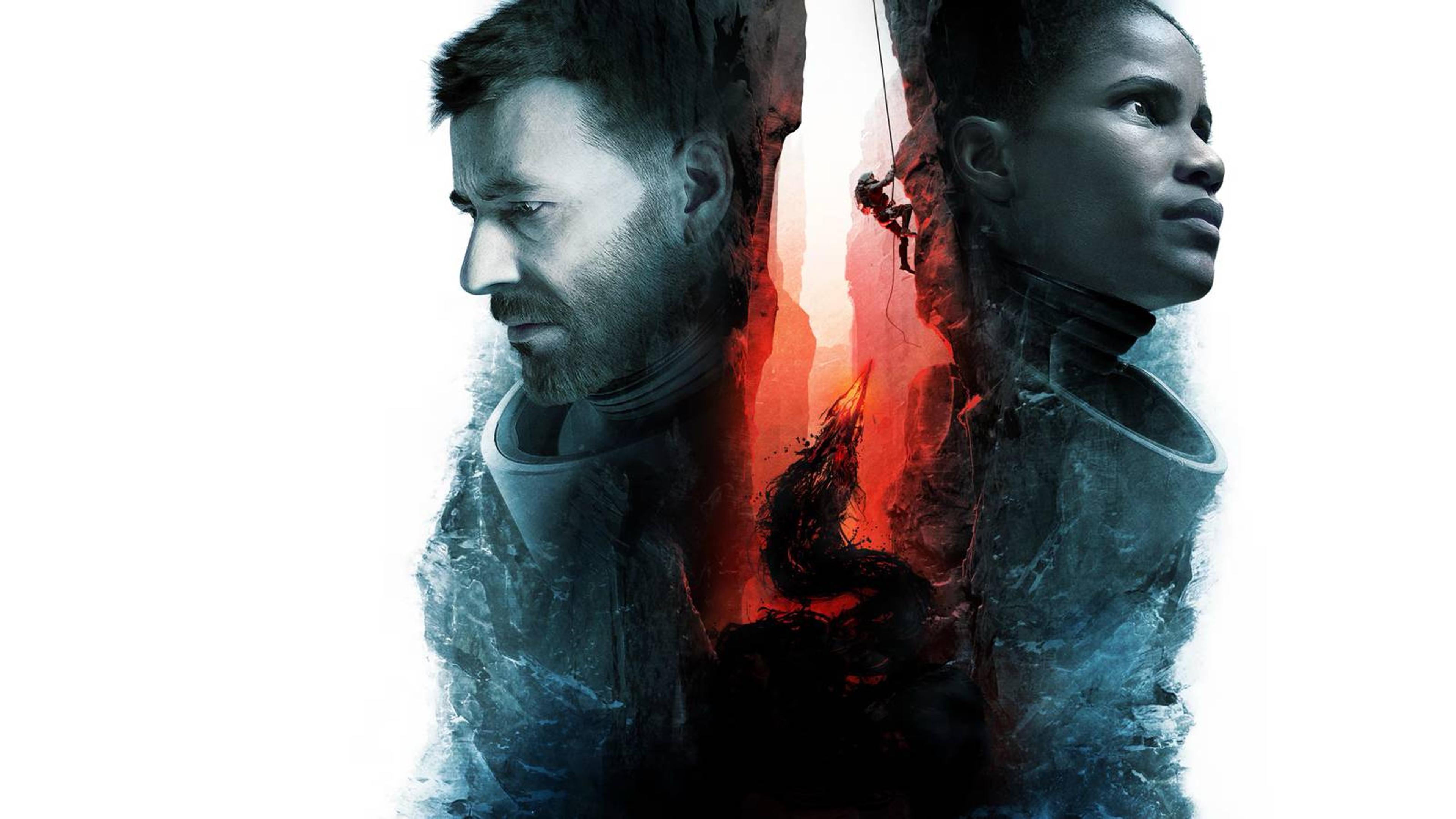
Aphelion is a stealth‑based story game at its core. You’ll play as Ariane, an astronaut sent by the European Space Agency to the planet Persephone in search of a new home for humanity. Of course, nothing ever goes to plan, and upon reaching Persephone, your ship crashes, and you lose contact with fellow astronaut Thomas, another playable character at a certain point in the story.
It’s a pretty interesting way to play the game since you’ll have two very different perspectives that take place on the same planet but in wildly different areas. Since neither of our protagonists are together, virtually all the story is delivered via monologuing or through recordings. A very difficult thing to do in writing is to make these kinds of stories interesting, but with an added bit of mystery, the devs at DON'T NOD have at least got my attention.
A Visual Masterpiece with Some Problems
Visually speaking, the world, even while frozen over, looks amazing. The destruction of the ship and the flames that consume parts of it look almost realistic. There are a lot of lifelike designs in the game, not just from a game‑design standpoint, and that’s probably thanks to the ESA, which worked closely with DON'T NOD as they crafted Aphelion.
For a lot of games, especially sci‑fi ones, having a coherent design philosophy can be really challenging. Knowing where things go and how they should look is difficult when you’re working with an idea that no human has seen before. For instance, the ship you travel on is massive—unbelievably huge—and it’s only got two actual passengers. This feels a bit odd as you explore, but with the number of things you see contained in the ship, it makes much more sense.
UI that Stays Out of the Way
With how much work went into these environments, it would be a shame to cover them up with so many UI elements; luckily, Aphelion has little to no UI. There is a pause menu that provides a way to listen to recordings and check on some other kinds of progress, but while you’re walking around the environment, there isn’t anything to obstruct your vision.
It’s really not something to worry too much about, but anything you do need is just a button‑push away or completely diegetic. For instance, Thomas needs to keep his oxygen level up, and instead of simply having a bar on the screen, you can see it deplete slowly from his backpack. It keeps you engaged in the game without making the experience feel overly “gamified.”
The Duality of Gameplay
Having two protagonists with differing gameplay isn’t something that’s incredibly new, but usually they’re together and share a good bit of similarities. In Aphelion, Ariane and Thomas share virtually no gameplay similarities, or if they do, they’re minimal at best. This keeps the gameplay interesting and breaks up the monotony that typically follows similar titles.
During my time with Aphelion, I only had access to Ariane and only got a couple of chapters’ worth of gameplay with her. For the most part, it was fairly basic: some jumping, some climbing, and the usual expectations. What really drew me in was the way the environment reacted to you.
Not every ledge is safe, and not every hold will be there for long. On the ship, pieces fall off and can hit you or give you a limited amount of time to make a choice. In the icy world, every ledge could crumble a bit and leave you falling to your doom. There is also something that adds more interactivity to the climbing; you have to push another button to make sure you land your jumps. It doesn’t make the game a thousand times better, but it does make climbing more engaging.
Beyond climbing, there’s the actual stealth gameplay where you’ll attempt to move past the Nemesis, a strange new life form that relies on sounds and vibrations to hunt you. I can’t comment much on how difficult it gets, but having an enemy you can essentially walk in front of was an intriguing idea. The focus on vibrations means that careful planning for the way you want to get around the Nemesis is important.
A Thrilling Mystery
I didn’t get to experience too much of the story, but what was there had me questioning and theorizing the whole time. It isn’t just a good story; it’s something that will make you think and wonder. Ultimately, it is an emotional journey as Ariane searches for Thomas, knowing he’s hurt and alone in a world they knew virtually nothing about.
The intense moments are followed by some time to breathe, allowing you to take in what just happened—something Hollywood could probably learn from. Aphelion is a story‑focused game, where each of the 12 chapters will provide you with a piece of the puzzle you need to understand what exactly is going on.
From those quiet emotional moments where you watch Ariane’s face twist in nerves and fear, to the high‑stakes moments where you’re running away from—or towards—something, Aphelion succeeds in keeping your attention. While there isn’t much information in these early chapters, there is certainly something deeper happening on Persephone.
My only complaint about all this would be that I want more. The story, the visuals, and the game design all come together expertly and really put you in the shoes of these astronauts on a foreign world. The problems will get ironed out, and when the game launches in full, it’ll be something deeply interesting to almost anyone.
Aphelion isn’t incredibly long, coming in at around ten hours or so to finish, but the conciseness of the journey seems to make it that much better. There aren’t a ton of distractions to keep you from moving forward in the story; rather, the game wants to push forward and finish the narrative. I, for one, cannot wait to get more time with Aphelion and find out what happens to Ariane and Thomas in their journey on Persephone.
Systems
PC • PlayStation • Xbox
Developer(s): DON'T NOD
Publisher(s): DON'T NOD
0
Comments
Want to join the conversation?
Loading comments...