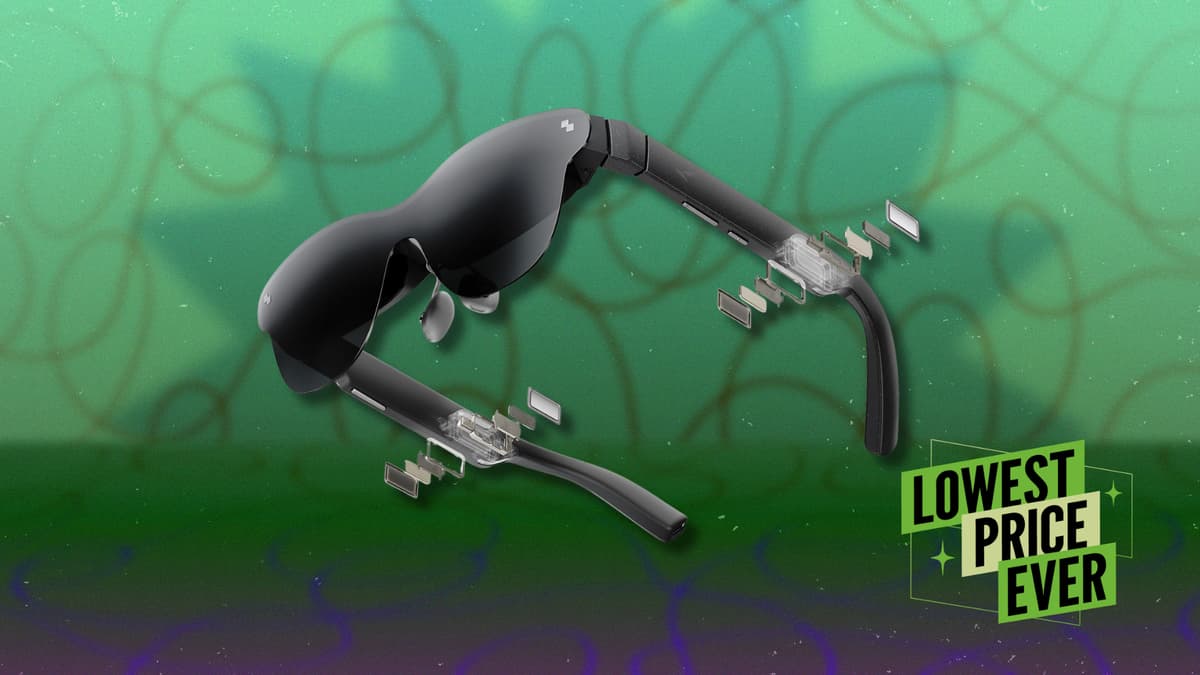
These Smart Glasses Can Be Used As a Private HD Screen, and They’re $50 Off Right Now
•March 11, 2026
0
Why It Matters
The price cut lowers the barrier to high‑end AR experiences, accelerating consumer adoption. It also forces rivals to reassess pricing and feature roadmaps.
Key Takeaways
- •Discounted to $249, down $50 from launch
- •201‑inch virtual HDR10 display with 120 Hz refresh
- •Bang & Olufsen directional speakers deliver spatial audio
- •Supports phone, laptop, PS5, Xbox, Switch streaming
- •Best AR value per Lifehacker review, beats XReal One Pro
Pulse Analysis
The AR wearables market has long been dominated by premium devices that command six‑figure price tags, limiting mainstream uptake. TCL, best known for its QLED televisions, is leveraging its display expertise to launch the RayNeo Air 4 Pro at a consumer‑friendly price point. By bundling a 201‑inch virtual HDR10 screen, 120 Hz refresh rate, and Bang & Olufsen audio into a lightweight frame, the company aims to democratize immersive visual experiences and position itself as a serious contender in the mixed‑reality space.
Technically, the Air 4 Pro offers a compelling mix of hardware and software. The glasses can mirror a smartphone, laptop, or gaming console, turning any content into a private 201‑inch display that only the wearer sees. A 3D upscaling engine converts 2D media into depth‑enhanced visuals, while the integrated directional speakers provide spatial sound without occluding the ears. Compared with rivals such as the XReal One Pro, the RayNeo delivers comparable resolution and refresh rates but at a significantly lower price, earning Lifehacker’s “best value” accolade. Early adopters praise its low latency for gaming and the convenience of a truly private screen for on‑the‑go productivity.
For enterprises, the price reduction signals a tipping point where AR can move from niche pilot projects to broader workforce deployment. Training simulations, remote assistance, and collaborative design sessions can now be conducted with a device that costs less than many high‑end laptops. As competitors scramble to match TCL’s feature set and pricing, we can expect a rapid acceleration of AR content ecosystems, tighter integration with existing enterprise platforms, and a surge in developer interest aimed at exploiting the newly accessible hardware.
These Smart Glasses Can Be Used As a Private HD Screen, and They’re $50 Off Right Now
0
Comments
Want to join the conversation?
Loading comments...