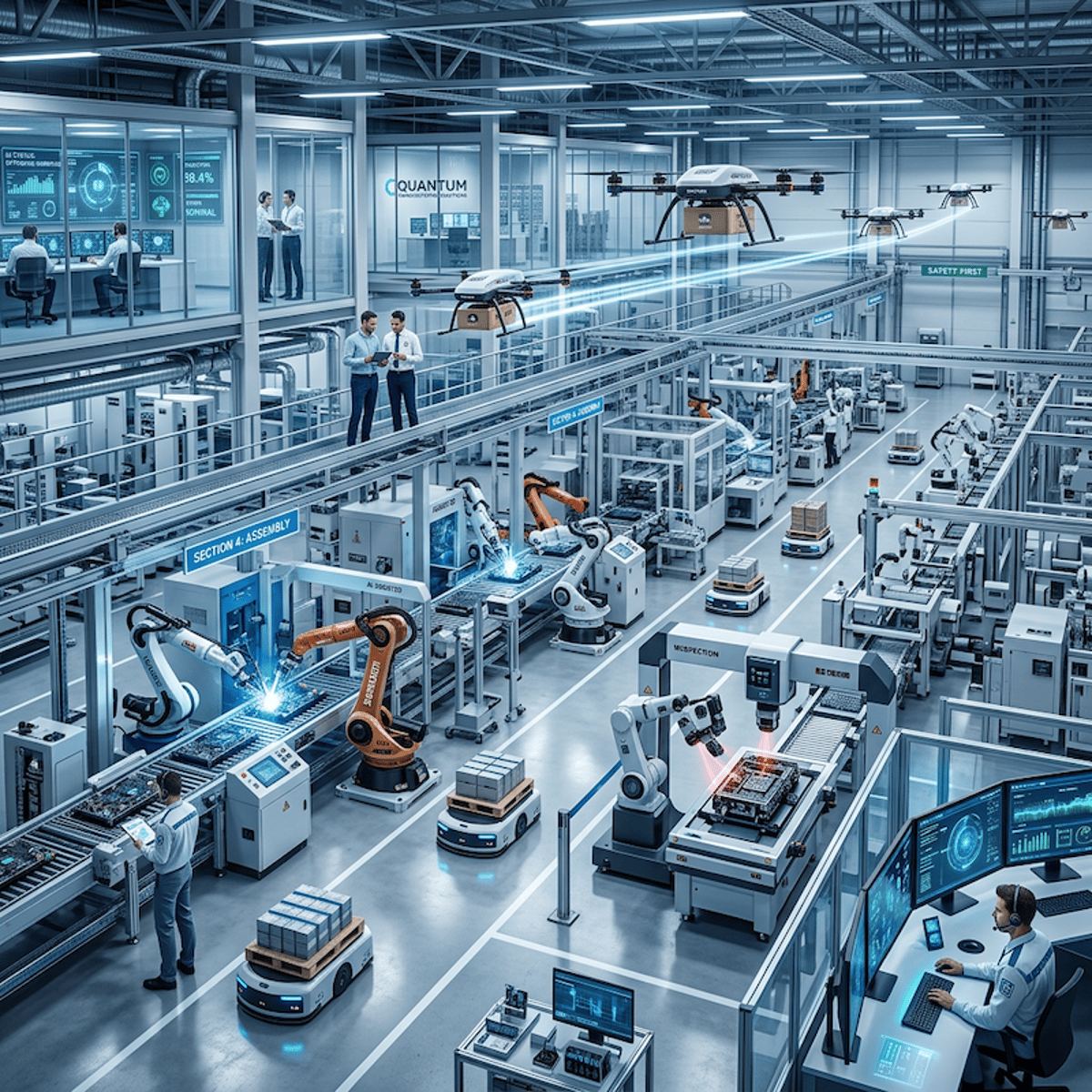
Should You Lease or Finance Warehouse Automation Equipment?
Companies Mentioned
Why It Matters
The financing decision directly shapes liquidity, debt ratios, and the ability to scale or modernize, impacting competitive advantage in fast‑moving e‑commerce fulfillment.
Key Takeaways
- •Leasing preserves cash and offers upgrade flexibility every 2‑3 years
- •Financing creates owned assets, enabling depreciation tax shields and equity growth
- •Lease agreements often bundle maintenance, reducing unexpected repair expenses
- •Loans increase leverage, affecting debt‑to‑equity and future credit capacity
- •Choice depends on growth speed, tech turnover, and long‑term asset goals
Pulse Analysis
The surge in same‑day delivery expectations has forced fulfillment centers to replace manual pick‑and‑pack lines with sophisticated automation. Advanced guided vehicles, AI‑driven sorters, and smart conveyors can boost throughput by 30‑50 percent, but the upfront price tag often runs into the high‑hundreds of thousands or even millions of dollars. As a result, senior finance teams are scrutinizing every dollar, weighing the operational upside against the capital outlay required to stay competitive in a crowded market.
Leasing transforms equipment costs into an operating expense, freeing up cash for other initiatives and shielding firms from rapid technology obsolescence. Typical lease terms of two to three years include service contracts, so unexpected repair bills stay off the budget. Conversely, equipment loans convert the purchase into a balance‑sheet asset, allowing firms to claim depreciation deductions and build equity that can boost overall company valuation. However, loan payments increase leverage, potentially tightening debt‑to‑equity ratios and limiting access to future credit lines for warehouse expansion or real‑estate financing.
Strategic decision‑making starts with a clear view of growth trajectories and technology cycles. High‑velocity e‑commerce players that anticipate frequent layout changes or need to stay on the cutting edge often favor leasing for its agility. More stable, high‑volume operators with long‑lasting conveyor systems may opt for financing to capture tax benefits and eliminate recurring payments after the loan matures. Tools like debt‑service coverage ratio calculators help quantify the impact on cash flow, ensuring that any new debt fits within the firm’s financial safety net before committing to a multi‑year obligation.
Should You Lease or Finance Warehouse Automation Equipment?
Comments
Want to join the conversation?
Loading comments...