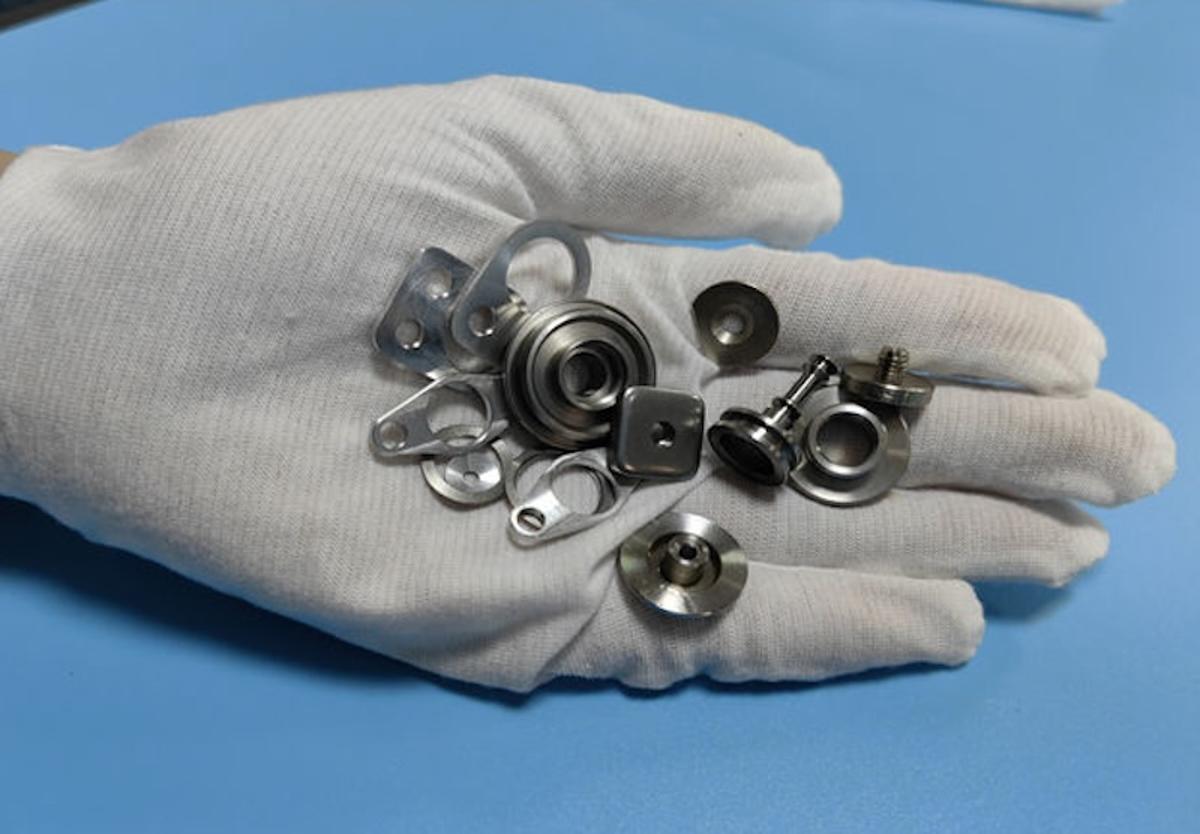
Why Precision Swiss Machining Is Critical to the Future of Robotics and Automation
Why It Matters
The mechanical precision of Swiss‑machined parts directly influences robot accuracy, uptime, and overall production cost, making them a strategic differentiator for OEMs. Their role is critical for realizing the performance promises of AI‑driven, interconnected factories.
Key Takeaways
- •Swiss machining delivers tolerances within ±0.001 mm for miniature parts
- •Reduced vibration improves robot motion stability and sensor alignment
- •Supports diverse materials like titanium and engineering plastics for harsh environments
- •Enables high‑volume production with consistent surface finish and concentricity
- •Precision components are critical for AI‑driven smart factories
Pulse Analysis
The surge in collaborative robots and autonomous assembly lines has turned mechanical precision into a strategic asset. Even micrometer‑scale deviations in shafts, bearings, or sensor housings can cascade into positioning errors, increased wear, and downtime that erode the economic case for automation. As factories push for higher cycle speeds and tighter tolerances, the hardware backbone must match the agility of software‑driven control systems. Consequently, manufacturers are scrutinizing every component for repeatability, vibration resistance, and long‑term stability to safeguard throughput and quality.
Swiss‑type CNC lathes address those demands by stabilizing the workpiece near the cutting zone, which dramatically reduces chatter and enables tolerances as tight as ±0.001 mm. The technology excels at producing miniature, high‑aspect‑ratio parts with superior concentricity and surface finish, eliminating secondary operations that would otherwise add cost and variability. Moreover, Swiss machining readily accommodates a spectrum of engineering alloys—from corrosion‑resistant stainless steel to lightweight titanium and conductive copper alloys—allowing designers to tailor components for the thermal, electrical, and mechanical stresses typical of robotic applications. High‑volume runs retain the same precision, supporting scalable production.
Looking ahead, the convergence of AI, digital twins, and Industrial IoT will amplify the need for components that can maintain sub‑micron accuracy over millions of cycles. Suppliers that combine Swiss machining expertise with advanced metrology and rapid prototyping become strategic partners, reducing time‑to‑market for next‑generation robots and autonomous material‑handling systems. Investment in precision manufacturing infrastructure therefore translates directly into competitive advantage for OEMs seeking to differentiate on uptime, energy efficiency, and adaptability in smart factories. In this ecosystem, Swiss‑machined parts are not just accessories—they are the mechanical foundation of future automation.
Why Precision Swiss Machining is Critical to the Future of Robotics and Automation
Comments
Want to join the conversation?
Loading comments...