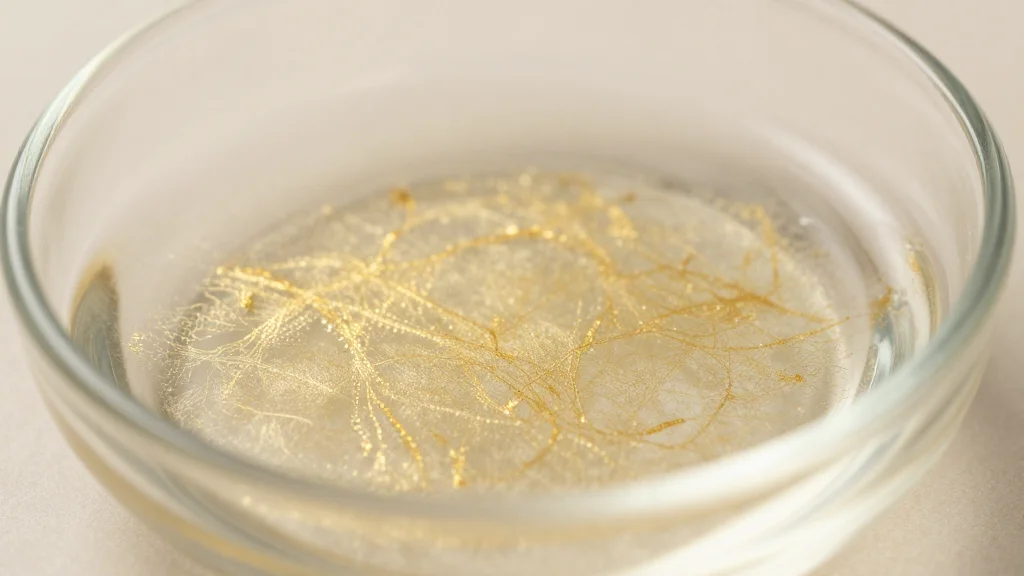
Japanese Team Shows Liquid‑Like Gold Nanoparticles Enable Adaptive Materials

Why It Matters
The discovery provides a concrete route to materials that can change their physical properties on command, a long‑sought goal in nanotechnology. By leveraging subtle molecular rearrangements to drive macroscopic reconfiguration, the approach sidesteps the need for complex external actuators, potentially lowering cost and energy consumption for smart coatings, sensors, and reprogrammable photonic devices. Moreover, the use of gold—a biocompatible and chemically stable metal—opens avenues in biomedical implants that could adapt to physiological changes, enhancing integration and functionality. Beyond immediate applications, the work reshapes fundamental understanding of interfacial nanoparticle dynamics. It shows that the air‑water boundary can act as a catalyst for ligand mobility, suggesting that other interfacial systems (e.g., oil‑water, solid‑liquid) might host similar fluidic behaviors. This could spark a new subfield focused on exploiting interfacial physics to engineer responsive nanostructures, expanding the toolbox for designers of next‑generation nanodevices.
Key Takeaways
- •Gold nanoparticles coated with a dendritic liquid‑crystal ligand and a linear ligand exhibit liquid‑like flow at an air‑water interface.
- •Structural transition occurs at ~104 °F (40 °C) and reverses under mechanical compression.
- •X‑ray scattering at DESY confirmed ligand redistribution as the mechanism behind large‑scale reorganization.
- •Potential applications include tunable optical coatings, reconfigurable plasmonic circuits, and adaptive biomedical interfaces.
- •Researchers aim to scale the technology and explore other metal cores and multi‑stimuli responsive ligands within 2–3 years.
Pulse Analysis
The Tohoku University breakthrough arrives at a moment when the nanotech industry is hunting for low‑energy, reversible actuation mechanisms. Traditional approaches—such as shape‑memory alloys or electrochemical swelling—often demand high voltages, significant heat, or bulky infrastructure. By contrast, the gold nanoparticle system leverages intrinsic molecular motion amplified by the air‑water interface, delivering a stimulus‑responsive switch that operates near ambient conditions. This could dramatically reduce the power envelope for smart surfaces, making them viable for battery‑powered wearables or remote sensors.
Historically, the field has struggled to translate nanoscale responsiveness into macroscale functionality without sacrificing stability. The reported reversible island‑to‑network transition demonstrates that a carefully engineered ligand cocktail can bridge that gap, preserving the structural integrity of the gold cores while allowing the ensemble to flow. If the team can maintain performance over thousands of cycles, the technology could outpace competing platforms like DNA‑origami reconfigurable scaffolds, which often suffer from degradation in real‑world environments.
Looking ahead, the commercial impact will hinge on integration pathways. The thin, two‑dimensional films are compatible with roll‑to‑roll coating processes, suggesting a relatively smooth transition to large‑area manufacturing. However, the reliance on gold may raise cost concerns for mass‑market products; future work on cheaper metals such as silver or copper could broaden adoption. Overall, this discovery injects fresh momentum into adaptive nanomaterials, positioning liquid‑like nanoparticle assemblies as a versatile, scalable foundation for the next generation of smart devices.
Japanese Team Shows Liquid‑Like Gold Nanoparticles Enable Adaptive Materials
Comments
Want to join the conversation?
Loading comments...