Human-Robot Collaboration: How Modern Workplaces Can Be Designed for Safety, Productivity, and Employee Wellbeing
Companies Mentioned
Why It Matters
These advances let manufacturers boost throughput without sacrificing worker safety or regulatory compliance, turning automation from a risk into a strategic advantage.
Key Takeaways
- •$85 billion industrial robotics market drives shared workspaces.
- •ISO 10218‑1:2025 adds safety and cybersecurity rules.
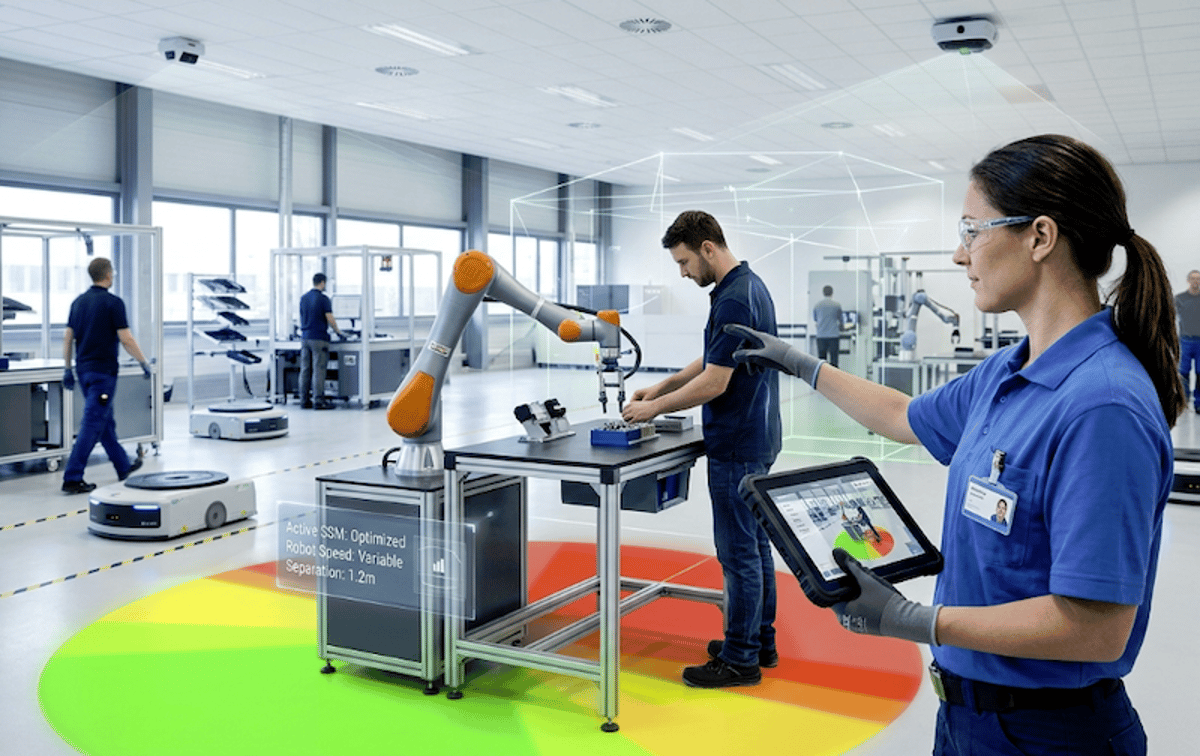
- •Zone‑based layout (green, yellow, red) balances speed and risk.
- •Real‑time telemetry predicts collisions, reduces emergency stops.
- •Speed‑Separation Monitoring dynamically adjusts protective distances.
Pulse Analysis
Modern factories are at a crossroads where collaborative robots, or cobots, are no longer confined behind cages. The $85 billion market surge reflects a strategic shift: manufacturers are redesigning floor plans to blend human agility with robotic precision. By segmenting work areas into green, yellow, and red zones, companies can modulate robot velocity in real time, preserving both safety and output. This zoning, coupled with ISO 10218‑1:2025’s updated safety and cybersecurity mandates, provides a clear regulatory framework that reduces liability and builds confidence among plant managers.
Data‑driven safety is the next frontier. Edge sensors, wearable badges, and robot controllers now feed continuous streams into localized machine‑learning models. These algorithms forecast spatial conflicts before they materialize, allowing systems to pre‑emptively slow or stop robots. The result is a smoother production cadence, fewer emergency stops, and lower mechanical wear. Moreover, logged near‑miss events create a feedback loop for engineers to refine layout designs, turning anecdotal observations into empirical improvements.
The human element remains paramount. Psychological comfort stems from transparent interfaces that clearly signal robot intent, reducing anxiety and cognitive load. Comprehensive training transforms workers from wary observers into skilled collaborators who can offload repetitive, ergonomically taxing tasks to machines. When combined with Speed‑Separation Monitoring, which dynamically expands protective bubbles based on relative motion, facilities achieve peak productivity while safeguarding employee wellbeing. This holistic approach—integrating technology, standards, and human factors—positions collaborative robotics as a sustainable growth engine for the manufacturing sector.
Human-Robot Collaboration: How Modern Workplaces Can Be Designed for Safety, Productivity, and Employee Wellbeing
Comments
Want to join the conversation?
Loading comments...