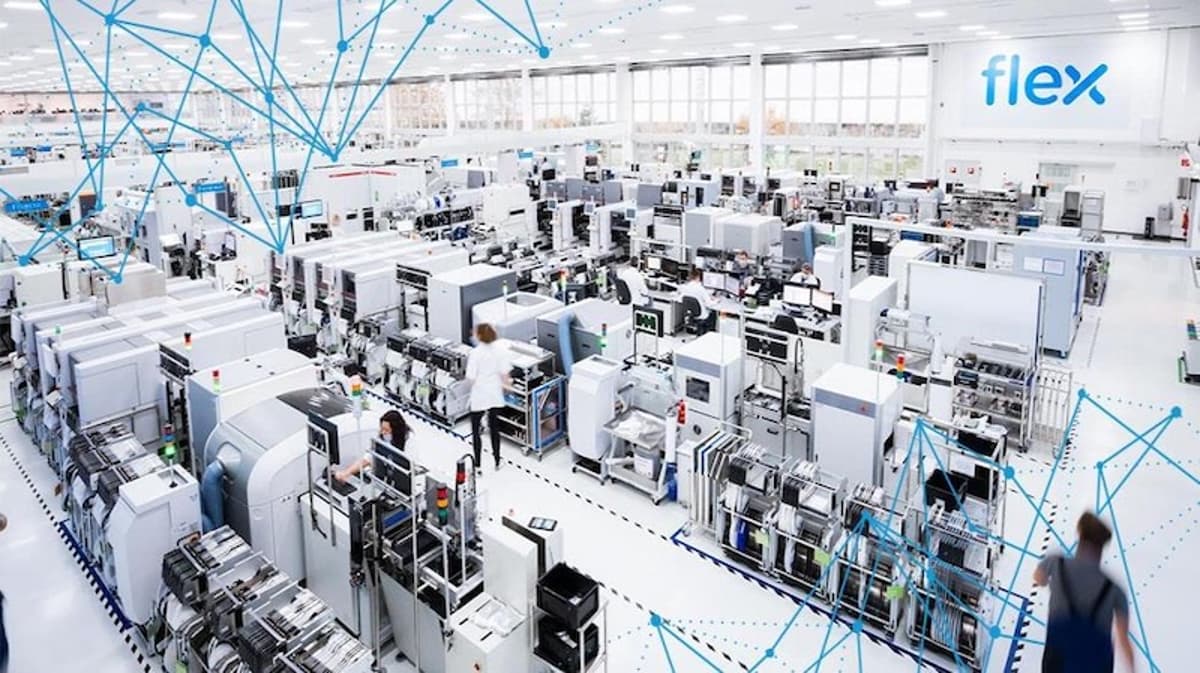
Scaling Automation in Contract Manufacturing: Interview with Rodrigo DallOglio of Flex
Companies Mentioned
Why It Matters
Automation is becoming a baseline requirement for contract manufacturers to stay competitive on cost, quality, and speed, and Flex’s dual‑role partnership accelerates industry‑wide adoption of scalable robotics solutions.
Key Takeaways
- •Flex deepens Teradyne Robotics tie, deploying and building robots globally
- •Cobot and AMR use cases prove flexibility for high‑mix, low‑volume production
- •Scaling starts with a single high‑impact pilot, then replicates across sites
- •Physical AI enables robots to perceive, reason, and act in real time
- •Automation shifts from differentiator to necessity for cost, quality, speed
Pulse Analysis
Flex’s expanded alliance with Teradyne Robotics marks a pivotal step in the broader shift toward large‑scale automation in contract manufacturing. By acting as both a user and a supplier of robotic systems, Flex can validate technologies in its own high‑mix facilities before mass‑producing components for external customers. This feedback‑driven model shortens the learning curve, reduces deployment risk, and creates a replicable blueprint that other manufacturers can follow when moving beyond isolated pilots.
The practical impact of collaborative robots (cobots) and autonomous mobile robots (AMRs) is evident in Flex’s ability to handle frequent design changes and product variety without sacrificing throughput. Cobots perform repeatable tasks such as assembly and inspection, while AMRs automate material transport, freeing human workers for higher‑value activities. Together they deliver a hybrid of flexibility and standardization, enabling manufacturers to meet tight delivery windows and maintain quality across diverse product lines.
Physical AI represents the next evolution, embedding perception, reasoning, and real‑time decision‑making directly into robotic hardware. On the shop floor, AI‑enabled robots can adjust paths, adapt to new parts, and respond to anomalies without manual reprogramming, driving both efficiency and resilience. While fully autonomous factories remain a future goal, the current wave of AI‑augmented robotics is already reshaping how contract manufacturers scale operations, improve margins, and future‑proof their supply chains.
Scaling automation in contract manufacturing: Interview with Rodrigo DallOglio of Flex
Comments
Want to join the conversation?
Loading comments...