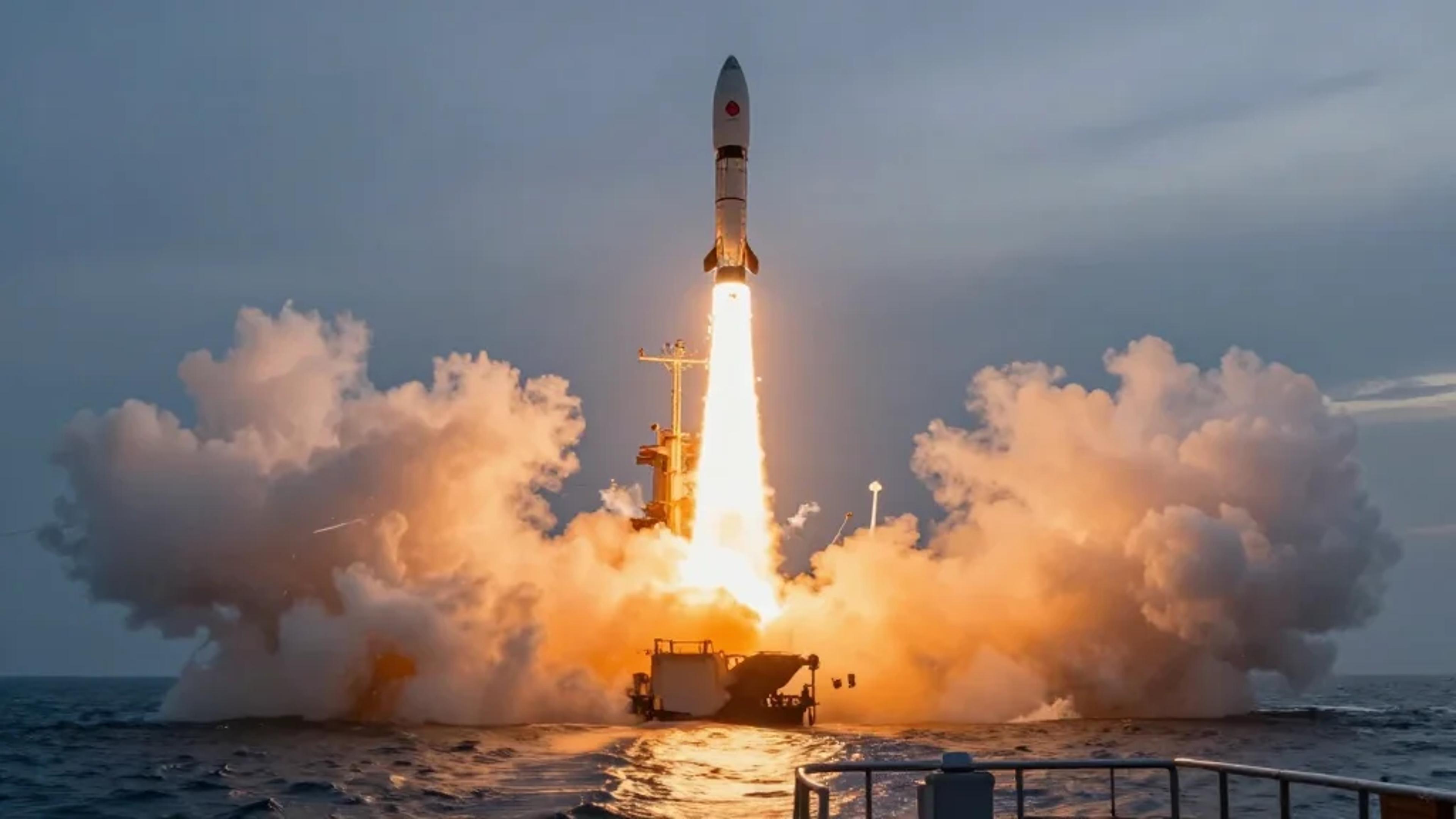
Smart Dragon 3 Rocket Sends Seven Satellites to Orbit From Sea Platform
•February 16, 2026
0
Why It Matters
Sea‑based launches give China a mobile, cost‑effective alternative to crowded land sites, attracting international commercial customers and easing range‑safety constraints.
Key Takeaways
- •Smart Dragon 3 launched seven satellites from sea platform
- •Payload includes Pakistan remote‑sensing satellite
- •Rocket can deliver up to 1.5 tonnes to sun‑synchronous orbit
- •All nine missions operated exclusively from maritime launch ships
- •Sea launches ease pressure on China's coastal launch corridors
Pulse Analysis
China’s push for sea‑based launch capability reflects a strategic shift toward greater flexibility and capacity in the global launch market. By mounting the Smart Dragon 3 on a dedicated launch‑service ship, the China Academy of Launch Vehicle Technology eliminates the geographic constraints of fixed launch pads, reduces weather‑related delays, and shortens preparation cycles. The solid‑propellant design further simplifies operations, allowing rapid turnaround between missions and supporting the growing demand for rideshare services.
The recent flight, carrying seven satellites with a combined mass of roughly 1.5 tonnes, showcases the commercial appeal of multi‑payload sea launches. International customers, exemplified by Pakistan’s remote‑sensing satellite, benefit from lower per‑satellite costs and access to sun‑synchronous orbits ideal for Earth‑observation constellations. As satellite constellations proliferate, providers that can bundle diverse payloads on a single launch become increasingly valuable, positioning China as a competitive player alongside private launch firms.
Looking ahead, China’s maritime launch strategy could reshape launch‑site economics and regulatory frameworks. Mobile platforms alleviate pressure on coastal range safety corridors, potentially opening new orbital slots and reducing launch‑site congestion. If the Smart Dragon 3 program maintains its reliability record, it may attract more commercial and governmental payloads, accelerating the deployment of global satellite networks and reinforcing China’s foothold in the commercial space sector.
Smart Dragon 3 rocket sends seven satellites to orbit from sea platform
By Riko Seibo · Tokyo, Japan (SPX) · Feb 16 2026
China has launched a Smart Dragon 3 carrier rocket from a sea‑based platform off the coast of Yangjiang in Guangdong province, placing seven satellites into orbit on Thursday afternoon.
Liftoff occurred at 2:37 pm local time from a dedicated launch‑service ship, after which the solid‑propellant rocket deployed all seven spacecraft into their preset orbits.
The payloads included a remote‑sensing satellite built by Pakistan, along with other satellites that took advantage of the rocket’s capacity to carry multiple spacecraft on a single mission.
According to the China Academy of Launch Vehicle Technology, which developed the Smart Dragon 3 series, this flight marked the ninth mission for the rocket variant and continued its record of operating exclusively from sea‑based platforms.
Smart Dragon 3 stands 31 metres tall, has a core diameter of 2.65 metres and a liftoff mass of about 140 metric tons, using solid‑propellant stages to simplify operations and reduce launch‑preparation time.
The launcher can deliver multiple satellites with a combined mass of up to 1.5 tonnes into a typical sun‑synchronous orbit at an altitude of around 500 kilometres, making it suitable for constellations and remote‑sensing clusters.
Smart Dragon 3 carried out its maiden flight in December 2022 from a ship in the Yellow Sea, when it successfully placed 14 satellites into orbit and demonstrated China’s growing capability in sea‑launch operations.
All nine Smart Dragon 3 missions to date have been conducted at sea, underscoring China’s strategy of using mobile maritime platforms to supplement land‑based launch centres and ease pressure on coastal range safety corridors.
The latest launch also counted as China’s 12th space mission of 2026, contributing to a busy national manifest that increasingly features commercial and international payloads.
0
Comments
Want to join the conversation?
Loading comments...