Why Electric Vehicle NVH Testing Demands a Different Approach than ICE Validation
Why It Matters
Accurate EV NVH validation prevents noisy cabins that can erode brand reputation and extends development timelines, giving manufacturers a decisive advantage in a market where quietness is a premium feature.
Key Takeaways
- •EV test rigs need 6‑10 dB lower background noise than ICE rigs
- •Instrumentation must capture up to 20 kHz to detect inverter harmonics
- •Load controllers require sub‑50 ms response for zero‑torque events
- •Contactless magnetic coupling isolates drive motor noise from the drivetrain
- •Dual tracking of mechanical and electrical orders avoids misattributed tones
Pulse Analysis
Electric vehicles have turned cabin quietness from a luxury into an expectation, and that shift reverberates through every stage of drivetrain validation. Traditional NVH rigs were built around the roar of combustion, where a loud engine masked many subtle acoustic defects. In an EV, the ambient noise floor can drop from 65 dB to under 50 dB, exposing gear whine, bearing chatter, and high‑frequency inverter tones that were previously invisible. Engineers therefore must redesign test environments to achieve a background level at least 6‑10 dB lower, often using contactless magnetic couplings that eliminate direct mechanical paths for structure‑borne noise.
Beyond a quieter test floor, the frequency spectrum of interest expands dramatically. ICE validation focused on 25‑200 Hz combustion orders and sub‑1 kHz structural resonances, allowing DAQ systems sampled at 20 kHz. EV powertrains, however, generate switching harmonics and motor pole‑pair excitations that extend well beyond 10 kHz, sometimes up to 20 kHz or higher. Capturing these signals demands microphones and accelerometers rated for the full audible range, synchronized multi‑channel sampling at 50 kHz or more, and analysis tools that track both mechanical orders and electrical harmonics simultaneously. Without this capability, aliasing and misattribution can obscure the true source of cabin noise.
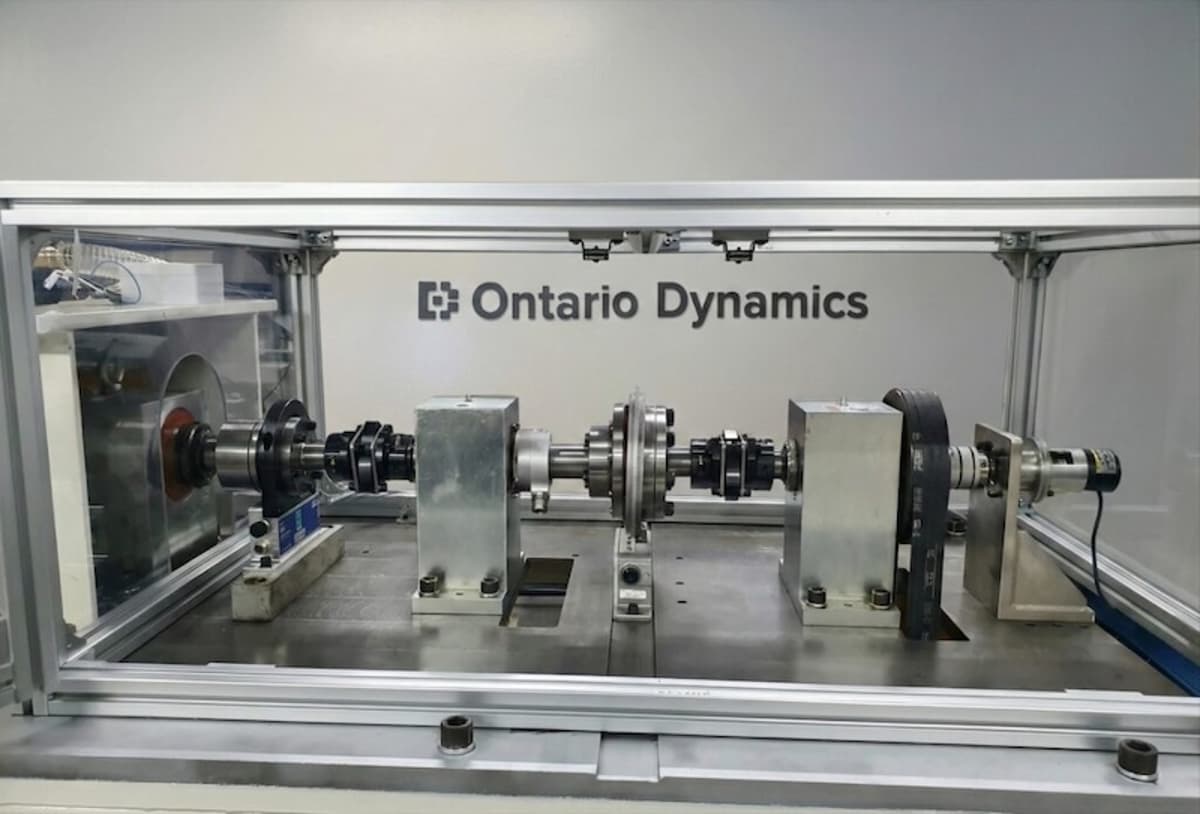
The practical payoff of investing in EV‑specific NVH infrastructure is a shorter, more reliable validation cycle. Accurate, high‑resolution data enables engineers to pinpoint acoustic issues early, reducing the risk of costly redesigns after tooling is locked. Companies like Ontario Dynamics are capitalizing on this need by offering turnkey test benches that integrate low‑noise drive motors, fast‑response load controllers, and semi‑anechoic cells. For OEMs, the decision is less about capital expense and more about engineering confidence: a purpose‑built EV NVH rig delivers the measurement fidelity required to meet consumer expectations and stay ahead in a fiercely competitive market.
Why Electric Vehicle NVH Testing Demands a Different Approach than ICE Validation
Comments
Want to join the conversation?
Loading comments...