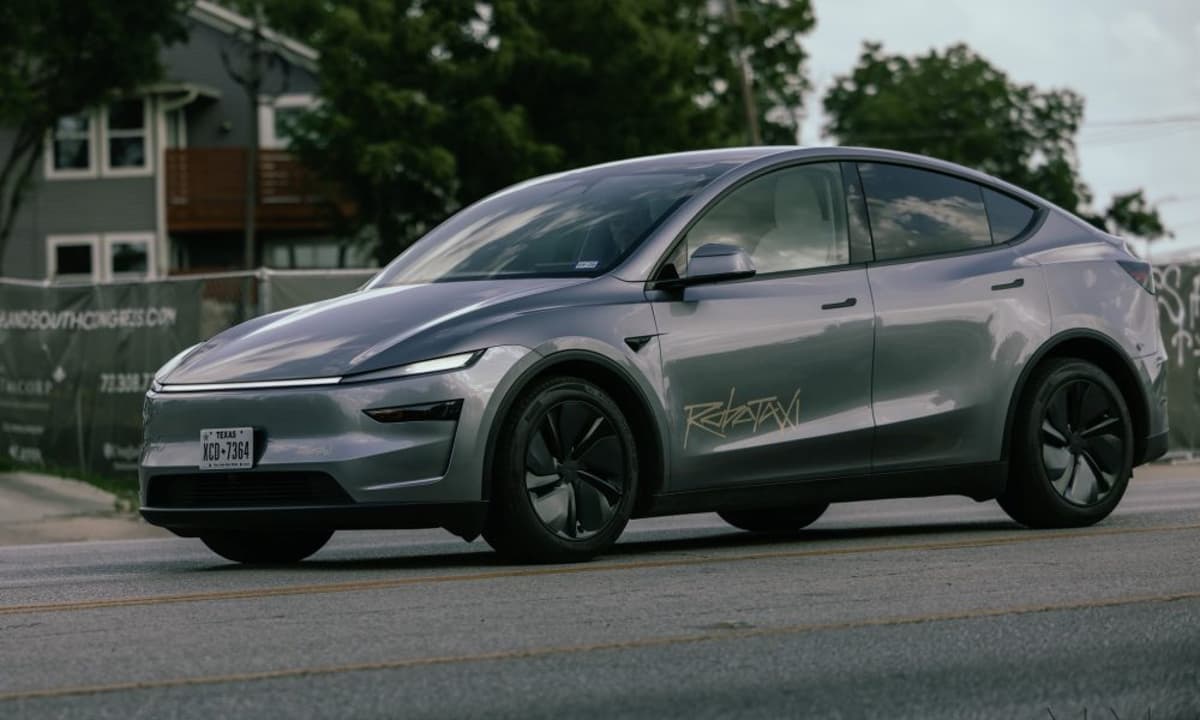
Tesla Responds to Robotaxi Skeptics with a Massive Move in Austin
Key Takeaways
- •Geofence now spans entire Austin metro, including suburbs and airport.
- •Fifth expansion since July 2025, area more than doubled.
- •Fleet size stays conservative, safety remains top priority.
- •Signals Tesla’s confidence in FSD reliability for unsupervised rides.
- •Puts Tesla on par with Waymo’s coverage despite smaller fleet.
Pulse Analysis
Tesla’s latest geofence expansion in Austin marks a decisive shift from a tightly controlled pilot to a city‑wide, unsupervised service. By opening the entire metropolitan area—including suburbs such as Pflugerville and Manor, the I‑35 corridor, Gigafactory Texas, and Austin‑Bergstrom Airport—the company has more than doubled the operational footprint it held since October 2025. The announcement, posted on X, comes just days after media outlets highlighted the modest size of the Robotaxi fleet, prompting Tesla to demonstrate that its Full Self‑Driving (FSD) software can handle a broader, real‑world environment.
Despite the geographic leap, Tesla has kept the vehicle count deliberately low, underscoring safety as the program’s chief metric. The conservative fleet allows the firm to collect high‑quality mileage data while monitoring FSD performance across diverse traffic conditions. This data‑driven approach contrasts with Waymo’s larger, but more regionally confined, deployments and gives Tesla a scalable model that can be replicated in other markets once confidence thresholds are met. The expansion also serves as a public rebuttal to critics who question the viability of an autonomous ride‑hailing network without a sizable fleet.
The Austin rollout positions Tesla to compete for a share of the emerging autonomous‑mobility market, where high‑margin, app‑based services are the long‑term goal. Full‑metro coverage signals to investors that the company is moving toward commercial profitability rather than remaining in a testing phase. It also puts pressure on regulators to accommodate larger unsupervised zones, potentially shaping policy for future deployments in cities like Dallas or Miami. If the expanded service meets safety and reliability targets, Tesla could accelerate its path to a global Robotaxi network.
Tesla responds to Robotaxi skeptics with a massive move in Austin
Comments
Want to join the conversation?