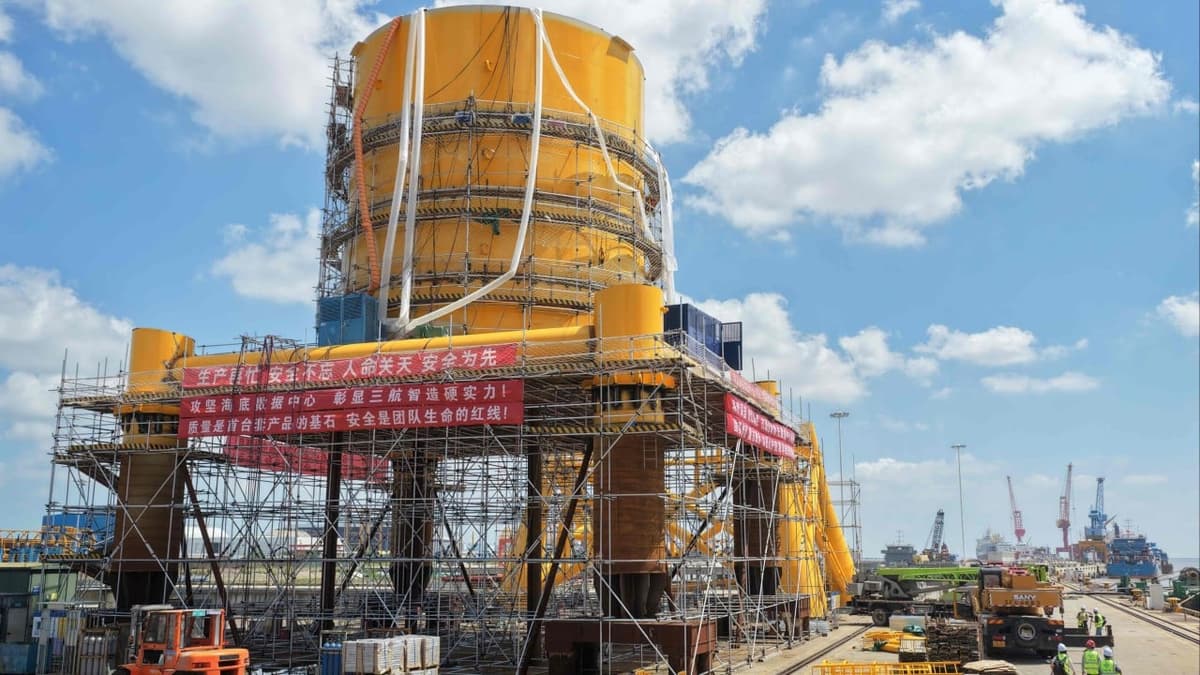
China Turns to Offshore Wind Farms, Subsea Data Centres to Ease AI Computing Bottleneck
Why It Matters
Linking subsea data centres to offshore wind offers a low‑carbon, space‑efficient solution to China’s exploding AI compute demand, setting a precedent for sustainable high‑performance computing globally.
Key Takeaways
- •First offshore-wind‑powered UDC operational off Shanghai.
- •1.6 billion yuan investment, 24 MW capacity.
- •Cuts water use, electricity, carbon emissions versus land sites.
- •Mitigates AI compute bottleneck amid limited land.
- •Early-stage tech faces standards, maintenance, economic hurdles.
Pulse Analysis
China’s AI ambitions are colliding with a stark shortage of land‑based data‑centre space, prompting policymakers to look seaward. Offshore wind farms, already a cornerstone of the nation’s renewable rollout, now double as power anchors for submerged compute clusters. By situating servers beneath the sea, operators exploit the ocean’s natural cooling, slashing energy consumption and enabling higher density racks without the costly air‑conditioning infrastructure required on land. This synergy aligns with Beijing’s dual goals of expanding AI capabilities while meeting its carbon‑reduction commitments.
The Shanghai pilot, a 10‑metre‑deep, 24‑megawatt installation costing roughly US$232 million, serves as a real‑world testbed for the economics of underwater data centres. Early results suggest substantial resource savings: the facility could avoid 26,000 tons of water and cut electricity use by 3.4 million kWh annually, translating into roughly 2,720 tons of CO₂ emissions avoided compared with a conventional land‑based counterpart. These figures bolster the case for scaling subsea hubs, especially as AI workloads become increasingly latency‑sensitive and demand proximity to end‑users in coastal megacities.
Despite the promise, the technology remains nascent. Industry analysts flag a lack of standardized design codes, complex maintenance logistics, and uncertain return‑on‑investment as hurdles that must be cleared before widespread adoption. Nonetheless, China’s aggressive investment contrasts with the retreat of projects like Microsoft’s Natick in the United States, suggesting a competitive edge for firms that can master subsea operations. If the Shanghai and Hainan sites prove commercially viable, they could catalyze a new wave of ocean‑based compute infrastructure, reshaping the global data‑centre landscape and setting benchmarks for sustainable AI deployment.
China turns to offshore wind farms, subsea data centres to ease AI computing bottleneck
Comments
Want to join the conversation?
Loading comments...