Today's AI Pulse
AI agents stress-test cybersecurity frameworks
Multiple outlets report that AI agents are being deployed to probe and evaluate existing cybersecurity controls, exposing gaps in governance. The surge in AI‑driven testing is prompting CISOs to argue for larger cyber budgets to keep pace with evolving threats.
Also developing:
By the numbers: OneRobotics acquires Nanoleaf for $40M

Zendesk Launches New AI Capabilities for the Resolution Platform, Creating the Ultimate Service Experience for All
Presented by Zendesk Zendesk powers nearly 5 billion resolutions every year for over 100,000 customers around the world, with about 20,000 of its customers (and growing) using its AI services. Zendesk is poised to generate about $200 million in AI-related revenue this year, double than some of its largest competitors, while investing $400 million dollars in R&D. Much of that research is focused on upgrading the Zendesk Resolution Platform, a complete AI-first solution for customer service, employee service, and contact center teams, announced at Relate this past March. During AI Summit, Chief Executive Officer Tom Eggemeier, along with members of the Zendesk team, took to the stage to announce several major advancements, including voice AI agents, video calling, and screen sharing for Zendesk Contact Center, and improved IT asset management, as well as the introduction of next-generation analytics, in the wake of its acquisition of HyperArc. "We have built the only platform that is purpose-built for service and purpose-built for AI," Eggemeier said. "That focus is why we lead in AI for all types of service. And it is why we can deliver what no one else can for every service need you have in your organization." New capabilities across use cases and companies At its core, the Resolution Platform powers autonomous AI agents that solve complex issues in real time, leveraging leading LLMs like GPT-5, developed in collaboration with OpenAI, and supporting Model Context Protocol (MCP) to instantly access data, which streamlines workflows and improves autonomous problem-solving. "Since our launch in March, we’ve been building fast, focused on making AI agents smarter, more flexible, and ready for even more channels," said Shashi Upadhyay, president of product, engineering, and AI at Zendesk. "And now, these AI agents are getting even better. They work across messaging, email, and now voice. They are getting smarter; able to handle multiple intents in a single message, detecting, remembering, and resolving many issues at once." The only platform with native built-in QA, resolutions are automatically scored down to the conversation level, so teams can track resolution quality at scale. For startups, these insights are critical. They not only show what worked, but what needs fixing before it costs them time, reputation, or growth, and importantly, fit within a startup budget. That’s because Zendesk is the only company that charges only for successful resolutions, which are verified through the industry’s longest validation window, with two layers of quality checks. Making the product CX admin a hero Zendesk demonstrated the platform’s new features by highlighting a hypothetical wearable device company’s product launch. Service leaders at every stop along the product launch journey — from design to manufacturing — manage emerging issues with the support of the upgraded Resolution Platform. For a global manufacturer that builds complex, state-of-the-art wearable tech, the pressure starts the moment a new product hits the market, tickets start pouring in, and a red-flagged backlog piles up. "It is not a product issue, it is a resolution bottleneck," Upadhyay said. But, he added, "What once took days can now be resolved instantly." The new Zendesk Admin Copilot is designed specifically to assist human agents, helping them spot what is not working, what to do next, and carry out changes quickly. It flags operational issues, like missing intent tags, broken internal processes, or routing conflicts that delay resolution. Copilot explains what is happening in plain language, recommends specific fixes, and with the admin’s approval, can make the changes itself. It's grounded in live Zendesk data, like tickets, triggers, and knowledge, so every recommendation is specific, current, and based on how the service operation actually runs. Once the admin identifies the issue and implements a fix, the next step is ensuring everyone has access to the right knowledge to support it. For many organizations, that information lives outside of Zendesk. The newly launched Knowledge Connectors allows admins to pull in relevant content, like configuration guides or policy details, without needing to migrate anything so both human and AI agents have access to real-time instructions tied to the exact product version. The admin also creates a smarter feedback loop with the new Action Builder, which automatically tags, summarizes, and sends notifications to the product team through Microsoft Teams. And finally, Zendesk HyperArc will bring customers insights that combine AI and human analysis in a clear, narrative-driven view of what is happening and why, instead of siloed dashboards or static reports. "With these innovations in place, change at the manufacturing plant cascades quickly, tickets are routed cleanly, support agents know what to say, engineering sees real signals instead of scattered anecdotes, and customers who just want the product to work get fast, reliable resolutions," Upadhyay said. "The CX Admin becomes the quiet hero of the manufacturer’s story." Solutions for the retail CX leader As a CX or contact center leader for a retail company, when a must-have wearable drops, how do you deliver service for your new hit product that feels personal and consistent when your team is stretched across multiple countries, channels, and customer expectations at once? "Intelligent automation doesn’t just streamline operations — it enhances the customer experience across borders and channels," said Lisa Kant, senior vice president of marketing at Zendesk. Zendesk’s Voice AI Agents are fully autonomous AI agents designed to understand natural speech, take action, and resolve issues without needing to escalate. They can verify identity, track orders, update deliveries, and answer setup questions in multiple languages, while keeping the brand experience consistent. Meanwhile, Video Calling lets a live agent spin up a video session, confirm the device is working, and walk the customer through setup or troubleshooting. And because a help center is a critical part of delivering great service, especially when scaling fast across multiple countries and languages, Zendesk built Knowledge Builder, an AI-powered tool that helps teams build and maintain their help center content automatically. It analyzes real customer conversations and turns them into localized help articles for trending issues. Giving IT leaders a strong edge When a company adopts that new product, it becomes critical to resolve issues fast, to ensure employee productivity stays strong. Available with early access in November, Zendesk's new employee service offering, IT Asset Management (ITAM), natively integrates service and asset data together into the Zendesk service desk to help IT move from reactive troubleshooting to proactive service. Now, when a vague “tablet not working” ticket comes in, Zendesk ITAM surfaces the device details right inside the ticket, so IT knows exactly what they are dealing with. Zendesk Copilot uses that same asset data to recommend model-specific troubleshooting steps. And with Knowledge Connectors, those steps can be pulled directly from SharePoint or Confluence without migration. If the fix does not work, the IT specialist confirms in seconds that the device is under warranty and issues a replacement without any back-and-forth. With real-time visibility across every hardware asset, the IT leader can spot patterns before they become a flood of tickets, or failures at the point of care, so IT resolves issues faster and prevents problems before they happen. "With Zendesk, IT is not just reacting to issues — it is setting the standard for how proactive employee service is delivered," Upadhyay said. For more on the latest Zendesk updates and improvements, and to watch a conversation with Zendesk's special guest, co-founder of LinkedIn, Reid Hoffman, and more, watch the full videos here. And for the latest updates, detailed information, and product availability, visit Zendesk’s official announcements page. Sponsored articles are content produced by a company that is either paying for the post or has a business relationship with VentureBeat, and they’re always clearly marked. For more information, contact sales@venturebeat.com.

OpenAI Relies on Developers to Drive AI-First Economy
DevDay 2025 INTERVIEW: Greg Brockman (@gdb), President of @OpenAI, on platform risk and how OpenAI thinks about developers building on top of its models. “We want to help transition the world to an AI-first economy — and we can’t do that...

Future Workplaces Will Replace Org Charts with Task‑based Work Charts
Zero chance tomorrow’s org chart looks like today’s org charts. So what WILL it look like? Clara Shih says AI will likely shrink specialization - the more optimistic reframe is that Gen z and Gen alpha will become professional generalists....
Google Backs Supermemory’s Mind Tech
Google veterans have poured $3 million into Supermemory, a startup developing a cognitive AI platform aimed at enhancing human memory through advanced algorithms. The post explores how this funding could accelerate the creation of memory‑boosting tools and reshape digital learning experiences....

Supermemory Closes $3M Round
The post announces that Supermemory has secured a $3 million funding round led by former Google executives, marking a significant boost for its cognitive AI platform. The startup is building personal memory assistants that can understand context and user behavior, promising...

Prioritize Entrepreneurship, Curiosity, and Critical Thinking for AI Success
The skills that top AI leaders recommend today ⬇️ The absolute best thing to be working on right now is entrepreneurship aka “the pursuit of opportunity without regard to resource constraint” because “the underlying substrate of our resources is continually...

AI‑Driven Talent and Knowledge Red
Clara Shih from @Meta: One interesting use case of LLMs is to extract tacit culture and knowledge from a smaller enterprise or startup. Aneesh Raman from @LinkedIn: maybe net-new businesses is the right metric to look at for business growth;...

Vandals Deface Ads for AI Necklaces that Listen to All Your Conversations
Critics attacked subway ads to defend human friends and broadly criticize AI.
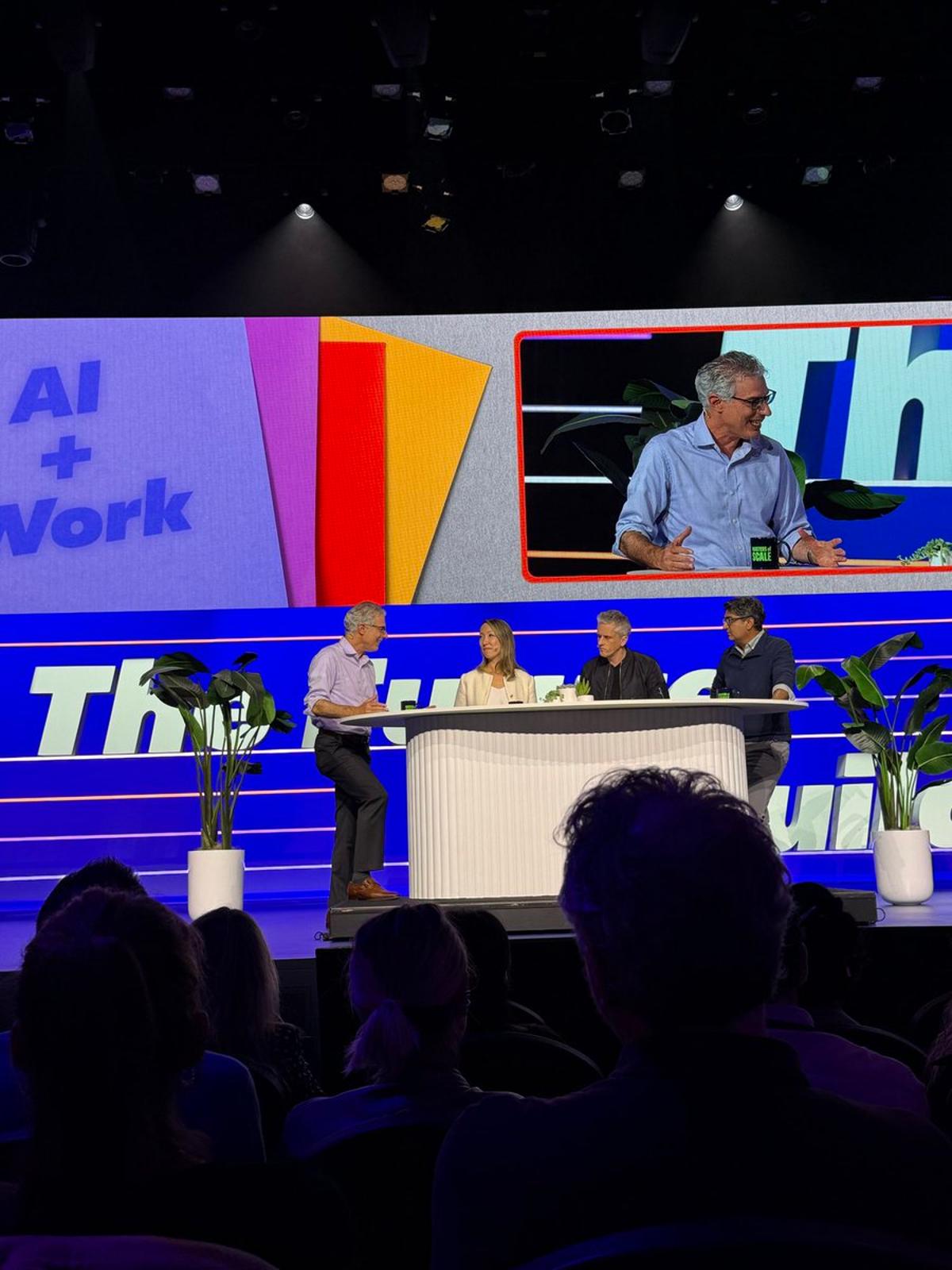
AI Fuels Imagination, Shifting Focus From Productivity to Growth
Lots of AI optimism at Masters of Scale Summit from Aneesh Raman, @levie, @clarashih 🤖 Aneesh: we were not born to be productive, we are here to imagine; we are at the beginning of the next shift Aaron: Productivity >>...

California Law Empowers AI Workers to Report Safety Risks
California is taking AI safety seriously. The Transparency in Frontier Artificial Intelligence Act (SB 53) gives employees at advanced AI companies new legal rights to report safety risks without retaliation. The act applies to companies using large-scale compute for model...

Insurers Balk at Paying Out Huge Settlements for Claims Against AI Firms
OpenAI, Anthropic consider using investor funds to settle potential lawsuits.

Specialized AI Models: Faster, Cheaper, and Profitable
FROM THE LIVE SHOW: Matt Hicks (@matthicksj), President & CEO of @RedHat, on models that are faster, cheaper, and more profitable. "When you know the thing that you want to do... If I can specialize it down to a 100 billion...
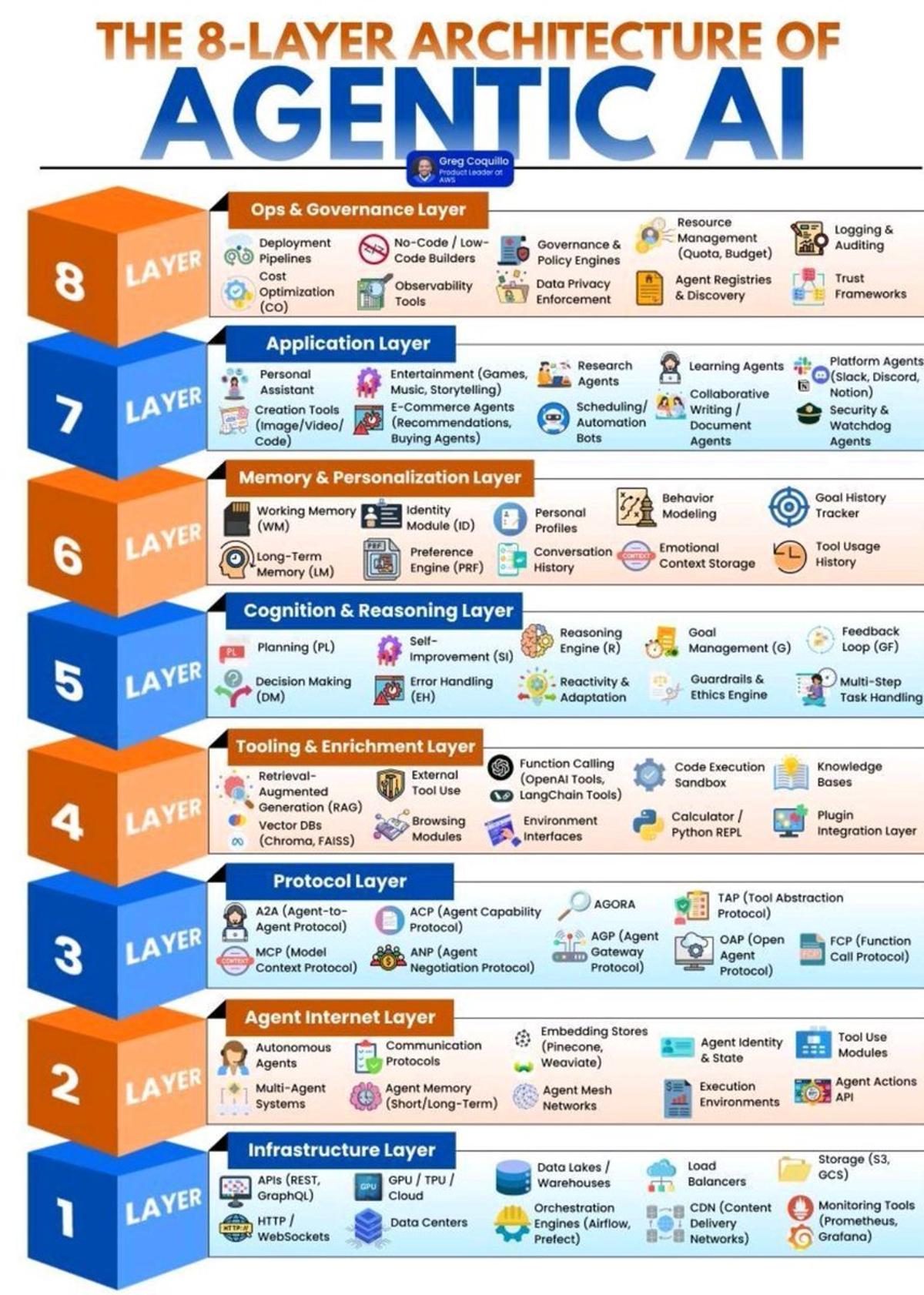
Eight‑Layer Agentic AI Enables Scalable Enterprise Intelligence
Agentic AI goes beyond single-task agents. 🚀 This 8-layer architecture shows how AI evolves from infrastructure → cognition → governance → applications. 🔑 Key: Integration of memory, reasoning, personalization & compliance = scalable, enterprise-ready AI. Do you see businesses adopting all 8 layers...

What’s the Path to AGI? A Conversation with Turing Co-Founder and CEO Jonathan Siddharth
The post serves as a curated roundup of recent Gradient Dissent podcast episodes, featuring AI founders and CEOs—from Surge AI’s Jonathan Siddharth on AGI pathways to leaders at Glean, DeepL, GitHub, and more—who share origin stories, challenges, and how their...
Show End‑to‑End AI Projects, Not Just Buzzwords
In interviews, most candidates talk about AI. But few build something that truly stands out. After reviewing hundreds of projects and interviewing candidates, here’s what actually makes the difference. 👇 1️⃣ Complete end-to-end projects A strong portfolio project isn’t just a chatbot or a...

Top SV Startups Prioritize Productive AI Agents
The best Silicon Valley startups are spending time making AI agents productive, says @levie from @Box https://t.co/WvLGcpsTrn
Graphs and ML for Robotics
The post features Abhishek Paudel, a PhD student who uses graph‑based methods to improve robotics, machine learning, and planning under uncertainty. He explains how graphs can model environments, capture spatial relationships, and serve as a unifying framework for multi‑level planning...

Google's Free AI Training Explains Generative AI Basics
Google offers various AI-powered programs, training, and tools to help advance your skills: What Generative AI is, and How it is Used 👉 https://t.co/PZ5icoD24N @Google #AI #IoT #5G https://t.co/9f7g9HJ84a
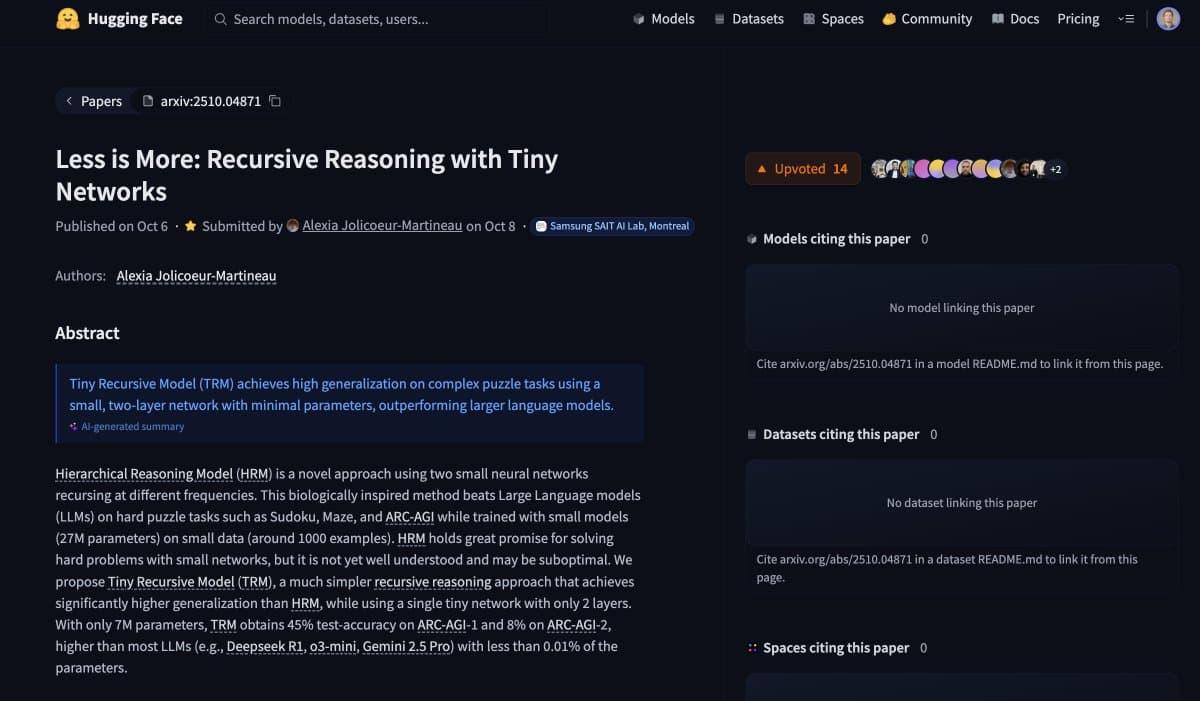
Explore a Cool New Paper and Chat with Author
Very cool paper! You can discuss with the author here: https://t.co/NnioeyTNqv https://t.co/iaLPjaSbpX

EP83: Self Driving Computers, Plus SearchGPT, & Github Copilot with Sonnet
The post introduces "This Day in AI" podcast, hosted by Michael and Chris Sharkey, two self‑described average tech enthusiasts who explore AI topics with a humorous, no‑expert approach. It highlights the show’s casual format—off‑the‑cuff hot takes, AI experiment stories, prank...

Elizabeth Kelly (AISI): How Will the US AI Safety Institute Lead the US and Globe in AI Safety?
In this episode of the #InAIWeTrust podcast, Elizabeth Kelly, director of the U.S. Artificial Intelligence Safety Institute (AISI), discusses the impact of the recent National Security Memorandum on AI and her role in shaping the Biden administration’s AI Executive Order....

The Risks of Too Much AI: Fortune’s Jeremy Kahn
In the podcast, Fortune AI editor Jeremy Kahn warns that over‑reliance on generative AI can erode critical thinking, source verification, and the deep reasoning that comes from writing, likening the risk to past tech such as PowerPoint. He cites examples...

EP82: Crazy Computer Use, Anthopic's Sonnet 3.5 (New) & the xAI Surprise
The post introduces the "Day in AI" podcast, hosted by Michael and Chris Sharkey, two self‑described average tech enthusiasts who explore AI without academic pretensions. It highlights the show’s blend of mediocre hot takes, DIY AI experiments, prank calls, and...
Vercel’s CEO & Founder Guillermo Rauch on the Impact of AI on Web Development and Front End Engineering
The post is a curated roundup of recent Gradient Dissent podcast episodes, each featuring AI‑focused founders and CEOs discussing their companies’ breakthroughs—from data labeling at Surge AI and enterprise search at Glean to neural translation at DeepL and developer tools...

AI in the Classroom with Irina Jurenka
The post catalogs Professor Hannah Fry’s DeepMind podcast series, showcasing a wide‑range of AI applications—from cybersecurity and drug design to robotics, scientific discovery, and education. In the highlighted Episode 7, Fry and research lead Irina Jurenka examine how AI tutors can...

Graph Databases and AI
The post interviews Microsoft Gray Systems Lab principal scientist Yuanyuan Tian about how graph databases uniquely model relationships, enabling complex applications such as fraud detection, security, healthcare, and supply‑chain optimization. It highlights the practical challenges of moving from SQL to...
Michael Chertoff (Chertoff Group) and Miriam Vogel (EqualAI): Is Your AI Use Violating the Law?
In a special episode of the #InAIWeTrust? podcast, EqualAI CEO Miriam Vogel and former Homeland Security Secretary Michael Chertoff discuss their co‑authored paper on the legal risks of AI deployment, highlighting current statutes, emerging liabilities, and practical guidance for lawyers, executives,...
Practical Workflow Orchestration
The post highlights the growing pain of workflow orchestration for data scientists, especially with AI-driven, agentic pipelines that can fail in unpredictable ways. It features Adam Azzam from Prefect explaining their open‑source Python library for orchestrating and monitoring pipelines, along...

Never Too Much AI: Upwork's Andrew Rabinovich
In the podcast, Upwork’s VP of AI, Andrew Rabinovich, explains how the platform is shifting from simple talent matching to an outcome‑driven model powered by AI, exemplified by the new "Uma" assistant that translates client needs into solutions by pairing...

Streamlining Your AI Tools & Subscriptions with Magai with Dustin Stout
In this episode, Kinsey Soderberg interviews Dustin Stout, CEO of Magai, about his shift from acting to entrepreneurship and the creation of Magai—a platform that consolidates multiple AI tools into a single, user‑friendly interface. Stout explains how Magai tackles the...
BI 196 Cristina Savin and Tim Vogels with Gaute Einevoll and Mikkel Lepperød
The post recaps episode BI 196 of the *Brain Inspired* podcast, where hosts Gaute Einevoll and a guest discuss Neuro‑AI with researchers Cristina Savin and Tim Vogels. Savin describes using recurrent neural networks to model learning and behavior, while Vogels explains how AI‑driven optimization is...

EP81: Can AI Make Your Life Easier? Geoffrey Hinton Is Relevant Again & State of AI Report
In this episode, Michael and Chris discuss Geoffrey Hinton’s renewed relevance after his Nobel win and explore practical AI applications using OpenAI’s Realtime API for voice‑based phone agents, including attempts to book appointments and even a quirky dog‑groomer‑for‑a‑pig call. They...
Snowflake’s CEO Sridhar Ramaswamy on 700+ LLM Enterprise Use Cases
The post is a curated roundup of recent Gradient Dissent podcast episodes where host Lukas Biewald interviews a range of AI‑focused CEOs and leaders—from Surge AI’s founder on data labeling, Glean’s CEO on enterprise search, DeepL’s chief on translation, to...
AI: Supercharging Scientific Exploration with Pushmeet Kohli
In this episode, Professor Hannah Fry interviews Pushmeet Kohli, VP of Research at Google DeepMind, to explore how AI is accelerating scientific discovery across fields such as material science, biology, weather forecasting, and mathematics. Kohli highlights concrete breakthroughs—like AI‑designed new materials,...
BI 195 Ken Harris and Andreas Tolias with Gaute Einevoll and Mikkel Lepperød
In this episode of Brain Inspired, hosts Paul and Gaute Einevoll share recordings from a Norwegian Neuro‑AI workshop, featuring conversations with neuroscientists Ken Harris and Andreas Tolias. Harris discusses his ultra‑high‑density recordings of thousands of neurons and the challenges of...

Creating Your Team of Custom GPTs with Niki Dunagin
In this episode, host Kinsey Soderberg interviews Niki Dunigan, founder of The Creative CoPilot, about her shift from real‑estate to AI coaching and how custom GPTs can empower creative entrepreneurs. Niki explains how AI can fill skill gaps, streamline branding...

EP80: Corey Hotline, OpenAI DevDay 2024 Recap, Microsoft CoPilot, ChatGPT Canvas & Ray-Band Doxing
The episode recaps OpenAI Dev Day highlights, focusing on the new Realtime API, its voice capabilities, and practical tests like the Corey Hotline, while also covering GPT‑4o image fine‑tuning, prompt caching, and model distillation techniques. It then shifts to Microsoft’s...
Dr. Brennan Spiegel (Cedars-Sinai): AI in Healthcare: Will AI Help Humans to Thrive?
In this podcast episode, Dr. Brennan Spiegel, director of health services research at Cedars‑Sinai, explains how AI can boost efficiency and patient care, highlighting his co‑founding of Xaia, an AI‑driven mental‑health tool. He emphasizes the need for human‑centered design, arguing...

Ethically Sourced Creativity: Shutterstock's Alessandra Sala
Alessandra Sala, senior director of AI at Shutterstock, explains how the company leverages its curated library of 825 million creative assets as an ethically sourced training set for AI, rewarding contributors through a royalty‑sharing model. She highlights Shutterstock’s structured acquisition process,...

36 - Adam Shai and Paul Riechers on Computational Mechanics
In this episode, host interviews Adam Shai and Paul Riechers about applying computational mechanics—a physics subfield for predicting random processes—to understand and scale transformer models. They explain how computational mechanics differs from other approaches, describe the fractal geometry of belief‑state...

New Patreon Tiers + MATS Applications
The post announces the launch of new Patreon tiers for the AI X‑risk Research Podcast, outlining the added benefits and how listeners can support the show. It also highlights the MATS (Machine Intelligence Research Institute's Alignment Training) application process, encouraging...

EP79: Fun with ChatGPT Advanced Voice Mode & Which Models Do People Actually Use?
The episode "EP79: Fun with ChatGPT Advanced Voice Mode & Which Models Do People Actually Use?" is a light‑hearted discussion on the Day in AI podcast where hosts Michael and Chris Sharkey explore ChatGPT’s new voice capabilities and debate the...
Elevating ML Infrastructure with Modal Labs CEO Erik Bernhardsson
The post curates a series of Gradient Dissent podcast episodes where host Lukas Biewald interviews a range of AI and tech leaders—from data‑labeling pioneer Surge AI to translation powerhouse DeepL, GitHub’s Copilot team, and AI‑driven cybersecurity and defense experts. Each...
Gaming, Goats & General Intelligence with Frederic Besse
The post outlines Professor Hannah Fry’s AI‑focused podcast series, highlighting episodes that explore AI’s impact on cybersecurity, world‑model generation, drug discovery, robotics, health, philosophy, and regulation, among other fields. Each episode features DeepMind experts who discuss cutting‑edge research, practical applications,...

Process Mining with LLMs
The post features David Obembe discussing his master’s thesis on creating a conversational interface for process‑mining tools using large language models (LLMs). He explains process mining fundamentals, how event logs become process maps, and how LLMs can speed up insight...

Easy Ways to Train Your AI Assistant on Your Brand (for Better Results!)
The post offers solopreneurs practical methods to train AI assistants—especially ChatGPT—to reflect their unique brand voice, covering everything from creating a brand persona to building an ultimate AI training tool. It highlights tips shared in a guest interview, including overcoming...
![AIS002:061 [Gareth Rydon] AI to Augment Not Replace, Why Taking a Human-Centric Approach Is Key](/cdn-cgi/image/width=1200,quality=75,format=auto,fit=cover/https://ep-app.cdn.evolvepreneur.net/uploads/media/share_image/0001/05/thumb_4596_share_image_extra_large.jpeg)
AIS002:061 [Gareth Rydon] AI to Augment Not Replace, Why Taking a Human-Centric Approach Is Key
In this episode of the Evolvepreneur AI Advantage Show, host Richard Wray talks with AI entrepreneur Gareth Rydon about why AI should augment, not replace, human work, stressing a human‑centric design approach. Rydon draws on his service‑design background and his...

EP78: One Week Later: O1-Mini O1-Preview & Can We Now Build Agents?
The post introduces episode EP78 of the "This Day in AI" podcast, where hosts Michael and Chris discuss the recent release of OpenAI's o1-mini and o1-preview models and debate whether these advances now enable practical AI agents. They share hands‑on...

AI Tips for SEO and Adding Personality to Your Content with Rachel Hernandez
In this episode, host Kinsey interviews Rachel Hernandez, Director of Marketing at NextNet Media, about using AI tools like ClearScope and Copymatic to boost SEO while keeping content authentic. Hernandez emphasizes the need for thorough editing, injecting personality through puns,...

EP77: OpenAI O1 & O1-Mini, The Era of AI Reasoning & Is Reflection-70B a Fraud?
The post introduces the "This Day in AI" podcast, hosted by Michael and Chris Sharkey, which offers casual, humor‑filled discussions about AI experiments, tools, and trends without pretension or expert credentials. It highlights the show’s format—weekly (or irregular) hour‑long episodes...