American AI Leadership Can Open a New Chapter for Middle East Integration
Why It Matters
U.S.‑led AI hubs give Gulf economies a high‑growth diversification path while cementing America’s strategic foothold in a geopolitically sensitive market.
Key Takeaways
- •G42's Abu Dhabi data center rivals Berkeley size, built on NVIDIA, Oracle.
- •Saudi Humain project relies on US chips from NVIDIA, Qualcomm, Amazon, Cisco.
- •Pax Silica alliance secures AI supply chain, curbing China chip dominance.
- •AI hubs aim to diversify economies; Saudi oil accounts for 40% GDP.
- •Israel's upcoming NVIDIA R&D campus becomes largest US‑led AI site abroad.
Pulse Analysis
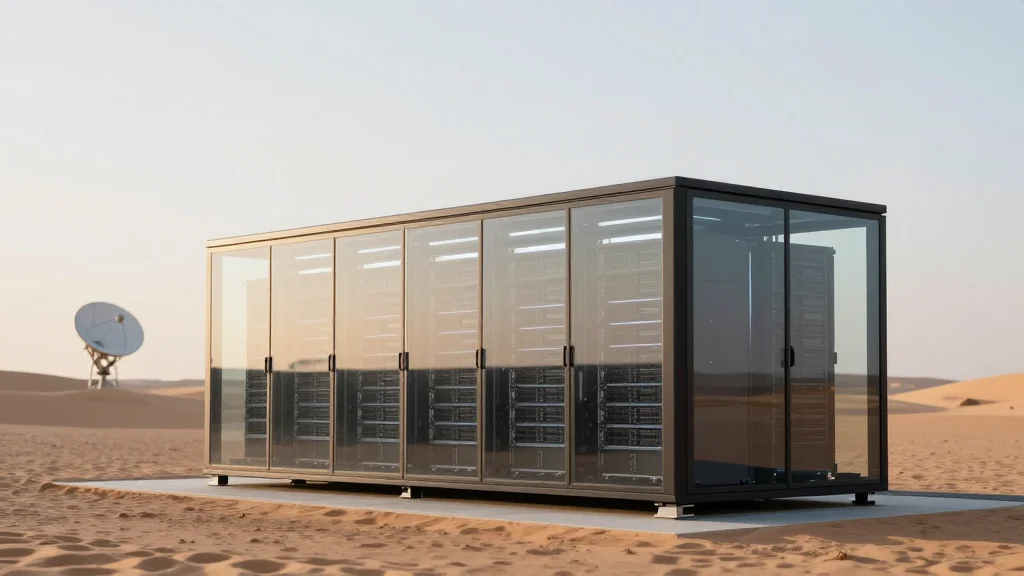
The scale of the new AI facilities signals a decisive shift in how the Middle East will consume compute power. G42’s 100,000‑cubic‑meter concrete complex in Abu Dhabi, the Saudi Humain campus, and Fort Foundry One in Israel together dwarf previous regional projects and rely almost entirely on U.S. hardware and cloud services. By anchoring these hubs with NVIDIA GPUs, Oracle cloud, Amazon Web Services, and Cisco networking, the United States is exporting the same technology stack that powers Silicon Valley’s most advanced applications, effectively turning the Gulf into an extension of its own data‑center ecosystem.
Policy has kept pace with construction. The State Department’s Pax Silica coalition, now counting Israel, the UAE, Qatar and other trusted allies, formalizes a supply‑chain pact that guarantees access to critical minerals, semiconductors and AI models. The Commerce Department’s recent approvals for advanced chip sales to the UAE and Saudi Arabia further lower barriers for local firms to embed AI in finance, healthcare and energy. This coordinated approach not only mitigates the risk of Chinese silicon dominance—China supplies roughly 80 percent of global wafer capacity—but also creates a unified market where U.S. standards become the default, encouraging cross‑border data sharing and joint research.
The economic and geopolitical implications are profound. For oil‑rich states like Saudi Arabia, AI infrastructure offers a pathway to diversify a GDP that still derives 40 percent from hydrocarbons, while Israel’s upcoming NVIDIA research campus positions it as the largest U.S.‑led AI R&D hub outside America. The technology‑driven collaboration also softens historic political frictions, providing a pragmatic bridge between former adversaries such as the UAE and Israel. Though full diplomatic normalization remains elusive, shared investment in AI could accelerate incremental cooperation, reinforcing Washington’s influence and reshaping the Middle East’s growth narrative for the next decade.
American AI leadership can open a new chapter for Middle East integration
Comments
Want to join the conversation?
Loading comments...