
K‑Water to Deploy Four‑Legged AI Robots for 61% of Plant Inspections
Korea Water Resources Corp. (K‑Water) announced a $17.3 million program to install four‑legged AI robots at four pilot water‑treatment plants, targeting 61% automation of condition inspections. The rollout, backed by state funding, will expand to 44 plants by 2030 and is projected to cut annual inspection costs by $1.5 million.

Experts Urge U.S. ‘Cyber Monroe Doctrine’ to Safeguard Digital Sovereignty
A coalition of cybersecurity scholars and former officials is urging the United States to adopt a ‘Cyber Monroe Doctrine’ that would treat foreign control of digital systems as a direct threat to national security. The proposal expands the historic Monroe...

The UK Government's Low Value Purchase System Is a Waste of Time
The UK Government’s RM6237 Low‑Value Purchase System lets public bodies buy goods under a set threshold from registered suppliers, but it forces every supplier to submit a monthly management‑information report—even when no sales occur. A Freedom of Information request revealed...

Police Widen ALPR Use to School Residency Checks, Study Finds
An Electronic Frontier Foundation audit reveals U.S. law‑enforcement agencies have dramatically expanded the use of automated license‑plate reader (ALPR) databases beyond criminal investigations, with school residency verification accounting for more than half of searches in early 2026. The trend, dubbed...

SAP and Deutsche Telekom Put Sovereign AI at the Center of German Public Administration
Germany’s federal, state and municipal administrations are adopting a joint SAP‑Deutsche Telekom sovereign AI platform, turning policy on digital sovereignty into a shared, secure cloud infrastructure. The Federal Ministry for Digitalisation awarded the consortium a contract to provide PaaS services...
OMB Update Federal Cyber Logging Tactics
The Office of Management and Budget issued a new memorandum that rescinds the Biden‑era cyber‑logging directive and adopts a risk‑based, priority‑driven logging framework for federal agencies. The change aims to curb the costly, unwieldy data‑retention requirements that have hampered operational...
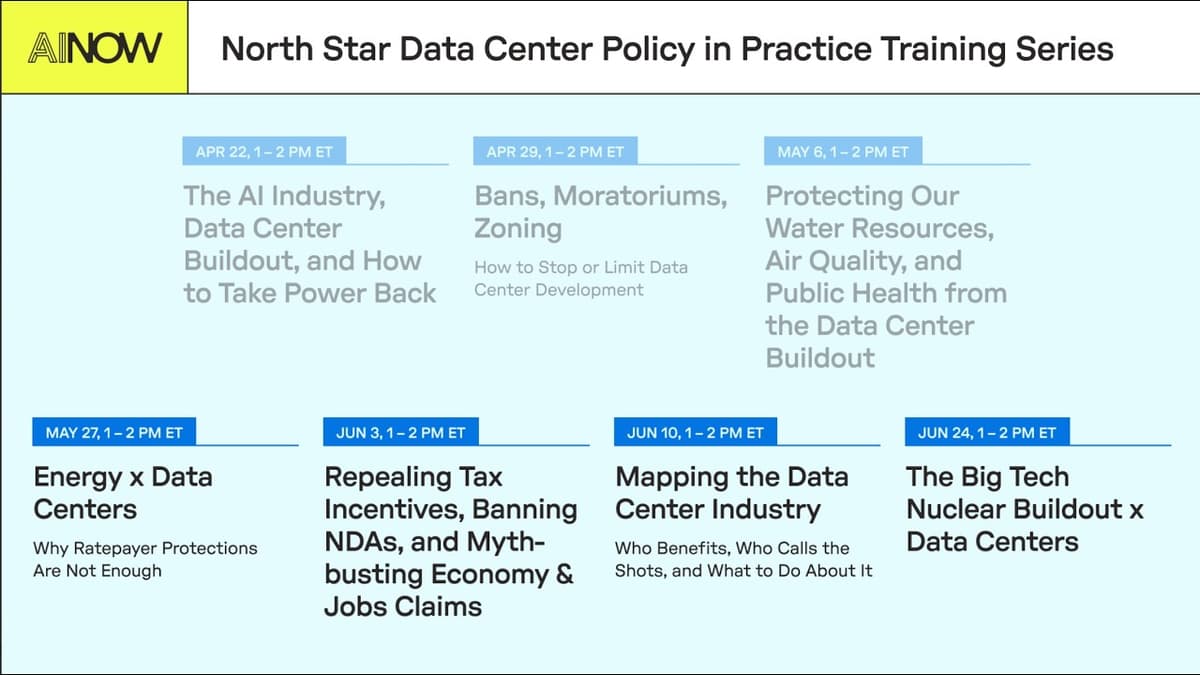
North Star Data Center Policy in Practice Spotlight: Energy & Ratepayer Protections
Speakers outlined a suite of local, state and federal policies to constrain data center energy demand, protect ratepayers, and accelerate additional renewable capacity. Local actions include binding zoning and permitting conditions, public monthly energy reporting, prohibitions or strict scrutiny of...

Satellite Connectivity Is the Backbone for Emergency Preparedness Response
Hurricane Laura’s devastation in August 2020 exposed a communications blackout that hampered rescue efforts. ST Engineering iDirect highlighted how satellite‑based, cloud‑native networks restored voice, data and video links for the National Guard and local agencies within hours. Modern non‑terrestrial systems...

Mumbai Prepares AI Platform CIVIT TWIN to Automate Building Approvals
Mumbai's municipal administration is gearing up to launch CIVIT TWIN, an artificial‑intelligence driven platform that will automate large portions of the city’s construction‑permit process. The system promises to evaluate proposals against thousands of regulatory parameters, reducing paperwork and speeding approvals...

Noida to Launch 100 E-Buses From June 15 to Boost Airport and City Connectivity
Noida Authority and UPSRTC will launch a fleet of 100 electric buses on June 15, the same day the city’s new international airport begins commercial flights. The service includes ten double‑deckers, five routes covering 200 km daily, and a fare cap...

Ghana Rolls Out Biometric Digital Visas as Part of Travel Modernization Push
Ghana has launched a biometric digital visa platform that offers free visas to African passport holders and charges $260 for non‑African applicants. The system, built through a public‑private partnership, processes applications online within 48 hours and integrates with chip‑enabled passports...

Liberia Restructures National ID Deal with OSD, Plans Issuance Restart
Liberia has reached a concession agreement with Austrian firm OSD International to restart its stalled national ID card program. The public‑private partnership will have OSD finance enrollment and issuance infrastructure, operate the system for a defined period, and then hand...

‘Deep Pockets’ Vs. ‘Long Pockets’ in DPI: What Instant Payments and Open Finance Tell Us About Sustainable Funding for Digital...
Digital public infrastructure (DPI) such as instant payment systems and open finance does not require massive upfront capital, but it does need sustained, long‑term funding. The authors argue that governance—pricing rules, participation mandates, and ownership—determines how ongoing costs are allocated...

USDOT, FAA Invest $835.8 Million for Air Traffic Control Facility Upgrades and Replacements Across U.S.
The U.S. Department of Transportation and the Federal Aviation Administration announced a combined investment of $835.8 million to modernize the nation’s air traffic control infrastructure. Over $750 million will replace eight aging towers and TRACON facilities with state‑of‑the‑art structures, while the FAA’s...

Putting Customers First: DVLA and CustomerFirst Partnering to Improve Drivers Medical Service
DVLA and CustomerFirst have created a NewCo team to overhaul the Drivers Medical service, which handles medical notifications for licensing decisions. The service is under pressure, expecting about 900,000 notifications this financial year and regularly exceeding its 50‑day decision target....

GDS Leader Picks AI Agents as Area with ‘Biggest Work to Do – but Most Potential’
The Government Digital Service (GDS) announced that artificial‑intelligence agents represent the biggest work‑to‑do and the greatest upside for future public‑service delivery. While GDS has successfully digitised the front‑end of GOV.UK, it acknowledges that current user journeys remain siloed with many...

National Cyber Shield Could Be Ready in Five Years
The UK’s signals intelligence agency GCHQ announced a five‑year plan to deploy an AI‑driven "national cyber shield" that will automatically detect and remediate threats to critical infrastructure such as energy, water, health, transport and finance. The system will embed agentic...