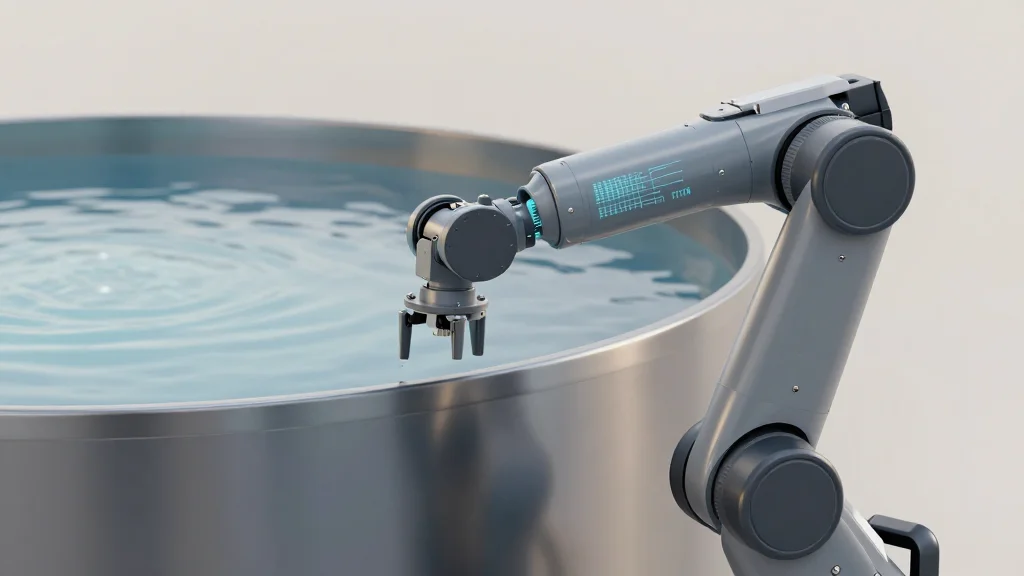
K‑Water to Deploy Four‑Legged AI Robots for 61% of Plant Inspections

Why It Matters
The deployment marks one of the most ambitious applications of autonomous robotics in a public‑utility setting, signaling that AI can move beyond data analytics to direct physical operations. For the management sector, the project illustrates how technology can reshape workforce planning, safety protocols, and cost structures in traditionally labor‑intensive environments. Moreover, K‑Water’s intention to package the technology for export could create a new competitive niche for Korean firms in the global water‑management market. If successful, the model could be replicated across other utility domains—such as dam monitoring, sewage treatment, and even power generation—accelerating the broader shift toward autonomous infrastructure management. The initiative also raises governance questions about data ownership, vendor independence, and the regulatory oversight of AI‑driven safety systems.
Key Takeaways
- •K‑Water will spend 26 billion won ($17.3 M) on four‑legged AI robots for water‑plant inspections.
- •Robots are slated to handle 61% of condition‑inspection tasks across 44 metropolitan plants by 2030.
- •Annual cost savings are projected at 2.25 billion won ($1.5 M) once the system is fully operational.
- •The rollout includes 10 plants in 2027, 11 in 2028, nine in 2029 and 10 in 2030.
- •K‑Water aims to export its AI‑based plant‑operation platform to overseas water‑management markets.
Pulse Analysis
K‑Water’s robotisation plan is a textbook case of strategic automation in a regulated, public‑service environment. By earmarking a modest $17.3 million budget, the agency is betting that the marginal cost of deploying AI‑enabled hardware will be offset by operational efficiencies and reduced safety incidents. Historically, utilities have been slow to adopt robotics due to high upfront costs and stringent safety standards. K‑Water’s hybrid funding model—combining state subsidies with internal capital—mitigates financial risk and signals governmental endorsement, which could encourage other public agencies to follow suit.
From a competitive standpoint, the move positions South Korea as a potential exporter of turnkey autonomous‑plant solutions. The agency’s plan to develop an independent control system sidesteps vendor lock‑in, a pain point for many utilities that have struggled with proprietary platforms. This could lower barriers for international customers wary of long‑term licensing fees and data‑privacy concerns. However, the success of the pilot will hinge on the robots’ reliability in harsh, wet environments and the robustness of the AI algorithms that detect equipment anomalies.
Looking ahead, the key metric will be whether the 61% automation target translates into measurable safety improvements and cost reductions. If K‑Water can demonstrate tangible benefits, it may catalyze a wave of similar deployments across water, energy, and waste‑management sectors, accelerating the broader industry transition toward fully autonomous infrastructure.
K‑Water to Deploy Four‑Legged AI Robots for 61% of Plant Inspections
Comments
Want to join the conversation?
Loading comments...