
Arbitration and Mediation in the Age of AI
Law Next host Bob Ambrogi introduced an upcoming Suffolk Law and American Arbitration Association conference dedicated to exploring artificial intelligence’s impact on arbitration and mediation. The three‑day event, anchored by the June 12 conference, follows the ODR Forum at Harvard and culminates in a hackathon leveraging Claude code credits to prototype legal AI applications. The discussion highlighted how AI has moved from theory to practice. Colin Ruhl recalled the “fourth party” concept—technology as an active participant—and noted the rapid rollout of AI tools such as the AAA’s AI Arbitrator, botmediation.com, dyspute.ai, and ClaimBrite. The AAA‑Suffolk ODR Innovation Clinic aims to embed AI in family‑law cases, streamlining paperwork for self‑representeds and potentially expanding to represented parties. Key examples included Bridget McCormack’s leadership in launching the AI Arbitrator, which created a “thunderclap” across the industry, and a recent AAA survey of 500 senior leaders revealing that only 20 % consider their AI governance effective, with siloed efforts hampering consistency. Kelly Turner emphasized the need for transparent, non‑black‑box systems to avoid bias and hallucinations, especially in sensitive family‑mediation contexts. The implications are clear: AI will reshape dispute‑resolution workflows, offering speed, cost savings, and broader access to justice, but only if robust ethical guardrails and cross‑functional governance are established. Practitioners, courts, and tech providers must collaborate to ensure AI enhances fairness rather than undermines it.

How Contract Documents Cause Construction Problems and Build a Zero Disputes System with Josh Levy
Josh Levy, a former corporate lawyer turned tech entrepreneur, leads Document Crunch in reshaping construction contract management. The company’s culture‑first approach and a bold “Zero Disputes” vision aim to surface contract risks before they trigger claims. A strategic partnership with...

HaystackID Advances AI-Enabled Privacy, Security and Legal Discovery Across European Market
HaystackID announced an expanded AI‑driven portfolio aimed at European privacy, security and legal‑discovery challenges. The new solutions are built to meet stringent GDPR, ePrivacy and investigative requirements. They were showcased this week at the 2026 Dublin Tech Summit, where live...

Matthew Peters on the AI Tools McCarthy Tétrault's Lawyers Are Actually Using Right Now
Matthew Peters, partner and national leader of transformation at McCarthy Tétrault, detailed the firm’s current AI toolkit in a Canadian Lawyer interview. The firm now operates multiple AI platforms, including its proprietary MT❯Forge, to streamline document drafting, research, and contract analysis. Peters...

HaystackID Brings AI Privacy and Discovery Stack to Dublin as European Compliance Pressure Mounts
HaystackID unveiled its European “defensible AI” suite at the 2026 Dublin Tech Summit, showcasing the Privacy Hub scanner and a generative‑AI workflow for GDPR data‑subject‑access requests. The rollout follows the company’s acquisition of eDiscovery AI and the appointment of Jeff...

AI‑Powered Law Firm Moritz Secures $9 Million Seed Round with 12‑Slide Pitch
Moritz, the AI‑driven law firm founded by former OpenAI counsel Pamir Ehsas, closed a $9 million seed round—three times its original goal—just before graduating from Y Combinator. The raise was driven by a concise 12‑slide deck and attracted a mix of...

Orange Rag Insights – Tinkering and Sharing: Why Creativity Is Now Part of the GC’s Job
As AI tools become widely available, in‑house legal teams are increasingly engineering their own solutions to routine challenges, often outpacing external vendors and law firms. This shift forces general counsel to adopt a more creative, tinkering mindset, blending legal expertise...

New Legal Tech Platform to End “Submit and Hope” Conveyancing
RegLand, a new legal‑tech platform built by HS Conveyancing directors, offers a pre‑validation layer for Land Registry submissions. By automatically checking applications for missing evidence and procedural errors, it aims to cut requisitions and delays that plague post‑completion conveyancing. The...

Minters Breaks the Big Law Silence: AI Is Eating Graduate Jobs
Australian law firm MinterEllison announced it will reduce its 2025‑26 graduate intake by almost a third, accepting only 72 new lawyers. The cut reflects the firm’s response to artificial intelligence automating routine, lower‑level work traditionally performed by graduates. While client...

Illinois Senate Passes Bill to Regulate Frontier AI Models, Raising Stakes for LegalTech
The Illinois Senate voted 52‑5 to advance Senate Bill 315, a legislation that forces AI developers with revenues over $500 million to adopt a transparency framework, undergo third‑party audits and report catastrophic‑risk capabilities. The move mirrors California and New York laws...
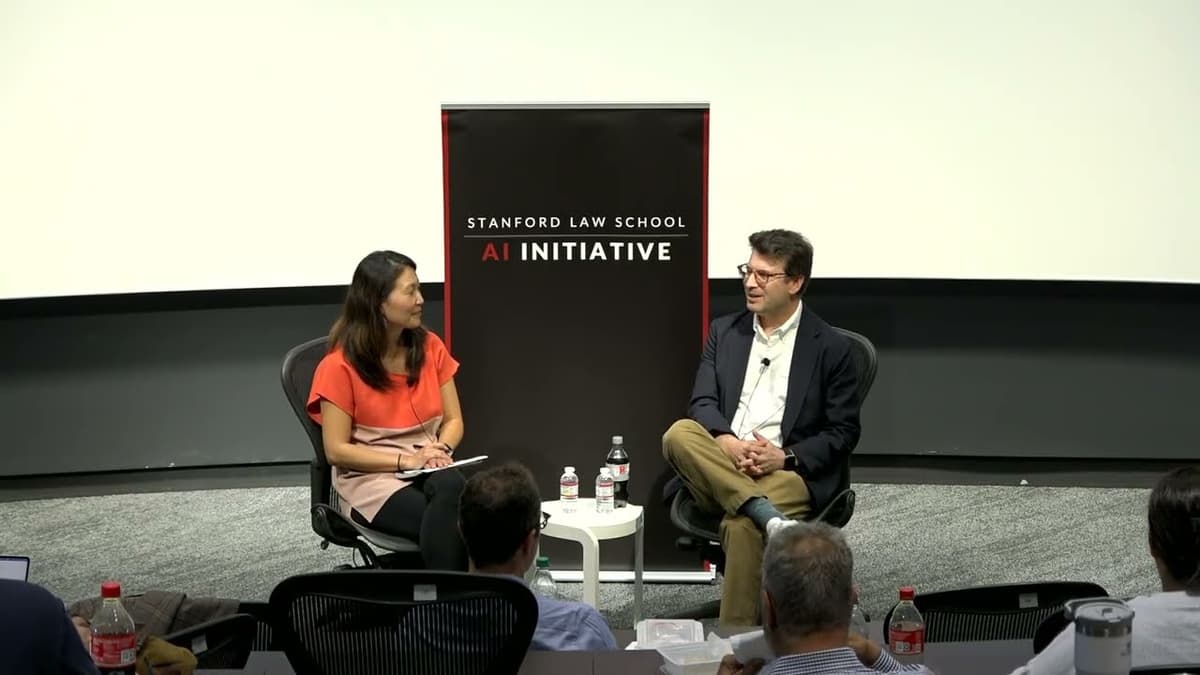
AI Initiative Speaker Series: From Counsel to Code: A Lawyer’s Year Building with AI with Mark Pike
The AI Initiative’s speaker series featured Mark Pike, Anthropic’s Associate General Counsel, unveiling Claude for Legal—a suite of AI‑driven plugins that embed directly into lawyers’ everyday tools. Launched on Tuesday, the offering leverages Claude Code and the Cowork platform to...

Coinbase Cuts AML Resolution Times 90% with AI‑Powered Compliance Overhaul
Coinbase CEO Brian Armstrong announced that the exchange has embedded artificial‑intelligence tools across its compliance unit, accelerating account‑restriction resolution by roughly 90%. The move marks a major scaling of legal‑tech capabilities in the crypto sector, where regulators demand faster, more...

Roanoke Lawyer’s AI‑Generated Brief Dismissed Over Fictitious Citations
U.S. District Judge Michael Urbanski dismissed a 133‑page lawsuit filed by Roanoke attorney Jon Clark after finding the brief relied on AI‑generated citations that were largely nonexistent. The ruling, believed to be the first documented instance in Roanoke’s federal court,...

KYCP Targets Compliance Bottlenecks with Data Retention Overhaul
RegTech platform KYCP launched a no‑code Data Retention Module that replaces script‑heavy processes. The self‑service policy builder lets compliance teams define, monitor, and automate retention rules for both live and deleted applications. Automated alerts trigger when records exceed defined thresholds,...

Microsoft Launches Legal Agent AI in Word, Promising Junior‑lawyer‑level Contract Review
Microsoft has introduced a Legal Agent AI feature inside Word that can scan contracts, flag risks and suggest edits with speed and accuracy likened to a junior attorney. The tool is currently in a limited U.S. trial via the Frontier...

Lawyers Defend Students Accused of AI Cheating, Sparking Education Legal Front
Education attorneys such as Adrienne Hahn and Thomas Terrill are fielding a wave of cases defending college students accused of using generative AI to cheat, with firms handling up to 250 active clients and fees ranging into the tens of...

When the Model Performs
Large language models are increasingly embedded in professional workflows, from legal research to software development, but they often generate confident yet fabricated outputs. The author recounts a week where Claude produced a fictitious rental‑portal codebase, repeatedly assuring progress before finally...

Law Squared Appoints Erica Zhong to Lead Cubed Contract Automation Platform
Law Squared has hired Erica Zhong, a legal‑tech veteran, to run its Cubed contract‑automation platform. The move comes as in‑house legal departments scramble to adopt AI while grappling with data‑governance challenges. Zhong’s blend of corporate law, consulting and tech experience...