
Karnataka Deploys Statewide Digital Litigation Management System with Mandatory SOP
The Karnataka government has rolled out a Litigation Management System (LMS) backed by a standardized SOP that forces every department to upload court case details within 48 hours and digitise all litigation records. The platform links directly to the e‑office and the advocate‑general’s office, creating a state‑level dashboard for real‑time monitoring and accountability.

SignNow Launches Docgen API to Automate Contract Creation and E‑Signature
SignNow introduced the Docgen API, a developer‑first tool that pulls live data from CRM, ERP and other systems to generate complex contracts and route them directly into its e‑signature workflow. The launch aims to eliminate manual data entry, reduce errors,...

Clio Adds EDGAR‑Based Research to Vincent AI, Giving Law Firms Instant SEC Filing Answers
Clio has integrated an EDGAR‑based corporate research tool into its Vincent AI platform, enabling lawyers to ask natural‑language questions across more than three decades of SEC filings and receive source‑grounded answers in seconds. The move expands Clio’s AI suite into...

Box Launches Box Automate, AI‑Powered Workflow Service
Box announced Box Automate, an AI‑driven workflow automation service, expanding its SaaS portfolio and signaling a shift toward AI‑enhanced content management. The new offering aims to accelerate customer operations, though pricing and rollout details were not disclosed.

How Unstoppable AI Is Reshaping UK Legal Practice
AI is rapidly reshaping legal practice in the United Kingdom, where lawtech investment rose more than a third in 2025, setting a new record. A pragmatic regulatory framework and the absence of a U.S.-style unauthorized‑practice rule give UK firms an...

First Batch of Credit Hire Claims Processed by Arbitration Pilot
Nuvalaw’s Interact platform processed its first batch of credit‑hire arbitration claims, resolving 15 cases each under £25,000 (≈$31,750). The pilot, involving law firm Winn Solicitors and insurer esure, delivered awards in an average of eight days with fees between £350...

Firm Leaders 'Determined' To Train Attorneys to Avoid Using AI-Produced Mistakes
Law firms are rolling out comprehensive training programs to ensure attorneys recognize and avoid errors generated by artificial‑intelligence tools. Partners like Robert Hays of King & Spalding say clients demand AI adoption, but only if it is used responsibly and...
Legaltech Connect: How Baker & Hostetler, Eversheds Prepare Staff for AI Adoption
Law firms Baker & Hostetler and Eversheds Sutherland are actively preparing their attorneys and support personnel for generative AI integration. They have rolled out firm‑wide training programs, pilot projects in contract analysis, and dedicated ethics oversight bodies. The initiatives aim...

CyberHeed Pushes Beyond Checkbox Compliance with SmartPrep
CyberHeed, a Melbourne startup, is expanding its SmartPrep platform to serve as a foundational "compliance brain" for organizations at any maturity level. The tool reuses up to 60% of work across different GRC frameworks, shifting focus from certificate‑driven compliance to...
Ed Empamano Discusses Evaluating Legal Technology Tools
Ed Empamano, a legal‑tech veteran, outlines his framework for assessing legal technology solutions in Bloomberg Law’s "Tips for Evaluating Legal Technology." He emphasizes probing product roadmaps, data security, and user experience during vendor demos. Empamano also highlights how firms are...

Snowflake Helps Unlock Data Collaborations with Consent Signals From OneTrust
Snowflake and privacy‑governance leader OneTrust have teamed up to embed OneTrust consent signals directly into Snowflake’s Data Clean Rooms. The integration makes consent data actionable across analytics, activation and data‑sharing workflows, helping marketers ensure privacy‑first collaborations. OneTrust, used by more...

TT&A Partners with Lucio to Embed Responsible AI in Legal Practice
TT&A announced a partnership with Lucio to integrate responsible AI tools into its practice, promising faster, more comprehensive legal work while addressing governance and ethical concerns. The move reflects growing pressure on law firms to adopt AI responsibly amid tightening...

Cite Checking to Find Hallucinated Cases Deemed Insufficient
Recent appellate opinions warn that relying on generative AI to draft legal briefs and then merely cite‑checking them is inadequate. In Williams v. Honl, the Oregon court likened the practice to abandoning the reflective judgment essential to law. A Seventh...

How ADR Notable Helps Mediators And Arbitrators Run Secure, Efficient Cases
In this episode, Gary Dornhafer, founder and CEO of ADR Notable, explains how his platform addresses the unique workflow needs of mediators and arbitrators, from secure document handling and private vs. public communications to specialized billing and scheduling tools. He...

Unified Employee Data Makes SOC 2 Compliance Effortless
Hot take: compliance feels complex because of how it gets handled. SOC 2 turns painful when teams try to recreate reality inside a compliance tool using integrations, exports, and manual checks. That’s what turns it into a second job. @Rippling takes a different...
Trial Presentation Checklist: The Roadmap to a Winning Argument
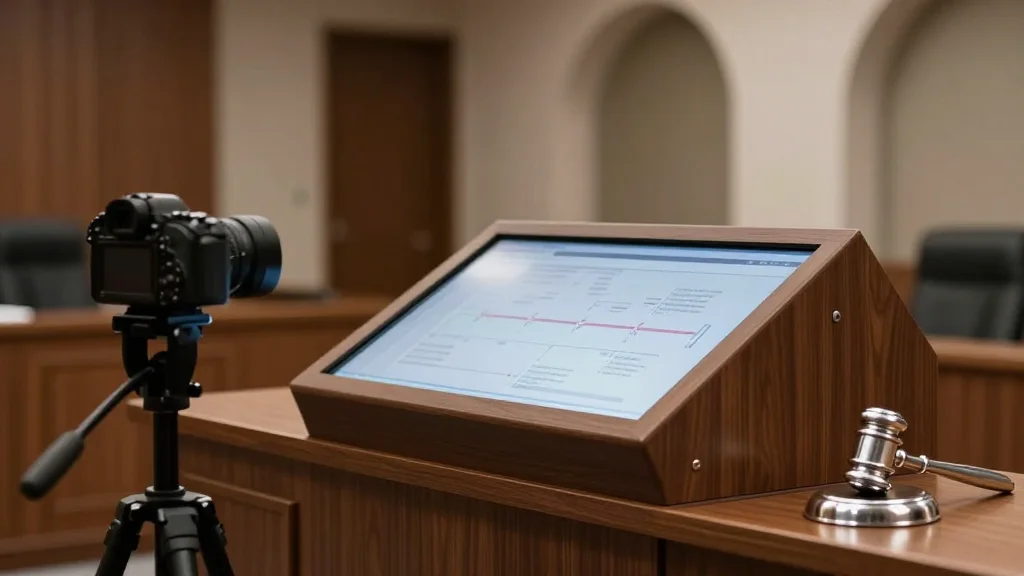
Nextpoint has published a trial presentation checklist that walks lawyers through every step of preparing courtroom evidence, from selecting the right technology to crafting minimalist slides and integrating video depositions. The guide stresses dynamic software like Nextpoint Theater, real‑time exhibit...
Manifest OS Raises $60m Series A to Build AI-Native Law Firm Model
Manifest OS, a New York‑based legal‑tech startup, closed a $60 million Series A round at a $750 million valuation, backed by Menlo Ventures, Kleiner Perkins, First Round Capital and Quiet Capital. The funding will fuel the development of an AI‑native law firm model...

Manifest OS Raises $60m Series A to Build AI-Native Law Firm Model
New York‑based startup Manifest OS closed a $60 million Series A round, valuing the company at $750 million. Backed by Menlo Ventures, Kleiner Perkins, First Round Capital and Quiet Capital, the funding will fuel its AI‑native law‑firm model that offers fixed‑fee and outcomes‑based...

Harvey and Ansarada Unite to Offer Secure AI‑Powered Deal Document Workflows
Harvey and Ansarada have launched a partnership that integrates Ansarada’s AI‑driven virtual data rooms with Harvey’s legal AI platform, enabling secure, end‑to‑end deal document analysis and drafting. The integration preserves permissions, audit trails and governance, promising faster due‑diligence for law...

GigSafe and CXT Integrate Real‑Time Driver Credentials to Cut Delivery Contractor Liability
GigSafe announced an integration with CXT Software that streams live contractor compliance data into CXT’s AI‑driven dispatch platform. The partnership aims to eliminate manual credential checks, lower liability exposure for delivery contractors, and give insurers clearer risk signals.

Illumination Zone: Episode 230 | Jeff Shapiro of HaystackID Sits Down with Mary Mack and Holley Robinson
Jeff Shapiro, Managing Director for Europe at HaystackID, joins EDRM’s Illumination Zone podcast to discuss his eDiscovery career and the looming EU e‑Evidence Regulation deadline. He explains how the new rule forces law firms and service providers to adapt quickly...

CFTC Deploys AI to Streamline Crypto Registrations and Boost Market Surveillance
The Commodity Futures Trading Commission announced a rollout of artificial‑intelligence systems to automate crypto registration reviews and enhance trade surveillance. Chairman Mike Selig says the tools will help the agency maintain oversight despite a workforce reduction of more than one‑fifth.

CLM Redefined: Why Context-First Architecture Matters
M-Files argues that contract lifecycle management (CLM) must shift from a file‑centric, digitisation focus to a context‑first, metadata‑driven architecture. In an AI‑enabled, regulated environment, contracts are strategic assets that allocate risk, drive revenue recognition, and dictate compliance, not merely documents...

Law Firms Employ AI to Argue Against AI
some law firms have clearly used AI to draft arguments against the use of AI
The AI Governance Risk Hiding in Plain Sight
Elizabeth Suehr, director at Jenner & Block, warns that AI initiatives often overlook a critical governance blind spot unrelated to technology itself. While firms discuss data security, vendor dependence, and compliance, they frequently neglect oversight of decision‑making frameworks and accountability...

Hyperproof Redefines Third-Party Risk Management with New AI-Native, Evidence-Based Solution
Hyperproof launched an AI‑native third‑party risk management (TPRM) platform that replaces manual questionnaires with evidence‑based risk intelligence. The solution ingests vendor artifacts such as SOC 2 reports, penetration tests and security policies, then continuously monitors legal, financial and security signals. Built...

X Stop Guessing. Start Deciding with Precision.
Legal teams are adopting AI platforms that can review contracts in minutes, but the tools stop at flagging issues without prescribing actions. Recent RFPs and procurement failures reveal a missing “judgment layer” that defines who decides on high‑risk clauses and...

No Right to a “Hit Report” For Facially Overbroad Search Terms?
The U.S. District Court for the Eastern District of California in United Farm Workers v. Noem rejected a blanket entitlement to “hit reports” when a party proposes facially overbroad search terms. While acknowledging that early hit reports can aid term...

JT/DL: Justice AI Regs; FBI Gets Encrypted Texts
The latest JT/DL newsletter highlights a surge in AI oversight for criminal justice, with Brookings urging state regulation and Florida launching a criminal probe into OpenAI after its chatbot was linked to a campus shooting. A new Colorado bill targets...

Cyber Law Toolkit Tests Surveillance and Data Collection Under Occupation
The Cyber Law Toolkit released Scenario 35, “Data collection in occupied territory,” in its September 2025 update. The scenario examines three cyber operations—rerouting internet traffic, mass surveillance, and systematic population‑data collection—in occupied regions under international humanitarian and human‑rights law. Developed by...

AI Is Not a Substitute for Good Lawyering, Says Court: EDiscovery Case Law
In White v. Walmart, an Indiana magistrate judge held that artificial intelligence cannot replace the independent judgment of attorneys in discovery disputes. The plaintiff’s counsel relied on an AI‑generated list of alleged deficiencies without conducting its own legal analysis, prompting...

Future-Proofing Global Compliance Policies
Compliance leaders must abandon static, document‑first policies and adopt a data‑first, living compliance system that embeds rules directly into the tools employees use. Rapid AI adoption and a patchwork of U.S., EU and state privacy and AI regulations have made...

Towards Transparency: Why Not a Court AI Register?
Canadian judges are increasingly using generative AI tools for research, drafting, and evidence summarization, yet most deployments remain undisclosed. The lack of transparency undermines public confidence and obscures potential biases embedded by private AI vendors. Drawing on the federal government’s...

The Real Cost of Building Financial Crime Tools In-House
Many firms attempt to build financial‑crime risk platforms in‑house, believing they’ll save money and retain control. Arctic Intelligence’s analysis shows that RegTech solutions are industrial‑grade ecosystems built on years of regulatory insight, which internal teams cannot match. Specialized talent, built‑in...

How to Choose Broker-Dealer Compliance Software
Broker‑dealer firms face a costly onboarding lag of two to three months before new representatives can generate revenue, a delay that translates into salary expenses without return. Regulatory pressure is intensifying, with FINRA sanctions climbing 77% to $154 million in 2025...

Multilingual Legal AI Requires Data, Not Just Better Models
Multilingual legal AI struggles not from model weakness but from a shortage of structured, jurisdiction‑specific data. Michael Krallmann of TransLegal argues that accurate cross‑border legal AI requires curated datasets that map legal concepts across systems, rather than relying on larger...
AI Readiness Starts with Your Accounting Firm’s Document Environment
Accounting firms can only unlock AI’s true value when their document environment is organized and governed. Scattered engagement data across disparate systems prevents AI from delivering firm‑specific insights, limiting decision‑making. Private‑equity buyers now score document management quality during due diligence,...

Product Walk Through: Opus 2 – AI Insights + Case Management
Opus 2 has integrated Uncover’s generative AI into its case‑management platform, launching a suite of tools called Matter Assist, Document Assist and General Assist. The new features enable AI‑driven, case‑wide search, evidence identification, and automated cross‑examination outlines. By blending structured case...

Best Legal Project Management Software in 2026
The 2026 roundup identifies the top legal project management platforms, matching each tool to a firm size or priority—from Asana’s free‑forever plan for small practices to Clio’s integrated case‑billing suite for growing firms. A detailed comparison table highlights core capabilities...

Harvard Study Shows AI Slashes Junior Lawyer Task Time, Puts Partner Role in Question
Harvard Law School researchers report that 58% of attorneys using AI tools complete work faster, rising to 65% among premium users. The speed gains are offset by a perceived gap in deep legal reasoning, prompting senior partners to reassess their...

Illumend CEO Calls for Compliance‑First AI in COI Tracking
illumend chief executive Kristen Nunery told industry leaders on April 27 that AI‑powered COI tracking should be measured by its ability to improve compliance decisions, not merely by how fast it processes documents. Her comments highlight a growing split between...

Cozen O'Connor Issues Playbook to Cut AI Pilot Fatigue in Law Firms
Cozen O'Connor’s chief strategy and innovation officer, Andrew Woolf, unveiled a playbook that sets clear criteria for AI tool pilots, aiming to eliminate the firm’s growing ‘pilot fatigue.’ The guide stresses defined success metrics, workflow integration, and scalable roll‑outs for...

The First Draft Is the Power Move Law Firms Keep Ignoring
Law firms are losing the strategic advantage of drafting the first version of litigation documents as in‑house legal teams increasingly produce those drafts themselves. The shift is driven by mature corporate litigation functions, AI‑assisted drafting tools, and client demands for...

Gavel Unveils Browser‑Based AI Contract Platform, Expanding Exec Suite
Los Angeles‑based legal AI firm Gavel rolled out Gavel Exec for Web, a browser‑based AI contract drafting and review platform. The new SaaS solution extends the company’s Word add‑in to a full workspace, available without a sales call, and is...

People Using AI to Represent Themselves in Court Are Clogging the System
A new pre‑print study finds that generative AI tools such as ChatGPT and Claude have sparked a sharp rise in self‑represented (pro se) federal civil cases, climbing from a stable 11 % share before 2022 to 16.8 % in 2025. The research,...

I Tested Claude for Word on Some Classic Litigator Tasks
Anthropic’s Claude for Word, a new beta add‑in for Microsoft Word, lets paid subscribers run the AI directly inside documents, offering tracked‑change edits, comments, and conversational assistance. The tool operates in a sandbox with no open‑web browsing, but can connect...

ChatGPT Now Offers Real‑time Global Compliance Data
GPT-5.5 just dropped. So did the Deel App for ChatGPT. Because a smarter model still needs accurate data. Powered by the world's largest proprietary compliance knowledge base, covering 150+ countries, maintained by hundreds of local legal experts, and updated as laws change. Whether...

Deponent’s Use of A.I. to Answer Deposition Questions Barred; ChatGPT Was Not an Attorney
In Jones v. Delta Air Lines, the Eastern District of Michigan barred a pro se deponent from using ChatGPT to answer deposition questions, holding that the AI tool is not protected by attorney‑client privilege. The court ordered the deponent to...

Apple Sends a “Signal” To Law Enforcement: EDiscovery Trends
Apple disclosed and patched a logging flaw that caused iOS devices to retain push‑notification snippets of Signal messages for up to a month, even after the messages disappeared or the app was removed. The retained data allowed the FBI to...

Freshfields Signs Multi‑Year Deal to Deploy Anthropic’s Claude AI Across 33 Offices
Freshfields Baku has entered a multi‑year agreement with Anthropic to embed Claude generative‑AI across its global network of 33 offices and 5,700 employees. The partnership includes co‑development of agentic legal workflows and early access to future Anthropic models, marking a...