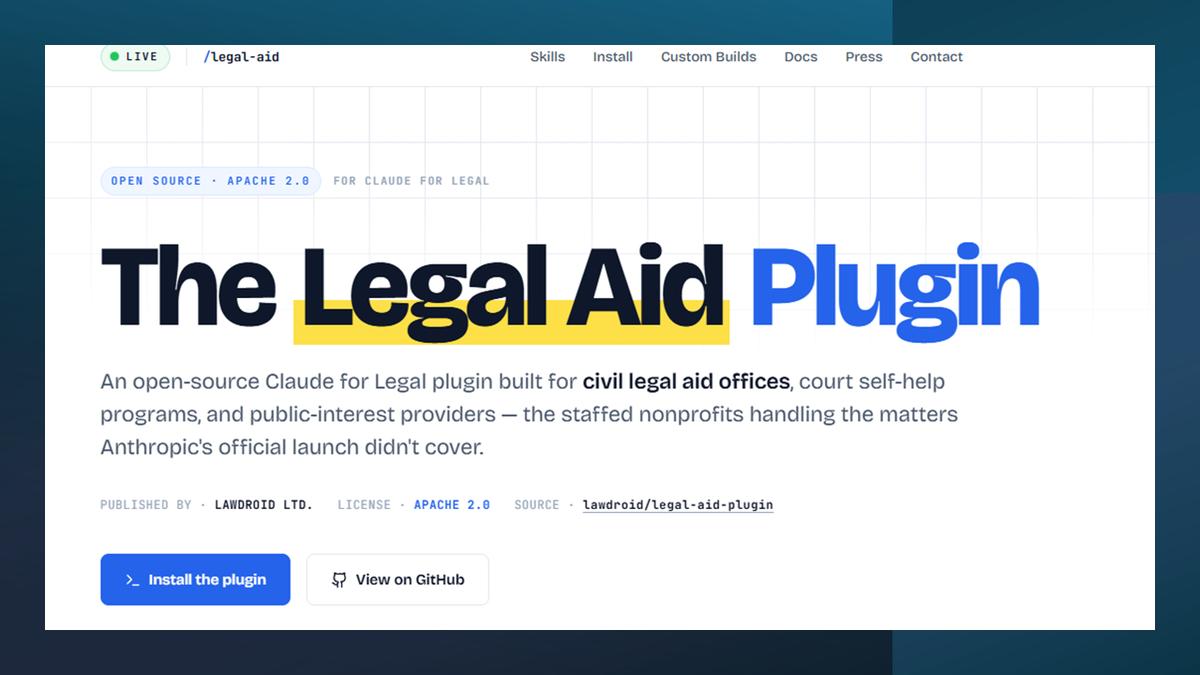
The Claude-Pocalypse Bypassed Legal Aid; LawDroid’s New Plugin Remedies That, with 15 Targeted Skills
Anthropic’s recent rollout of 12 legal‑specific Claude plugins ignored the needs of civil legal‑aid providers. In response, LawDroid launched a free, open‑source Legal Aid Plugin built for low‑income service organizations, offering 15 AI‑driven skills such as intake screening, document drafting, and deadline tracking. The plugin integrates with tools like CourtListener, Slack, and Google Drive, and leverages Anthropic’s nonprofit pricing for Claude subscriptions. A live webinar on June 1 will demonstrate installation and real‑world use cases for legal‑aid teams.

AI Will Shift Legal Billing From Hours to Value
I will not only change legal work, it will change how lawyers charge for it. If AI reduces the time needed for research, drafting and analysis, the billable hour becomes harder to defend. The future of legal services will move from hours...

John Barkers Solicitors Delivers Growth with OneAdvanced
John Barkers Solicitors, a 140‑year‑old firm in the Humber, partnered with OneAdvanced to replace legacy IT systems with a cloud‑based legal‑technology platform. The new solution enabled seamless hybrid working, allowing the firm to maintain operations and even grow during the COVID‑19...

The Cloud Attachment Problem: Why Modern Email Investigations Are Missing Critical Evidence
Modern email investigations increasingly encounter cloud‑hosted attachments that appear as hyperlinks to OneDrive, SharePoint, or Google Drive rather than traditional MIME files. Standard export workflows capture only the URL, leaving the actual document unretrieved and risking loss of the correct...
The Claude-Pocalypse Bypassed Legal Aid; LawDroid’s New Plugin Remedies That, with 15 Targeted Skills
LawDroid introduced an open‑source plugin that integrates Anthropic’s Claude AI into civil legal‑aid workflows, delivering 15 targeted capabilities such as intake automation, eligibility screening, and document drafting. The move directly addresses the omission of legal‑aid tools in Anthropic’s recent rollout...

Harvey Launches ‘Command Center’ for Managing Enterprise AI Adoption, and Partners with DeepJudge on Institutional Knowledge
Harvey unveiled Command Center, a dashboard‑style platform that lets law firms track AI usage, costs, compliance and performance in real time. The tool also enables governance policies and reporting for senior leadership. Simultaneously, Harvey partnered with DeepJudge to embed a...
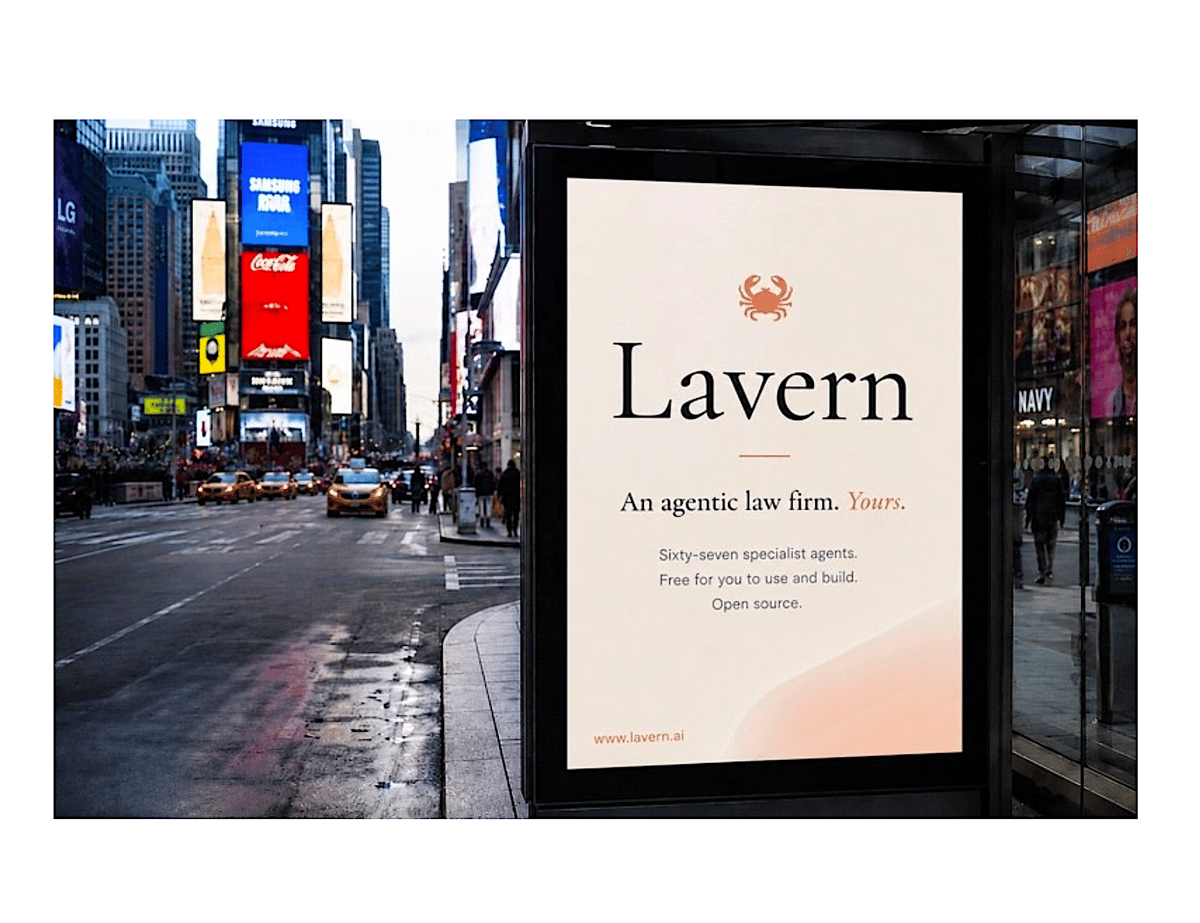
Lavern the Agentic ‘Law Firm’ Has Arrived
Antti Innanen announced the open‑source release of Lavern, an ambitious legal‑tech platform built over six months with 155,000 lines of code. The Apache 2.0‑licensed repository bundles 67 specialist agents, eight end‑to‑end workflows, and a domain‑agnostic orchestration engine that can be repurposed for...
Claude Could Become a Lawyer’s Portal to the Law, Look at Legal Data Hunter
Anthropic introduced Claude for Legal, embedding Legal Data Hunter's global corpus into its AI platform. The European startup has indexed 18 million legal documents from over 110 jurisdictions, exposing the dataset via an MCP server for real‑time AI queries. Lawyers can...

Legaltech Firm Eudia Secures Partnership with OpenAI to Support Pentagon and Other Government Agencies
Eudia, a California‑based legaltech startup, has struck a strategic partnership with OpenAI to embed the AI giant's frontier models into its platform for U.S. government legal and acquisition teams. The integration aims to accelerate contract review and procurement processes for...

Sherlocq Launches First AI‑Native Regulatory Intelligence Platform for Global Finance
Sherlocq announced the public launch of an AI-native regulatory intelligence platform for global financial services, covering more than 30 jurisdictions and integrating live connectors for Claude and ChatGPT. The tool promises to cut hours of manual research to seconds, targeting...

Lexroom Secures $50M Series B to Expand Legal AI Across Europe’s Civil Law Markets
Lexroom, the Milan‑based legal‑tech startup, closed a $50 million Series B round led by Left Lane Capital, bringing its total funding to over $73 million. The capital will fund expansion into Spain and Germany, targeting the under‑served civil law market in Europe. Investors...

Study Finds Most Enterprises Lack Trusted Contract System of Record
Sirion and WorldCC released a joint research report showing that the majority of enterprises still manage contracts as disconnected files rather than a trusted system of record. The survey of more than 170 global organizations highlights a critical data gap...

Real AI Use Cases For In-House Legal
The article outlines how artificial intelligence, especially large language models, is reshaping in‑house legal departments. It highlights measurable gains in contract management, risk assessment, and compliance monitoring. Practical examples demonstrate AI‑driven contract drafting, automated clause extraction, and predictive risk scoring....

TalkingTech Podcast with Harvey: How AI Agents Are Changing Legal Work—And Why It Matters Now
The TalkingTech Podcast with Harvey highlighted the emergence of AI agents that can plan, reason, and execute multi‑step legal tasks autonomously, moving beyond simple automation. On the Harvey platform, hundreds of use cases—from document checks to full‑draft generation—are already in...

LawX Secures €7.5 Million Seed to Launch Europe’s First AI Legal Operating System
Berlin‑based legal‑tech startup LawX closed a €7.5 million ($8.2 million) seed round led by Motive Partners, with participation from WENVEST Capital, xdeck and SIVentures. The funding will accelerate development of an AI‑driven operating system that automates back‑office tasks for law firms and...

"Instead, Claude Just Made Up More Stuff"
In the Brooks v. Lowes Home Centers case, attorney Mark Wilkins used the AI model Claude to draft a brief. The AI generated fabricated citations, which a law clerk uncovered. Wilkins submitted the corrected AI output without further review, prompting...

Prompts Generated by an Expert Are Discoverable, Court Rules: EDiscovery Case Law
In Conservation Law Foundation v. Shell Oil, a Connecticut magistrate ruled that AI prompts used by expert witness Dr. Naomi Oreskes are discoverable under Federal Rule 26(b). The court rejected the plaintiff’s claim that the prompts were protected by a...

Building the AI-Ready Legal Team
Legalfly will host a webinar on June 11 featuring senior legal solutions engineer Stephanie Adriaens, who will explain how legal teams can lay the operational groundwork for AI‑assisted contract review. The discussion will cover selecting the right contracts, centralising template libraries,...

Legora and Datasite Launch Generative AI-Powered Due Diligence Platform
Legora announced a partnership with virtual data‑room provider Datasite to embed generative AI due‑diligence tools into the Legora platform. The integration lets users pull documents from Datasite VDRs and run AI‑driven analysis without leaving the workflow, preserving existing data permissions.
Inhouse AI? Still A Long Way To Go
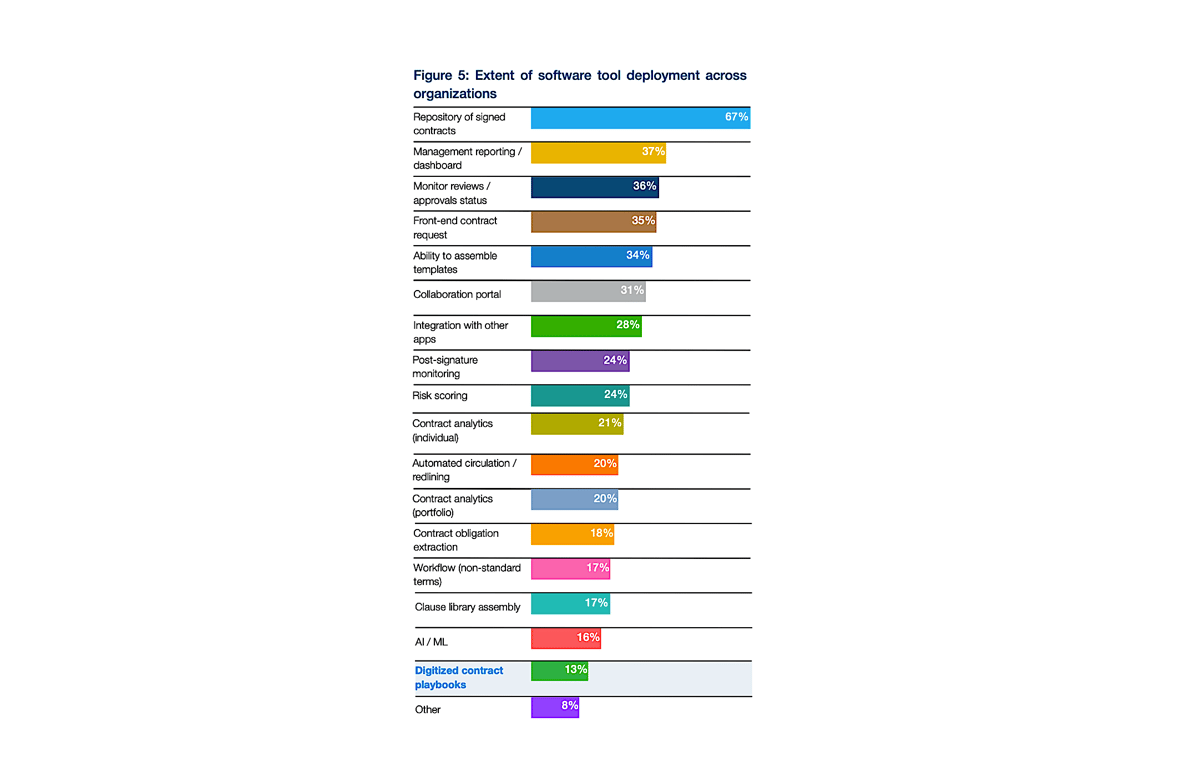
A joint World CC‑Sirion survey reveals that in‑house legal teams lag behind the latest AI capabilities. While 67% of organizations have a repository for signed contracts, only 16% use AI/ML tools and just 13% have digitized contract playbooks. Even basic functions...

FutureLaw 2026 Wraps in Tallinn, Spotlighting Billable‑Hour Reforms and AI Production Realities
FutureLaw 2026 concluded in Tallinn with a sharp focus on the billable‑hour model and the gap between AI demos and production tools. Founder Uwais Iqbal presented data from 23,000 AI‑assisted adjudications, while panelist Chas Rampenthal warned that generative AI is...
Littler Scales AI-Powered Deposition Training with Adoption of AltaClaro’s DepoSim
Littler, the world’s largest employment‑law firm, has adopted AltaClaro’s DepoSim, an AI‑powered deposition simulation platform, across its entire practice. The tool lets attorneys rehearse oral depositions in realistic, AI‑driven scenarios and receive instant, actionable feedback on questioning and witness control....

Casey Sullivan, Everlaw: Introducing Everlaw’s Anthropic MCP Integration
Everlaw announced a native integration with Anthropic's Claude via the Model Control Panel (MCP), allowing litigators to search, retrieve, and analyze case materials using generative AI within a single, secure system of record. The integration lets users pose natural‑language queries...

StreemView: The Significant Cost of Going Direct to RSMF: $1.1MM Saved
StreemView’s case study shows that processing chat data with search, filtering, and contextual expansion before creating 24‑hour RSMF files slashes review workload dramatically. By avoiding a direct‑to‑RSMF workflow, the legal team cut review volume by 97% and review costs by...

Carta Acquires Avantia Law to Launch AI‑powered ABS for Private‑equity Firms
San Francisco‑based Carta has bought Avantia Law, an AI‑focused alternative business structure serving asset‑management clients, and will rebrand the combined entity as Carta Law. The deal creates a cross‑Atlantic ABS that blends Carta’s ERP platform with Avantia’s AI, promising fixed‑fee,...
Construction Litigation Checklist: Your Step-by-Step Plan From Discovery to Decision
Construction disputes now average $42.8 million in North America, making them among the most data‑intensive litigation. Nextpoint’s checklist stresses starting with an early case assessment to map custodians, project‑management and accounting systems before discovery costs spiral. It then recommends a detailed...

When “The Devil Made Me Do It” Is Not a Defense: Lessons in AI Governance and Organizational Oversight From an...
A May 7, 2026 Southern District of New York decision rejected the government’s attempt to blame ChatGPT for terminating over 1,400 DEI‑related federal grants. The court found the agency’s AI‑assisted workflow lacked meaningful human oversight, proper prompt design, and documentation, rendering it...

NetDocuments Teams with Anthropic to Embed Claude via Model Context Protocol
NetDocuments announced a partnership with Anthropic that connects Claude, the firm’s large‑language model, to NetDocuments through the Model Context Protocol (MCP). The integration lets law firms query and draft using Claude while keeping all documents inside NetDocuments’ secure repository, preserving...

Access Legal Survey Shows 59% of UK Lawyers Use Unapproved AI, Breaching Confidentiality
Access Legal’s survey of 200 UK legal professionals reveals 59% have used unapproved AI, such as free‑version ChatGPT, in client work, directly contravening the SRA Code of Conduct. The findings come after the Upper Tribunal’s Munir decision, which says open‑source...

Anthropic Open-Sources Law-Firm Skills for Claude
Anthropic has released an open‑source repository, github.com/anthropics/claude-for-legal, that embeds its Claude AI across the legal sector. The package ships with 12 role‑specific plugins covering corporate counsel, contracts, M&A, privacy, IP and more, plus five hosted agent recipes for tasks such as...

LawX Lands $8.2M Seed Round to Build AI‑driven Legal Operating System for Europe
LawX, a Berlin legal‑tech startup, closed a €7.5 million seed round led by Motive Partners, with participation from WENVEST Capital, xdeck, SIVentures and several angels. The funding will accelerate development of its AI‑driven platform that automates case management, billing and other...

Bar Standards Board Introduces New Guidance on the Use of AI
The Bar Standards Board (BSB) has issued new guidance outlining how solicitors should safely and responsibly incorporate artificial intelligence into legal practice. The framework requires firms to conduct risk assessments, disclose AI‑generated content to clients, and implement robust data‑privacy safeguards....

Hong Kong Judiciary Expands Use of Integrated Case Management System for High Court Filings
Hong Kong’s Judiciary issued a Practice Note requiring law firms to use the integrated Court Case Management System (iCMS) for new High Court filings starting 1 June 2026. The move targets civil appeals, commercial, construction, IP, and personal‑injury matters, with exceptions only...

Anthropic Just Rolled Out Claude for Legal
Anthropic has launched Claude for Legal, an AI suite tailored to law schools and legal clinics. The offering includes a law‑student plugin that assists with exam preparation, a free CourtListener connector that provides research without Westlaw or LexisNexis, and a...

Gondim Law Expands Federal Immigration Litigation Monitoring Service for 2026
Gondim Law Corp announced on May 16, 2026 that it is broadening its 2026 federal immigration litigation monitoring and client advisory program. The firm will devote additional legal resources to track court decisions, agency policy shifts and USCIS processing trends,...

Financely Unveils Real‑World Asset Tokenization Desk, Targeting Commercial Real‑Estate Debt
Financely announced a Real World Asset Tokenization Readiness Desk that advises structured‑finance originators on packaging commercial real‑estate debt, trade finance and solar projects for tokenized capital markets. The service offers end‑to‑end screening, legal verification and data‑room preparation, aiming to unlock...

India's Chief Justice Surya Kant Unveils Digital Judiciary Roadmap, Targeting Paperless Courts
Chief Justice Surya Kant presented a comprehensive digital transformation roadmap for India's judiciary, pledging paperless filings, electronic records and nationwide online case tracking. The plan, accelerated by the COVID‑19 pandemic, seeks to cut delays, lower costs and create a technology‑enabled...

Haryana Deploys Online Auto‑Mutation System to Slash Property Fraud and Delays
The Haryana government has rolled out an online auto‑mutation system that instantly records ownership transfers after registration, beginning with a pilot in Manesar. Officials say the platform will address a backlog of roughly 130,000 mutation cases statewide and curb fraudulent...

Anthropic Rolls Out Claude for Legal with 20+ Connectors and 12 Practice Plugins
Anthropic introduced Claude for Legal, adding more than 20 Model Context Protocol connectors and 12 practice‑area plugins, while Freshfields signed a multi‑year agreement to deploy the tool across its 33 offices. The launch targets the 87% of general counsel now...

Insurers, Plaintiff Bar Wage AI Arms Race
Insurance carriers and plaintiff firms are rapidly deploying generative AI to value and settle claims, turning the litigation economics into an AI‑driven arms race. Legacy rule‑based tools like Colossus, still used by about 70% of insurers, are being supplanted by...

Patent Firms Face AI‑Driven Client Self‑Service Squeeze
Patent law firms are feeling pressure as AI tools enable corporate clients to internalize more patent work. The shift threatens traditional fee structures and forces firms to clarify where their expertise adds irreplaceable value.

Colorado Governor Signs Updated AI Act, Raising Compliance Stakes for LegalTech Firms
Colorado Gov. Jared Polis signed SB-26-189, an updated AI Act, on May 14, 2026. The law requires notification when AI influences employment, healthcare or housing decisions and mandates five‑year rule reviews, forcing LegalTech providers to overhaul compliance features.

Former Latham Associate Launches Free Legal AI Assistant “Mike”
A former Latham & Watkins associate has unveiled “Mike,” a free, open‑source AI assistant for lawyers. The tool is positioned as a challenger to the paid legal‑AI solutions offered by billion‑dollar tech firms, potentially widening access to automation for the...

Irish Court of Appeal Issues First Judicial Guidance on AI Use in Litigation
The Irish Court of Appeal, in the 2026 decision Von Geitz v Kelly & Ors, issued the first detailed judicial guidance on artificial‑intelligence use in litigation. The ruling warns that AI‑generated “hallucinations” can mislead courts, imposes a duty to verify citations, and signals potential sanctions for...

IManage Launches MCP Server, Offering Law Firms a Standard Gateway to AI Tools
iManage introduced its Model Context Protocol (MCP) Server, a standardized gateway that lets AI systems like ChatGPT, Claude and Microsoft Copilot access content stored in the iManage platform without custom integrations. The move targets the 32% of professional‑services firms that...

CJI Calls for Deepening Technology and AI-Based Judicial Architecture for Faster Justice Delivery
Chief Justice Surya Kant urged the Indian judiciary to deepen technology and AI integration to accelerate case disposal, announcing the launch of new digital platforms by the Madhya Pradesh High Court. He highlighted that technology is the only effective remedy...

Supio Unveils Supio Agent, AI Platform to Automate Plaintiff Law Firm Operations
Supio announced the launch of Supio Agent, an agentic AI platform designed exclusively for plaintiff law firms. The system automates intake, document processing and analytics, promising faster case evaluation and higher accuracy.

Lighthouse Earns Tier 1 Spot in Legal 500’s First Dispute Services Rankings
Lighthouse has been named a Tier 1 eDiscovery provider in Legal 500’s inaugural Dispute Services rankings, joining only four other firms. The Seattle‑based company cites more than 10,500 full‑service engagements and a new AI platform, LighthouseIQ, as proof of its market...

Thomson Reuters and Sterne Kessler Debut AI Patent Claim Eligibility Analyzer
Thomson Reuters and Sterne Kessler have launched the Patent Claim Eligibility Analyzer, an AI‑driven tool built into CoCounsel Legal that delivers Section 101 patent eligibility analysis in minutes. The co‑development model places litigators at the centre of the product, promising...

NetDocuments Launches First Legal Context Graph Platform, Redefining Document Management
NetDocuments, the leading document‑management provider for law firms, introduced an industry‑first legal context graph platform that continuously maps every matter, document and communication across hundreds of millions of records. The private preview opened today in Lehi, Utah, marking a shift...