Key Takeaways
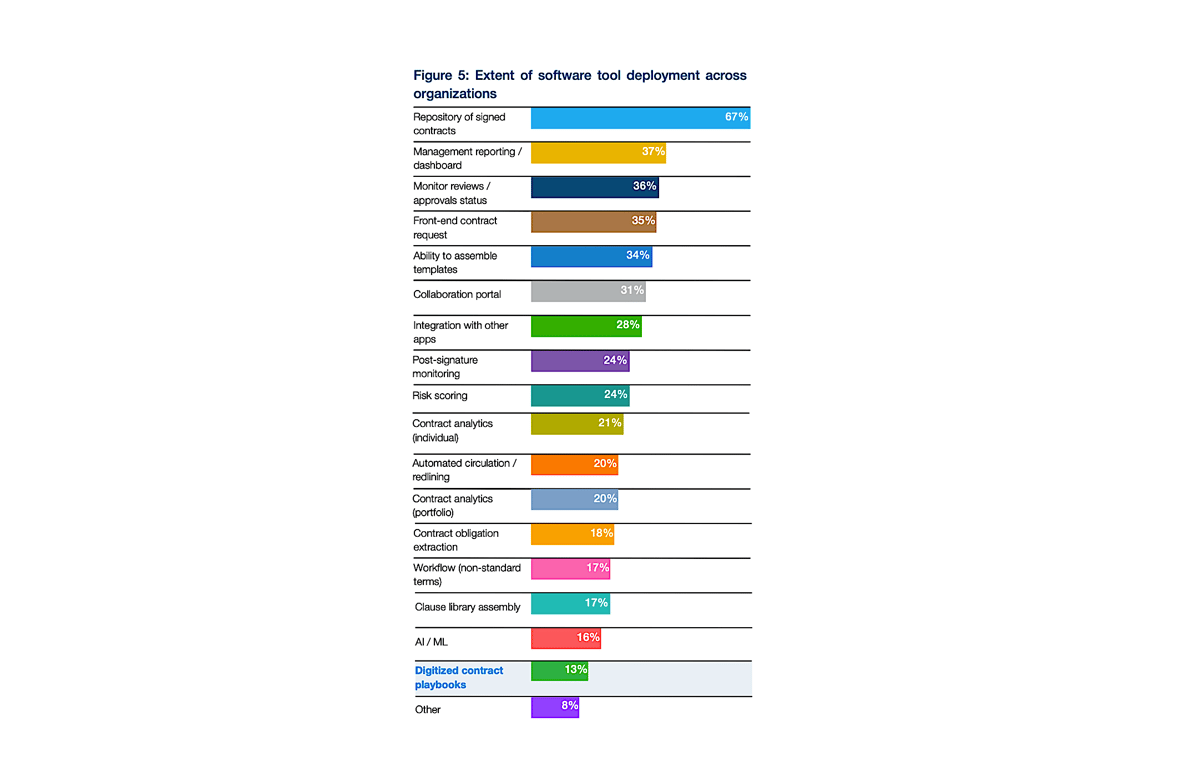
- •67% store signed contracts; 33% still lack a central repository
- •Only 16% of in‑house teams have deployed AI/ML tools
- •Digitized contract playbooks exist in just 13% of organizations
- •Template‑assembly capability is present in only 34% of firms
- •Legal‑tech firms must add forward‑deployed engineers to drive adoption
Pulse Analysis
The World CC‑Sirion report paints a stark picture of legal departments still stuck in the pre‑digital era. Even as generative AI promises to automate clause analysis and risk assessment, the survey shows that a majority of companies have not yet built the essential contract repository that underpins any AI effort. With only one‑sixth of in‑house teams leveraging AI/ML, the industry faces a classic data‑first dilemma: without clean, structured, and accessible contract data, AI models cannot produce accurate, actionable outputs.
For legal‑tech vendors, the data gap translates into a service‑oriented growth runway. Companies that bundle sophisticated AI engines with hands‑on implementation teams—often called forward‑deployed engineers—can bridge the chasm between technology and practice. These engineers help organizations migrate documents from shared drives into a unified system of record, create digitized playbooks, and configure template assembly workflows. While the cost of such services is non‑trivial, the payoff lies in unlocking AI‑driven contract analytics, automated compliance checks, and real‑time obligation tracking that can dramatically reduce legal spend.
The broader market trend reinforces the urgency. Enterprises across sectors are investing heavily in generative AI, yet the legal function remains a laggard due to fragmented data silos. As AI models become more capable, the pressure to establish a trusted contract data foundation will intensify, making early adopters a competitive advantage. Companies that prioritize data hygiene, system integration, and dedicated implementation support will not only reap efficiency gains but also position themselves as the next wave of AI‑enabled legal innovators.
Inhouse AI? Still A Long Way To Go
Comments
Want to join the conversation?