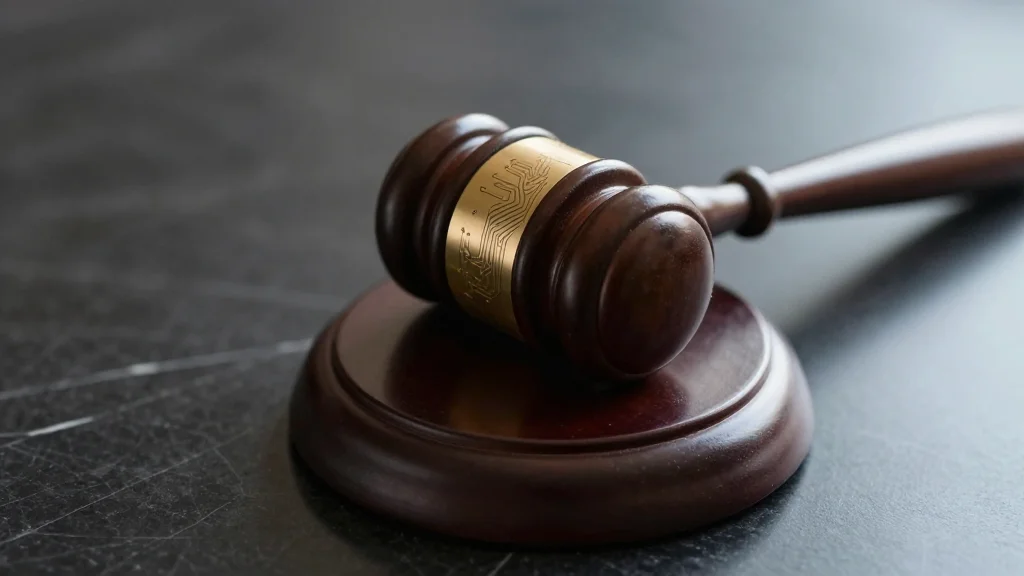
Roanoke Lawyer’s AI‑Generated Brief Dismissed Over Fictitious Citations

Why It Matters
The dismissal highlights a tangible risk as AI tools become embedded in everyday legal practice. When attorneys depend on generative models without rigorous verification, the resulting "hallucinations" can erode the credibility of filings and expose lawyers to disciplinary action. For the LegalTech industry, the case underscores the urgent need for built‑in validation mechanisms and clearer ethical guidelines. Beyond the courtroom, the incident may accelerate regulatory attention at the state bar level. If bar associations adopt formal rules requiring documented verification of AI‑generated citations, vendors will likely need to redesign products to include audit trails, provenance data, and real‑time cross‑checking against authoritative databases. This could reshape the competitive landscape, favoring platforms that prioritize accuracy over sheer speed.
Key Takeaways
- •U.S. District Judge Michael Urbanski dismissed a 133‑page lawsuit due to AI‑generated citations that were largely nonexistent.
- •Attorney Jon Clark admitted he believed the citations were accurate but took responsibility for verification.
- •The ruling is believed to be the first documented case of a federal court sanctioning an attorney for AI hallucinations in Roanoke.
- •Virginia State Bar President Brett Marston warned that AI hallucinations are "surprisingly frequent" and the bar is monitoring the issue.
- •The case may prompt bar‑level guidelines and push LegalTech vendors to add verification safeguards.
Pulse Analysis
The Roanoke dismissal is a watershed moment for the intersection of AI and legal practice, not because it introduced a new technology, but because it exposed the fragility of current verification workflows. Historically, the legal profession has relied on human editors and peer review to catch citation errors; AI promises to automate that labor, yet the technology’s propensity for "hallucination"—fabricating plausible‑looking but false references—creates a new liability vector. This case forces firms to confront a trade‑off: speed versus reliability.
From a market perspective, vendors that have built robust citation‑checking layers—such as integrating Westlaw or LexisNexis APIs to cross‑validate AI outputs—are likely to gain a competitive edge. Smaller startups that market raw generative capabilities without verification may see client churn as firms tighten internal controls. Moreover, bar associations could soon codify a duty of care that explicitly requires attorneys to certify the authenticity of AI‑generated citations, mirroring existing obligations for traditional research tools.
Looking ahead, the incident may catalyze a two‑track evolution: first, a wave of compliance‑focused features in LegalTech platforms, including audit logs, source attribution, and real‑time fact‑checking; second, a cultural shift within law firms toward hybrid workflows where AI drafts are treated as preliminary notes rather than final authority. Firms that institutionalize such safeguards early will likely avoid costly dismissals and disciplinary actions, while also positioning themselves as responsible innovators in a rapidly digitizing industry.
Roanoke Lawyer’s AI‑Generated Brief Dismissed Over Fictitious Citations
Comments
Want to join the conversation?
Loading comments...