CISA to Allow Researchers to Report Vulnerabilities to Exploited Bugs Catalog
The Cybersecurity and Infrastructure Security Agency (CISA) unveiled a public nomination form that lets researchers, vendors, and industry partners submit exploited vulnerabilities for inclusion in its Known Exploited Vulnerabilities (KEV) catalog. Submissions must include detailed exploitation evidence and can also be sent by email. The KEV list, a cornerstone for federal and private defenders, accelerates patching—organizations remediate KEV entries 3.5 times faster than non‑KEV bugs. CISA hopes the streamlined process will improve threat visibility as AI‑driven exploits proliferate.

New Zealand Budget 2026 Invests in Border Security Technology and Overseas Intelligence
New Zealand’s 2026 budget earmarks roughly $42 million (NZ$70.7 million) for upgraded cargo‑screening technology, facility improvements and enhanced training at ports and airports. An additional $6.5 million (NZ$10.8 million) will fund four new overseas customs liaison posts to boost intelligence sharing in the Pacific, South...

House Hearing Puts AI Fraud at Center of AML Overhaul
The House Financial Services Subcommittee held a hearing on modernizing the Bank Secrecy Act, emphasizing that current AML rules generate massive reporting volumes with limited investigative value. Lawmakers and experts debated lowering SAR/CTR thresholds versus leveraging AI to produce higher‑quality...

UK Police Bosses Urge Unsafe Platforms to Be Blocked for Under-16s
UK police chiefs, backed by the National Crime Agency, are urging the government to block any social, AI or gaming platforms that retain high‑risk features for users under 16. They identified six functionalities—mass discoverability, unrestricted adult contact, private messaging, harmful...

New Zealand Invests In Ambulance Workforce, Technology And Hubs To Meet Rising Emergency Demand
New Zealand’s 2026 budget earmarks NZ$35 million (about $21 million USD) over four years to expand ambulance crews, launch an electronic patient clinical record system, and build two new ambulance hubs in Auckland. The funding builds on earlier NZ$77.7 million (≈$46.6 million USD) contributions...

Dallas Drone as First Responder Program Takes to the Skies
Dallas Police Department unveiled a Drone‑as‑First‑Responder program, deploying quad‑propeller drones from eight fire stations to answer 911 calls with live video. The initiative, funded by a $120.6 million amendment to a $277.8 million Axon contract, aims to cut response times and reduce...

HHS Launches AI-Powered Audit Crackdown on States, Grantees
The U.S. Department of Health and Human Services (HHS) has launched AERO, an AI‑driven audit enforcement initiative that scans five years of audit data from all 50 states and their grantees. Built in part with ChatGPT, the tool flags persistent...

Agencies Shift From Fragmented IT Systems to Unified Platforms
Federal agencies are moving from isolated IT upgrades to unified platforms that combine AI governance, DevSecOps pipelines, and consolidated toolsets. NIST’s AI Risk Management Framework is being operationalized to standardize AI use across agencies, while vendors like NinjaOne warn of...

EHR Restart Was ‘Phenomenal’ Despite Persistent Challenges at Initial Sites, VA Secretary Says
VA Secretary Doug Collins told Congress that the department’s restarted rollout of its Oracle Health electronic health record system at four Michigan facilities in mid‑2026 went “flawlessly,” marking a turnaround from earlier troubled deployments. The modernization effort, originally a $10 billion...

Direction for Open Source DPI Sustainability, Local Ownership Established
Governments and development partners converged at the ID4Africa 2026 AGM to chart a path for sustainable, locally owned open‑source digital identity systems such as MOSIP, OpenCRVS and DHS2. Panelists from Togo, Ethiopia and Uganda highlighted early capacity‑building, domestic procurement and...

The Case for Constitutionally Grounded AI and Data Architecture
A new Fiduciary Commons framework, unveiled in 2026, proposes three statutes—VIDA, PDTA and GAAFA—to align state data architecture with Fourth Amendment fiduciary duties. It argues that centralized data stores, not policy gaps, drive the low confidence (22% of state CISOs)...
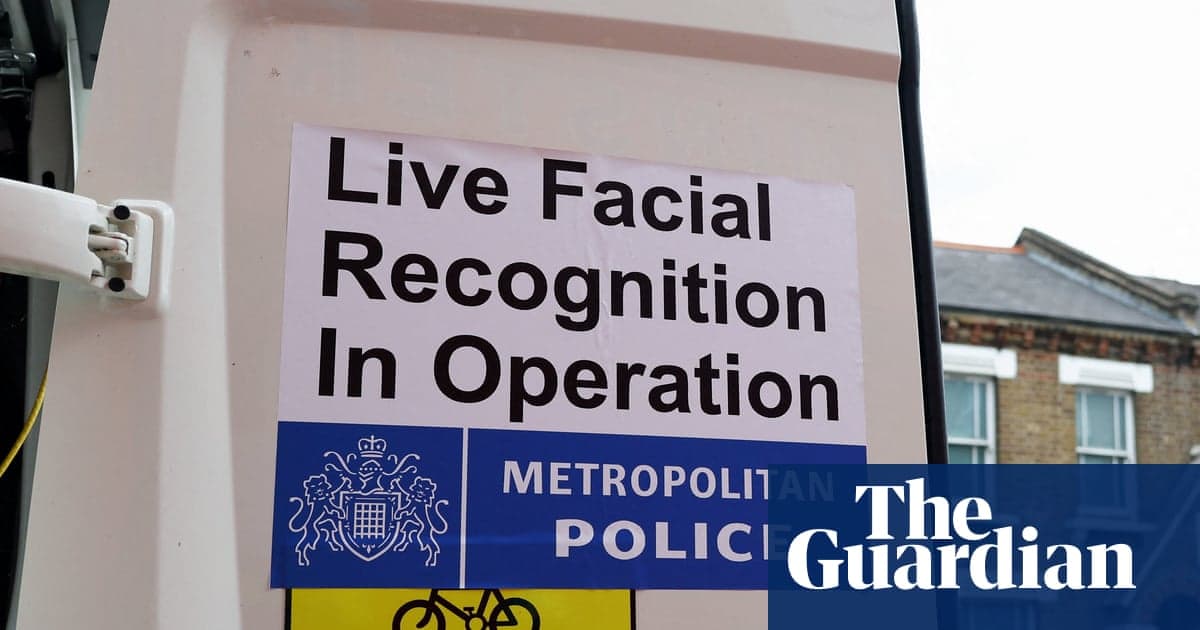
Met Palantir Row Goes to Heart of How Public Services Should Use AI
The Metropolitan Police is negotiating a roughly $63.5 million contract with US AI firm Palantir to help offset a $158 million budget shortfall that threatens 1,150 jobs. The Home Office has urged police forces to adopt AI "at pace and scale," prompting...

HHS Launches AI Initiative to Detect Fraud and Waste in Federal Health Programmes
The U.S. Department of Health and Human Services has launched an artificial‑intelligence program to screen Medicare, Medicaid, CHIP and the Health Insurance Marketplace claims in real time, replacing the traditional “pay‑and‑chase” model. The move follows a February strategy that introduced...

Missouri Department of Social Services Uses ServiceNow to Boost Citizen Experience
Missouri’s Department of Social Services has deployed ServiceNow to replace legacy systems, cutting technical debt and streamlining benefit delivery. The platform is already saving an estimated 40,000 caseworker hours each month in child‑welfare services. Agency leaders aim to process 80%...

Las Vegas Launches New Traffic Camera Program
Las Vegas City Council unanimously approved a $402,080 pilot program to install traffic‑light cameras at 12 high‑risk intersections. The solar‑powered system will record vehicle speed and red‑light violations without capturing license plates or facial data, and the data will be...