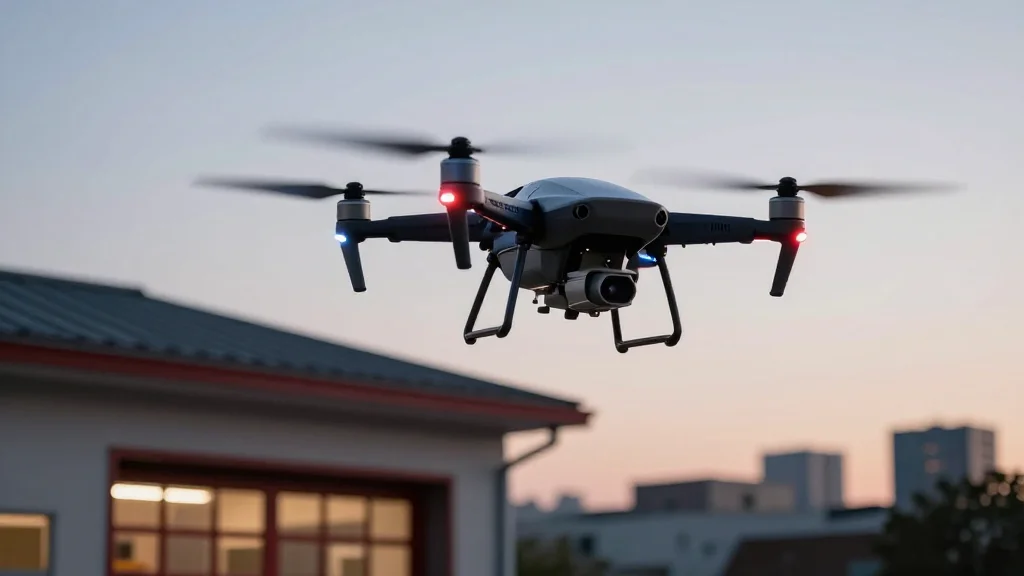
Dallas Drone as First Responder Program Takes to the Skies
Why It Matters
By delivering rapid aerial situational awareness, the program promises faster emergency response and operational cost savings for both police and fire services, while addressing privacy concerns through strict recording policies.
Key Takeaways
- •Dallas police launch drone responder program across eight fire stations
- •Drones can fly 200 ft, 35 mph, covering 2‑mile radius
- •$120.6 M amendment funds drones; total contract now $277.8 M
- •Integration planned with gunshot detection and license‑plate readers
- •Public portal will display drone flight information for transparency
Pulse Analysis
The Dallas Police Department’s Drone‑as‑First‑Responder program marks a significant shift toward aerial intelligence in municipal emergency services. Leveraging a $120.6 million amendment to its existing $277.8 million Axon partnership, the city has equipped eight fire stations with compact quad‑copter drones capable of reaching 200 feet altitude and 35 mph. By transmitting live video within a two‑mile radius, officers can assess situations before committing ground units, potentially trimming response times that have historically lagged behind departmental goals.
Beyond speed, the initiative offers cross‑agency benefits. Dallas Fire‑Rescue will use the drones to gauge fire scene conditions, allowing commanders to allocate resources more precisely and reduce wear on apparatuses. Planned integrations with gunshot detection systems and automated license‑plate readers will further enrich the data stream, creating a unified situational picture for first responders. A forthcoming public portal promises transparency, showing flight logs while adhering to privacy safeguards that restrict recording to felonies, warrants, consent, or extreme emergencies.
Industry observers see Dallas as a testbed for broader adoption of unmanned aerial assets in public safety. The $2.7 million investment in the Peregrine data‑integration platform, partially funded by a Homeland Security grant, underscores the city’s commitment to a data‑centric approach. As municipalities grapple with budget constraints and rising call volumes, the Dallas model demonstrates how strategic technology spend—paired with clear policy frameworks—can enhance operational efficiency, protect personnel, and maintain public trust.
Dallas Drone as First Responder Program Takes to the Skies
Comments
Want to join the conversation?
Loading comments...