
Can AI Cure Loneliness? South Korea’s Robot Companions for Seniors
The video examines South Korea’s Hyodol robot, an AI‑powered companion designed to alleviate loneliness among seniors. Named after the Korean word for doll and the notion of familial duty, the device is marketed as a “grandchild” that lives with elderly users. Hyodols perform a range of caregiving tasks: they speak in a seven‑year‑old voice, remind users to take medication, eat, and exercise, and detect touch. They transmit health metrics to a central monitoring system that can dispatch emergency calls. With 20% of the population over 65 and one‑in‑five seniors living alone, the government has placed roughly 15,000 units, covering about 90% of local jurisdictions. User Jang In‑young recounts initial resistance that turned into attachment because the robot calls her “grandma.” Counselors stress the doll is not a substitute for human care, and data are routinely deleted, yet privacy worries linger as newer versions aim to store user memories. The latest models now converse in English, Chinese, Japanese, and Dutch, signaling plans for export. If successful, Hyodols could reshape elder‑care economics, reducing caregiver strain while raising ethical questions about data ownership and emotional dependence on machines. The rollout also foreshadows a burgeoning global market for AI‑driven senior companionship.

How MQ-9B Is Set to Become an AEW Asset with LoyalEye ?
General Atomics Aeronautical Systems and Saab have taken a major step toward fielding an unmanned airborne early‑warning (AEW) capability by fitting the MQ‑9B Reaper with Saab’s LoyalEye sensor pods. The May 19 test flight from the Desert Horizon facility demonstrated a three‑pod...

Peter White on Automation Anywhere's Product Releases for the Autonomous Enterprise
At the Automation Anywhere Imagine conference in Dallas, Chief Product Officer Peter White outlined the company’s evolution from traditional robotic process automation (RPA) to a new generation of autonomous, AI‑driven agents. He traced his own journey from building Salesforce’s Einstein...

Inside Dematic’s Vision for Smarter Warehouse Operations
At Modex 2026 Dematic outlined a strategic shift from a traditional automation OEM to a customer-results driven systems and solutions integrator, combining its hardware portfolio with cloud analytics, data and AI capabilities. Brett Webster, Dematic’s software product management lead, said...

The Brain Chip That Lets Paralyzed People Grip Again
The video spotlights a coin‑size neural implant designed to restore hand function for individuals with spinal‑cord injuries. Placed just above the brain’s membrane, the chip captures cortical impulses, converts them into digital commands, and drives a robotic glove that can...
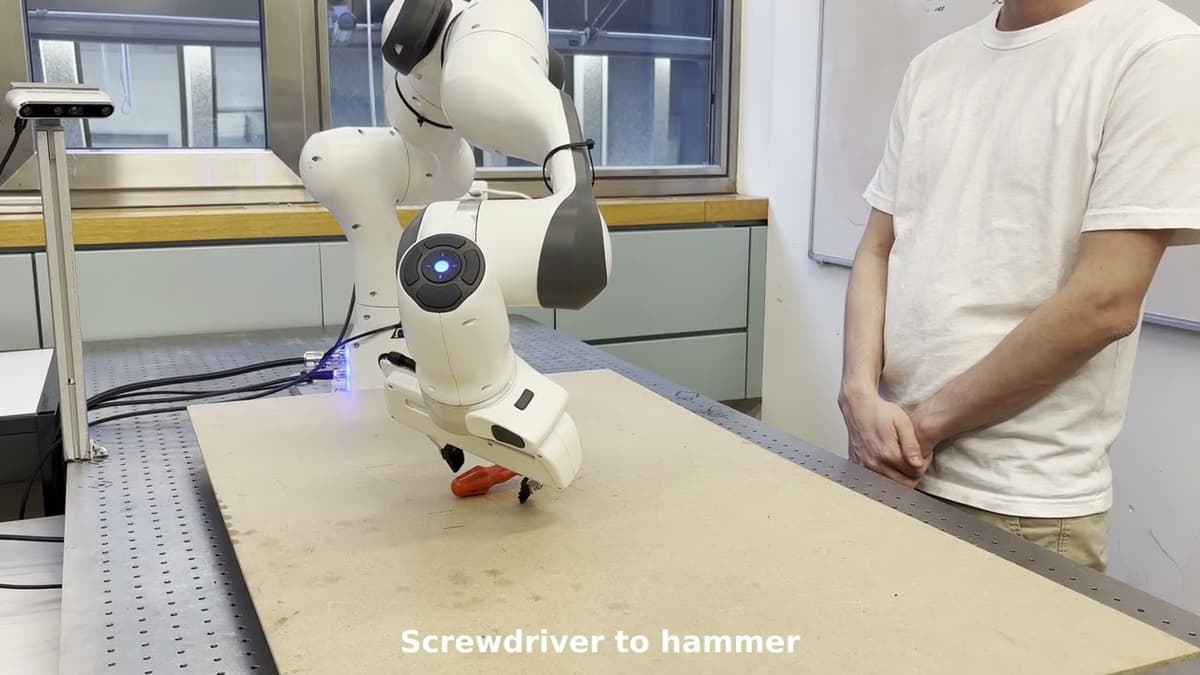
LLM-Handover: Exploiting LLMs for Task-Oriented Handovers
Researchers introduced LLM-Handover, a framework that combines large language model reasoning with part segmentation to select context‑aware grasps for robot‑to‑human handovers. The system processes an RGB‑D image and a natural‑language task description, infers relevant object parts, and chooses grasps that...

The $5 Trillion Race for the Humanoid Future
The video outlines the burgeoning race to dominate the humanoid robotics market, highlighted at this year’s Humanoid Summit in Tokyo. It frames the sector as a $5 trillion opportunity by 2050, driven by advances in artificial intelligence and the need for...

Humanoids: From Spectacle to Scale | Bloomberg Tech: Asia 5/29/2026
The Bloomberg Tech: Asia episode covered the Humanoid Summit in Tokyo, where industry leaders argued that proof‑of‑concepts are complete and the next hurdle is scaling humanoid robots into commercial deployments. Analysts cited Barclays’ estimate of a $2‑3 billion market today, with forecasts...

Turkish Firm Havelsan Is Jumping Into the Drone Swarm Business. | Middle East Defense Digest
Turkish defense software firm Havelsan unveiled its Barkan 3 unmanned ground vehicle, marking the company's first foray into the drone‑swarm market. The UGV is equipped with an AI‑enabled combat management system designed to operate as part of a larger, networked force. The...
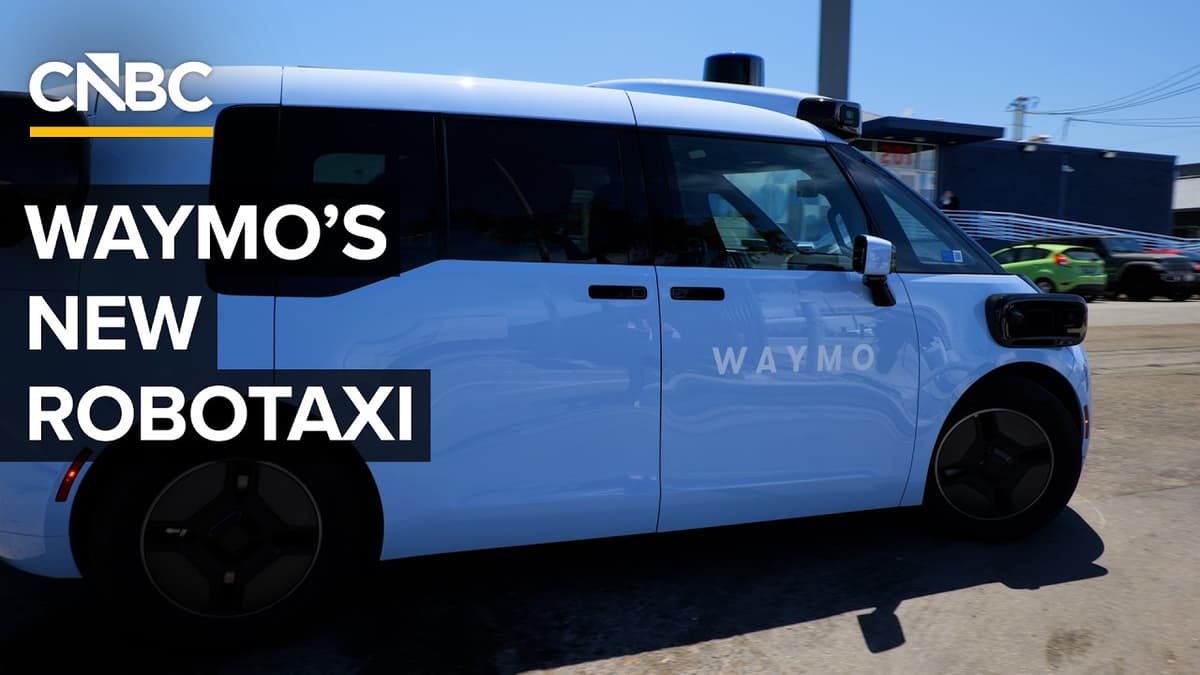
Inside Waymo’s New Robotaxi — The Ojai
Waymo unveiled the Ojai, a purpose‑built electric minivan designed specifically for its robotaxi service, beginning trials in San Francisco, Los Angeles and Phoenix before expanding to additional markets this summer. Co‑engineered with Geely’s Zeekr, the Ojai replaces the retrofitted Jaguar I‑Pace...
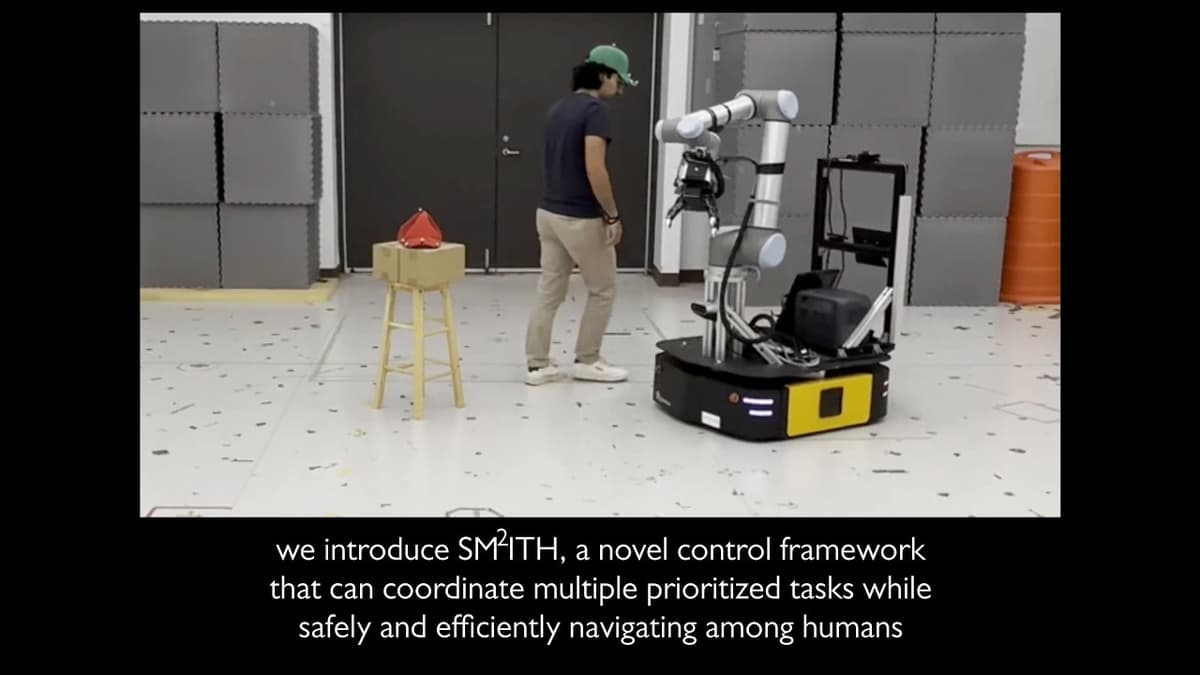
SM²ITH: Safe Mobile Manipulation with Interactive Human Prediction via Task-Hierarchical Bilevel MPC
The video introduces SM²ITH, a novel control architecture for mobile manipulators that embeds interactive human‑prediction into a task‑hierarchical bilevel model predictive control (MPC) scheme. By forecasting human trajectories, the system can plan safe, efficient motions while juggling several prioritized objectives...

The Frontier of Robotics Research | Bessemer Venture Partners | Robotics Day
The Bessemer Robotics Day panel brought together three AI‑research‑origin founders—Jason of Dyna, Philip of Exos Dof, and Armin of Perceptron—to map the current frontier of embodied AI. Moderated by partner Janelle, the discussion centered on how data, hardware, and...
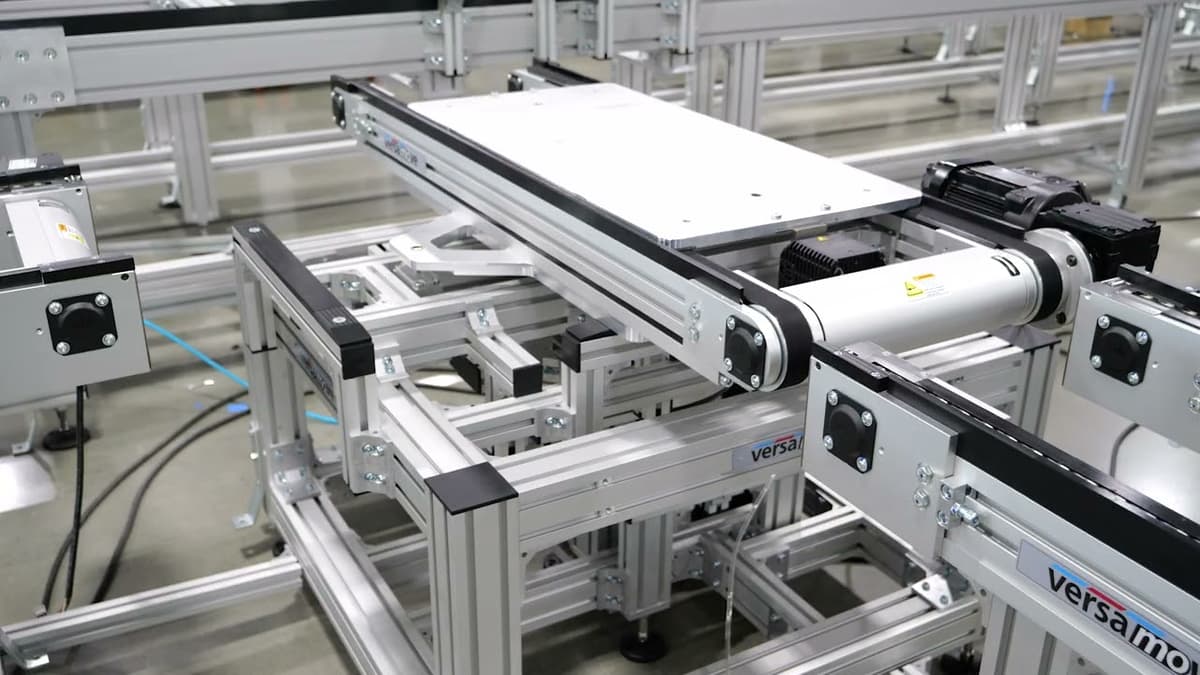
How Conveyor Systems Improve Automation, Robotics and Material Handling
MK’s presentation outlines how modern conveyor systems are becoming central to automation, robotics and material‑handling strategies. Over a decade, the company has layered digital tools—like a QR‑coded portal that instantly provides manuals, spare‑parts lists and service media—to streamline both internal...

Robots Can’t Pass THIS Test #shorts
CAPTCHAs, designed to distinguish humans from automated bots, rely less on the visible click and more on hidden behavioral and contextual signals. Google's reCAPTCHA analyzes mouse movement patterns, timing, network data, cookies and browsing history to judge whether activity looks...

Green Berets Testing Glider Drones for Sneaky Resupply
U.S. Army Special Forces (Green Berets) are evaluating low‑observable glider drones as a covert resupply method for troops operating in contested or remote environments. The prototypes, derived from hobby‑grade sailplane designs, can be launched from a small vehicle, glide silently,...