Why It Matters
The findings show that enhanced perception was a catalyst for complex neural development, setting evolutionary groundwork for the rapid diversification of life in the Cambrian.
Key Takeaways
- •Researchers analyzed 230+ Ediacaran trace fossils spanning millions of years.
- •Sensory range jumped from ~2 body lengths to ~8 body lengths.
- •Early photoreceptors likely gave these animals rudimentary vision.
- •Expanded perception set stage for complex neural pathways.
- •Findings link movement evolution to Cambrian explosion.
Pulse Analysis
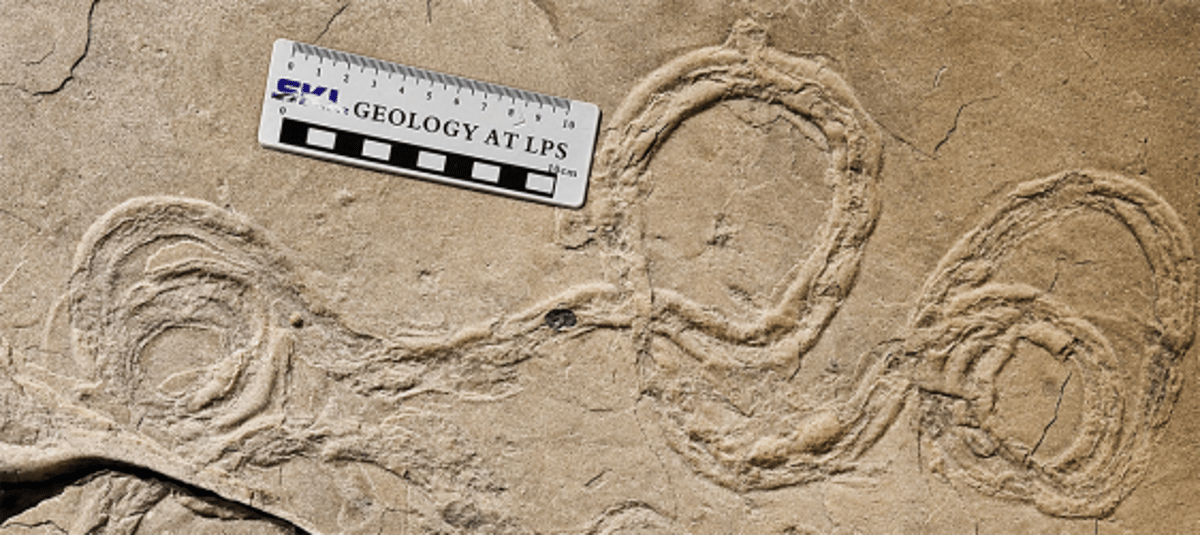
The Ediacaran period, dating back roughly 560 million years, has long been viewed as a quiet prelude to the Cambrian explosion. Recent work by scientists at the Natural History Museum in London overturns that notion by demonstrating that the earliest mobile animals left a rich record of movement in the form of trace fossils. By quantifying more than 230 of these fossilized trails and applying computer‑based motion models, the team reconstructed how these soft‑bodied organisms navigated their seafloor habitats, providing a rare window into behavior that body fossils alone cannot offer.
A striking discovery from the analysis is the rapid expansion of sensory capability. Initially, these organisms could only detect stimuli within roughly two body lengths—a range limited to direct contact or immediate proximity. Within a span of just a few million years, their perceptual field broadened to eight times their body length, implying the development of primitive photoreceptive structures. This sensory upgrade would have allowed early animals to anticipate food sources, avoid hazards, and perhaps coordinate with conspecifics, laying the groundwork for more sophisticated nervous systems and behavioral strategies.
The broader implication of this sensory revolution is its likely role in triggering the Cambrian explosion. By extending their information horizon, Ediacaran animals could exploit new ecological niches, driving competitive pressures that favored the evolution of complex tissues, eyes, and predatory tactics. Modern evolutionary biologists view this as an "information revolution" that reshaped early ecosystems. As researchers continue to refine trace‑fossil analytics and integrate molecular data, the link between movement, perception, and macro‑evolutionary bursts will become clearer, offering fresh insights into how life on Earth escalated from simple mats of bacteria to the diverse animal kingdom we see today.
What Happened When the First Animals Started to Move
Comments
Want to join the conversation?
Loading comments...