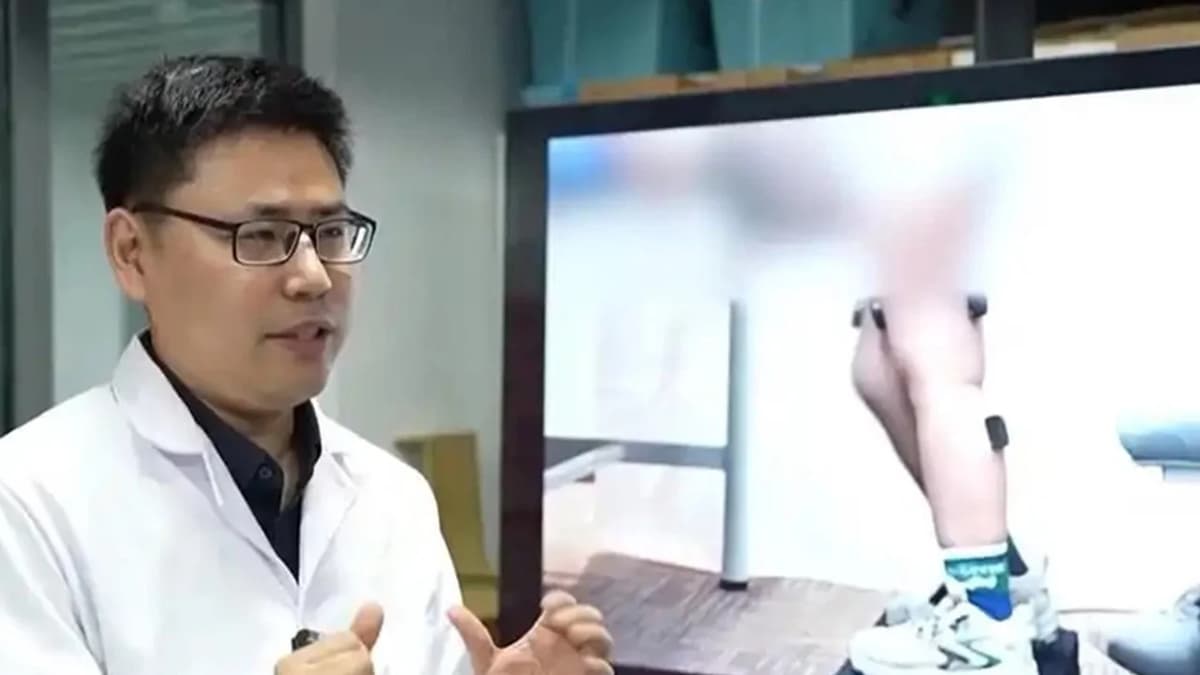
Chinese Robot Helps Children with Nerve Disorder Stand up for the First Time
Why It Matters
The breakthrough shows that resistance‑based exoskeletons can reverse muscle loss in SMA, offering a potential low‑cost, scalable therapy beyond existing drugs that only slow disease progression.
Key Takeaways
- •Resistive robot increased quadriceps size 19% in six weeks
- •Muscle strength rose 130% after 30 video‑game sessions
- •All six children stood unaided after training
- •Study published in Nature, attracting global patient requests
Pulse Analysis
The new wearable robot challenges conventional rehabilitation paradigms by using resistance rather than assistance. For SMA patients, whose motor neurons deteriorate, traditional assistive devices can inadvertently limit muscle activation. By applying a calibrated counter‑force during a gamified kicking motion, the device forces the neuromuscular system to recruit more motor units, stimulating hypertrophy and functional gains. This approach aligns with emerging research on neuroplasticity, suggesting that controlled adversity can accelerate recovery when paired with engaging tasks.
The six‑week trial in Beijing combined biomechanics, game design, and clinical expertise from MIT, illustrating the power of interdisciplinary collaboration. Each 30‑minute session required the children to kick a virtual ball, while the robot’s resistance scaled with their effort, creating a progressive overload similar to strength training. The resulting 19% increase in quadriceps cross‑sectional area and a 130% rise in force output are comparable to outcomes seen in adult athletes after months of conventional physiotherapy, underscoring the device’s efficiency for a pediatric population.
Beyond the immediate clinical impact, the study opens avenues for broader adoption of low‑weight, affordable exoskeletons in rare‑disease rehabilitation. Manufacturers can leverage the robot’s sub‑1 kg design to produce scalable solutions for home use, reducing reliance on costly hospital‑based therapy. As the research team prepares to expand trials internationally, the technology could reshape standards of care for SMA and other neuromuscular disorders, offering hope for functional independence where none existed before.
Chinese robot helps children with nerve disorder stand up for the first time
Comments
Want to join the conversation?
Loading comments...