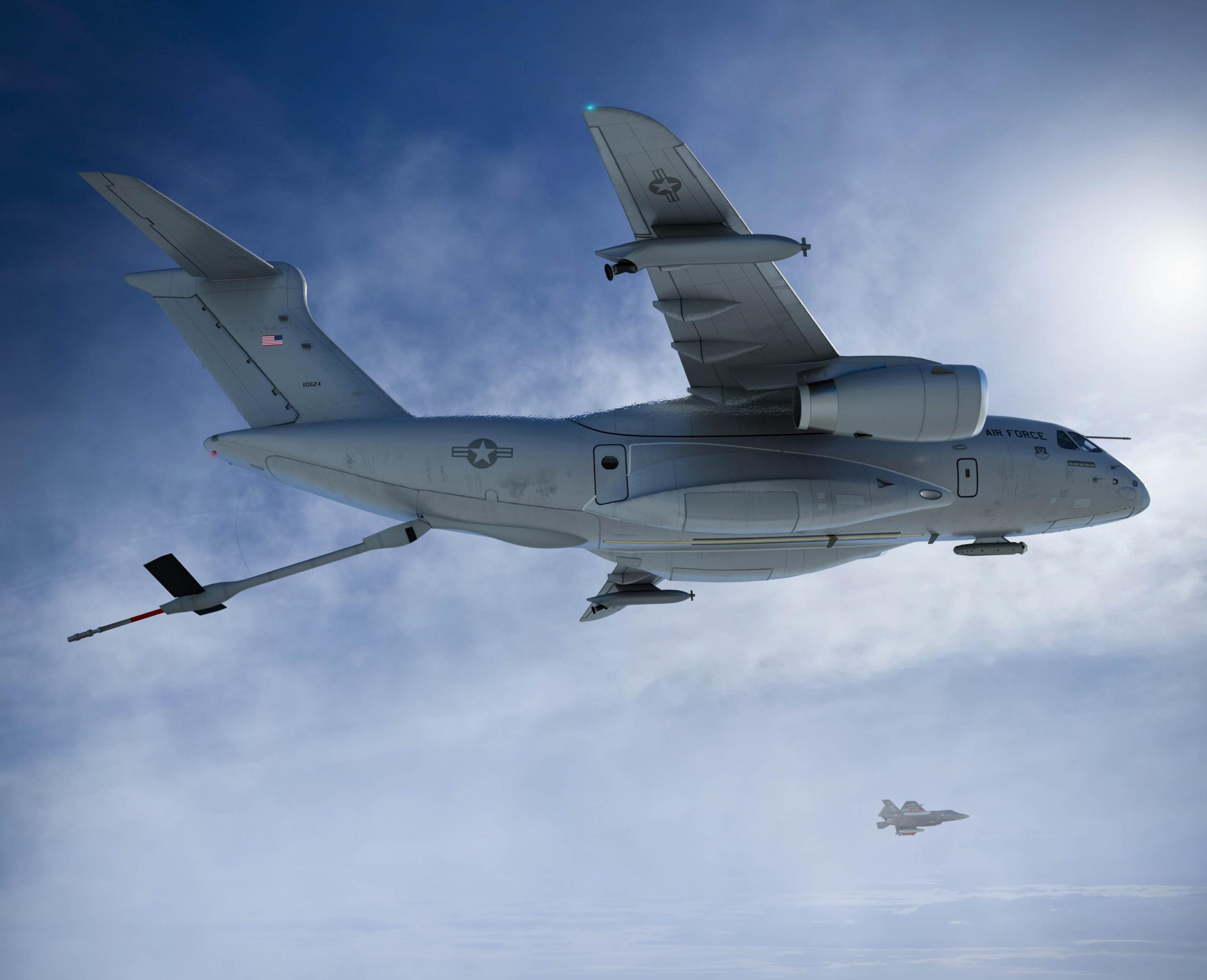
Northrop, Embraer Team Up to Pitch a Tactical Tanker for Dispersed Ops to USAF
•February 20, 2026
0
Companies Mentioned
Why It Matters
The KC-390 offers a versatile, low‑cost solution for dispersed operations, enhancing U.S. and allied force projection while relieving pressure on the aging tanker fleet. Its integration could accelerate the Air Force’s shift toward agile, decentralized basing.
Key Takeaways
- •Northrop partners with Embraer to modify KC‑390 as tactical tanker.
- •KC‑390 can refuel F‑35 and operate from austere runways.
- •Autonomous refueling boom development slated for early 2020s.
- •Midsize tanker fills gap between KC‑46 and legacy KC‑135 fleet.
- •Reconfiguration from cargo to tanker under five hours.
Pulse Analysis
The United States Air Force faces a looming capability gap as its legacy KC‑135 Stratotankers age past six decades and the newer KC‑46 Pegasus fleet remains limited in number. Decision‑makers have been seeking a flexible, cost‑effective platform that can support the Air Force’s Next‑Generation Air Refueling System (NGAS) while also fitting the emerging Agile Combat Employment (ACE) doctrine. By leveraging Embraer’s already‑in‑service KC‑390, Northrop Grumman aims to provide a midsize tanker that can be fielded quickly, sidestepping the lengthy procurement cycles typical of brand‑new airframes.
Technically, the KC‑390 brings a blend of cargo‑lift and refueling capabilities that few aircraft match. It can carry up to 35 metric tons of fuel, transport 26 metric tons of cargo, or seat 80 passengers, and its eight‑wheel landing gear distributes weight for operations on soft‑soil strips under 1,000 meters. The planned autonomous refueling boom will augment the existing probe‑and‑drogue system, enabling rapid, unmanned fuel transfers to fighters such as the F‑35. Moreover, the aircraft’s fly‑by‑wire cockpit and modular architecture allow a cargo‑to‑tanker conversion in less than five hours, giving commanders the agility to reconfigure missions on short notice.
Strategically, the Northrop‑Embraer collaboration could reshape the tactical mobility market. A successful KC‑390 variant would give NATO allies a common, interoperable tanker that complements the strategic KC‑46 fleet, reducing reliance on aging U.S. assets. The partnership also signals a broader trend of leveraging non‑developmental platforms to meet emerging warfighting concepts, potentially prompting competitors to revisit their own midsize tanker offerings. If the autonomous boom demonstrators meet schedule, the KC‑390 could become a cornerstone of dispersed air operations, reinforcing the United States’ ability to project power from austere forward locations.
Northrop, Embraer Team Up to Pitch a Tactical Tanker for Dispersed Ops to USAF
**MELBOURNE, Fla—**Contractors Northrop Grumman and Embraer are teaming up to offer the Air Force and U.S. allies a tactical mobility aircraft—designed for aerial refueling and cargo transport—to support Airmen operating from remote airfields with soft-soil airstrips, company officials said Feb. 19.
The Northrop-Embraer partnership, formalized in a memorandum of understanding, will focus on modifying Embraer’s KC-390 Millennium aircraft to refuel the F-35 and other fixed wing aircraft used by the U.S. Air Force and other NATO allies, some of whom already own KC-390s. As part of the partnership, the companies plan to develop autonomous refueling boom for the KC-390 to augment its wing-mounted probe and drogue refueling system.
The KC-390 was designed to be a multimission aircraft capable of carrying up to 35 metric tons of fuel—23 in the wing-mounted fuel pods and 12 in additional tanks inside the central cargo area—over distances of 4,570 nautical miles. It can also carry 26 metric tons of cargo or 80 passengers.
Northrop and Embraer officials say they’re making the partnership will both address a gap in the air mobility market and respond to customer demands for the KC-390 to have even more more versatility.
“As I look at the marketplace and the installed base within our customers, really the next logical step for growth for recapitalization is the mobility market, and that is both in terms of cargo transport aircraft as well as tankers and refueling aircraft,” Tom Jones, president of Northrop Grumman Aeronautics Systems, told a group of reporters at Northrop’s Melbourne facility.
Aviation Week reported Feb. 18 that Northrop is pitching the upgraded KC-390 as one-third of a “family of systems” to the Air Force, which is seeking industry ideas for the future of its tanker fleet under a program dubbed Next-Generation Air Refueling System. The outlet reported that Northrop’s proposed family would include a large, blended-wing refueler, the KC-390 as a midsize tanker, and a small, uncrewed tanker.
Northrop Grumman officials declined to confirm the report.
Currently, the Air Force has a tanker fleet of roughly 500 aircraft, of which about 375 are KC-135 Stratotankers that average more than 63 years old. The service continues to buy new KC-46 Pegasus tankers and decided last July that it would forgo a competition for a “bridge tanker” between the Pegasus and the as-yet-undefined NGAS and buy more of KC-46s instead.
Northrop and Embraer officials are making the case that the midsized KC-390 would augment the strategic KC-46 as a tactical refueler/cargo aircraft that is suited for agile combat employment, or ACE—the Air Force’s strategy for deploying small groups of Airmen to stand up ad hoc airfields in austere locations. The KC-390 is equipped with eight wheels to distribute the weight of the aircraft during takeoffs and landings using soft-soil airstrips. It’s also capable of takeoffs and landings using air strips just under 1,000 meters, Embraer officials said.
“This is an agile combat employment type of aircraft when the KC-46 is not,” Jones said. “You can’t overlook the modularity aspect of this, if you’re fighting a dispersed conflict.”
Frederico Lemos, chief commercial officer for Embraer Defense and Security, said that allied countries are acknowledging the need for distributed battlefield operations, adding that the KC-390 is “already operational, already validated by allies and is aligned with agile combat employment.”
“Operations are moving closer to the fight and supporting dispersed forces across a wider battlespace,” he said. “And at the same time, the legacy tanker fleet faces a lot of challenges. … They are not fit for that mission.”
It’s still unclear how long it will take to develop an autonomous refueling boom, which could be mounted on the rear of the KC-390.
“We recognize that a dynamic environment associated with aerial refueling is difficult,” said Craig Woolston, vice president and general manager for research & advanced design at Northrop Grumman Aeronautics.
Woolston would not comment on specific details about the autonomous refueling boom programs but said “we believe we have all the pieces to integrate. Certainly, we are at the beginning of this journey. … I’ll say we’ve got an investment plan or a development plan laid out over the next couple of years.”
Jones added that Northrop is hoping “we get to demonstrations of the technology, I’ll say, in low single digit years.”
Embraer officials say the KC-390 can be reconfigured from a cargo aircraft to a refueler in less than five hours. It’s equipped with IAE V-2500 engines capable of a top speed of 470 knots or .8 Mach.
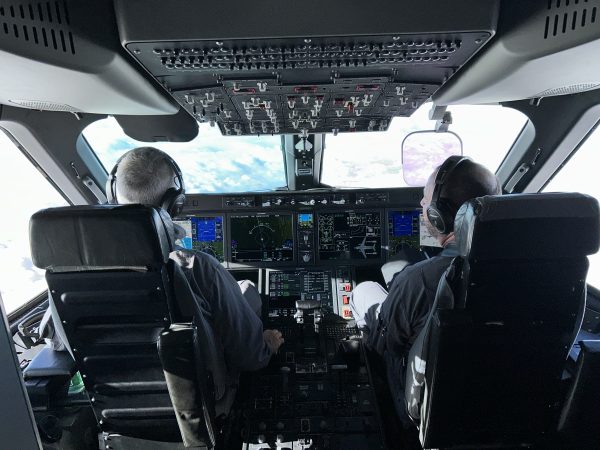
Embraer pilots fly a KC-390, an aircraft designed for aerial refueling and airlift missions. Air & Space Forces Magazine photo by Matthew Cox
“We designed the 390 to be built for the future with the right architecture to be able to absorb new integrations, new systems that address the future challenges that we don’t see yet,” Lemos said. The aircraft features fly-by-wire technology and other autonomous systems in the cockpit “to ease up the work of our crews so that they can focus on the mission,” he said.
“It’s a nondevelopmental platform that we can enhance its capabilities to bring the right solution to add volume, agility and responsiveness to this force structure, while freeing strategic assets to do the missions that they are best suited to do.”
This is not the first time Embraer, a Brazilian firm, has tried to break into the U.S. market. It previously teamed with L3Harris to pitch the KC-390 as a tactical mobility aircraft before that partnership ended, and the U.S. Air Force bought a few of its A-29 Super Tucano aircraft as part of its Light Attack experiment, leading the firm to pitch it for the Armed Overwatch program.
The post Northrop, Embraer Team Up to Pitch a Tactical Tanker for Dispersed Ops to USAF appeared first on Air & Space Forces Magazine.
0
Comments
Want to join the conversation?
Loading comments...