Key Takeaways
- •AI market to hit $16.9 B by 2034, 20% CAGR
- •Precision AI cuts farm operating costs up to 31% per acre
- •Robotics reduce labor dependence, boosting productivity
- •Funding surge: $105 M Ecorobotix, $20 M SwarmFarm, $33 M NeoFarm
- •Adoption limited by high upfront costs and data privacy concerns
Pulse Analysis
The agricultural sector is entering a rapid transformation phase, driven by AI technologies that turn raw sensor data, satellite imagery and climate models into actionable insights. Market analysts estimate the AI‑in‑agriculture market will climb from roughly $2.1 billion in 2024 to $16.9 billion by 2034, reflecting a compound annual growth rate near 20%. This expansion is fueled by rising food‑security concerns, government incentives for precision farming, and the falling cost of edge‑computing hardware, which together create a fertile environment for startups and incumbents alike.
At the farm level, AI‑powered precision tools are delivering tangible economic benefits. Variable Rate Technology and computer‑vision diagnostics enable farmers to apply water, fertilizer and pesticides only where needed, slashing input expenses and improving yields. Studies show that for major crops such as corn and wheat, AI can reduce per‑acre operating costs by as much as 31%, while also cutting water usage by up to 20%. Beyond cost savings, these technologies support regenerative practices—optimizing nutrient balances, reducing tillage and preserving biodiversity—thereby aligning profitability with sustainability goals.
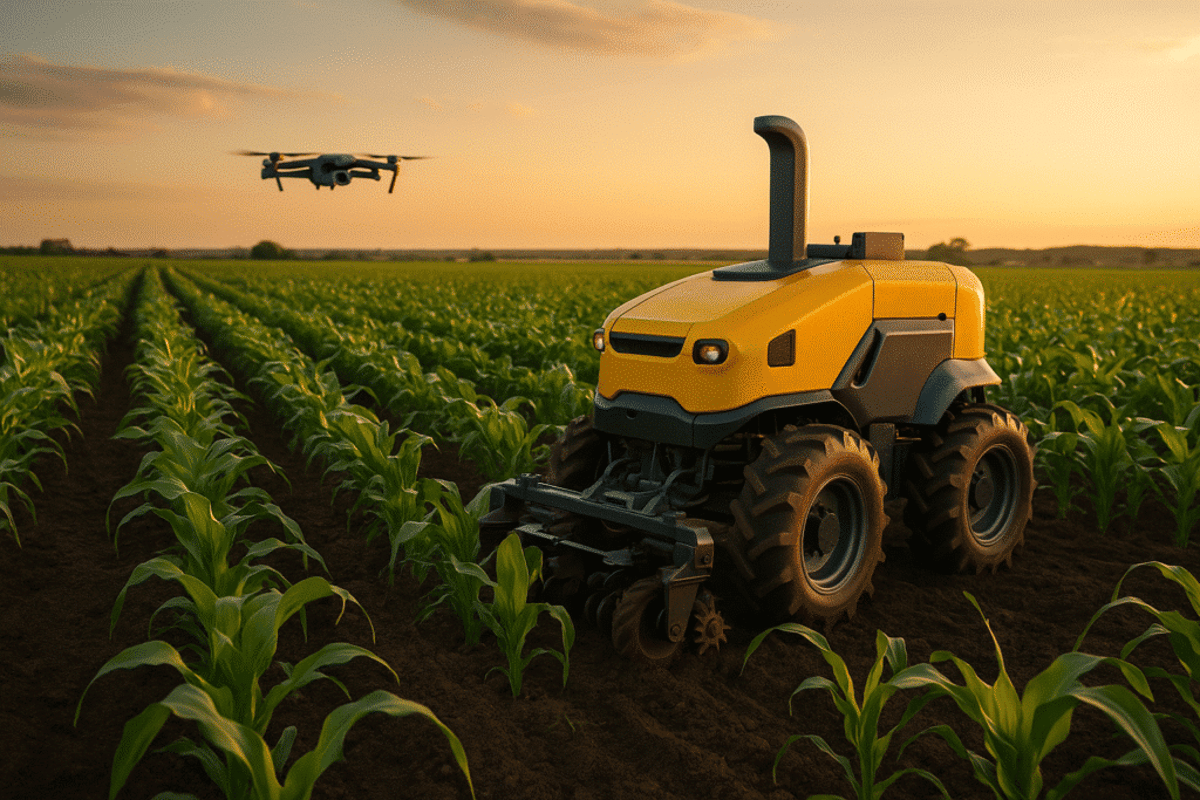
Despite the upside, adoption hurdles remain significant. The upfront price tag for sensors, drones, autonomous tractors and data platforms can exceed $100,000 for a mid‑size operation, a barrier especially for smallholders. Data‑privacy and ownership concerns add another layer of complexity, as farmers grapple with who controls the valuable agronomic data they generate. To bridge these gaps, capital is flowing into the ecosystem: $105 million into Ecorobotix, $20 million (A$30 M) into SwarmFarm, $33 million (€30 M) into NeoFarm, and $5.5 million into TRIC Robotics, while public programs such as the FCC’s multi‑billion‑dollar AgTech commitment aim to expand broadband and financing options. As the technology stack converges on edge AI, connectivity and interoperable software, the next decade is likely to see AI become a standard operating tool across the entire agribusiness value chain.
AI in Agriculture: The Future of Smart Farming
Comments
Want to join the conversation?