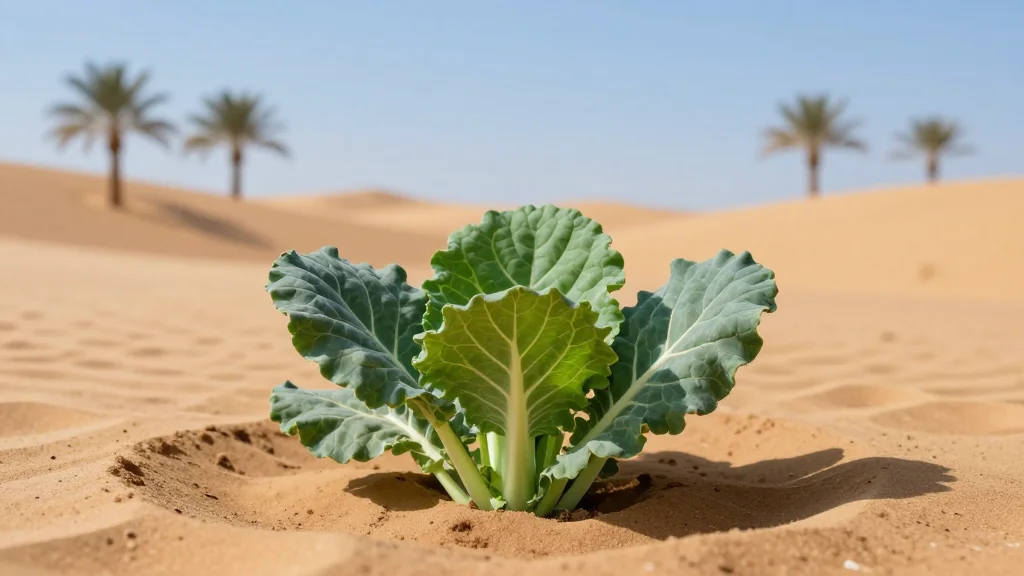
Gaps Galore in Collards Collections
Key Takeaways
- •Over 1,500 Brassica oleracea var. acephala accessions listed on Genesys
- •Accessions cluster in Europe, leaving Sahara oases under‑represented
- •Ethnobotanical study highlighted collard origins in Morocco’s Draa and Ziz valleys
- •Current genebank holdings in the valleys include only wheat, barley, chickpea
- •Researchers call for targeted collection and better variety‑level identification
Pulse Analysis
The recent ethnobotanical investigation into Morocco’s Draa and Ziz valleys sheds light on a largely overlooked chapter of Brassica history. By weaving together archival records, linguistic clues, and Indigenous farmer knowledge, Powell and Ouarghidi map the cultural pathways that brought collard greens to these marginal oases. Their work underscores how traditional scholarship can pinpoint geographic origins even before molecular tools are applied, offering a template for similar studies in other under‑documented crops.
Parallel to the historical narrative, the genetic dimension reveals a stark data gap. Genesys, the global plant‑genetic resource portal, currently hosts just over 1,500 Brassica oleracea var. acephala entries, with the majority sourced from Europe and North Africa. The geographic distribution forms a conspicuous void around the Sahara’s edge, where the collard populations of interest reside. This skew hampers any robust phylogeographic analysis, as researchers lack representative samples from the very ecosystems that may hold unique adaptive traits.
The implications extend beyond academic curiosity. Filling the collection void could unlock alleles for drought tolerance, heat resistance, and soil‑salinity adaptation—traits increasingly valuable as climate change pressures arid agriculture. Coordinated field missions, coupled with precise variety‑level identification in genebanks, would enrich the global Brassica pool and empower breeders worldwide. In short, targeted germplasm acquisition from the Draa and Ziz valleys is a strategic investment in food security and biodiversity resilience.
Gaps galore in collards collections
Comments
Want to join the conversation?