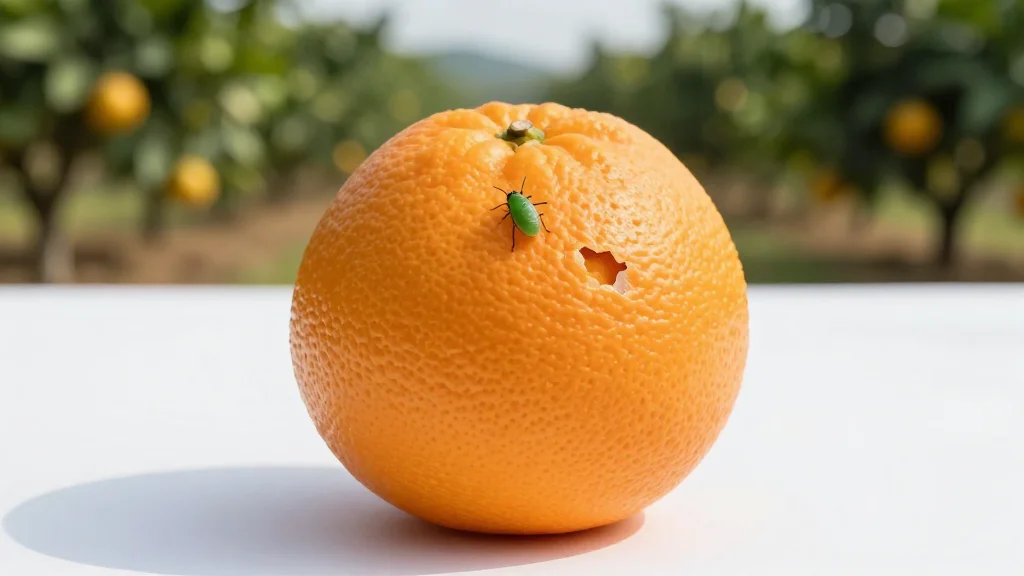
How A Tiny Insect Decimated Florida's Citrus, And What Orchardists Are Doing About It
Key Takeaways
- •Asian citrus psyllid introduced in 2005, spreads huanglongbing disease
- •Florida orange production fell 95% to 12.2M boxes in 2026
- •Exclusion mesh bags protect saplings for up to 30 months
- •Golden Ridge Groves uses permanent mesh tents over 750 acres
- •Citrus greening cut U.S. orange output 80% since 2000
Pulse Analysis
Florida’s orange legacy once symbolized the state’s economic engine, with 244 million boxes harvested in 1997‑98. The arrival of the Asian citrus psyllid in 2005 triggered huanglongbing, a bacterial greening that robs trees of nutrients, leading to a 95% drop in production and shrinking cultivated acreage from 600 to five. The loss reverberates beyond farm gates: thousands of jobs, ancillary supply chains, and tourism tied to fresh citrus have all contracted, while the state’s cultural branding—license plates, T‑shirts, and local festivals—faces an identity crisis.
In response, growers are experimenting with layered defenses. Traditional insecticide sprays remain a staple, but their efficacy wanes as resistance builds. The University of Florida’s research highlights exclusion mesh as the only proven barrier that fully blocks psyllid entry. Small‑scale farms use translucent mesh bags on young trees, extending fruit viability for roughly 30 months before the trees weaken post‑removal. Pioneers like the Bevilacquas have scaled the concept, erecting permanent mesh tents over 750 acres of grapefruit, creating controlled micro‑climates that sustain healthy yields while allowing consumer pick‑your‑own experiences. These structures also preserve moisture and light, mitigating the need for excessive water or chemical inputs.
Nationally, citrus greening has reshaped the supply landscape: California now leads U.S. orange output, and countries such as Egypt and South Africa dominate global exports. If Florida can perfect large‑scale mesh protection and develop greening‑resistant cultivars, it could reclaim a share of the market and revitalize rural economies. Conversely, failure to adapt may cement the state’s transition from citrus powerhouse to a peripheral player, underscoring the urgency of innovative agritech solutions.
How A Tiny Insect Decimated Florida's Citrus, And What Orchardists Are Doing About It
Comments
Want to join the conversation?