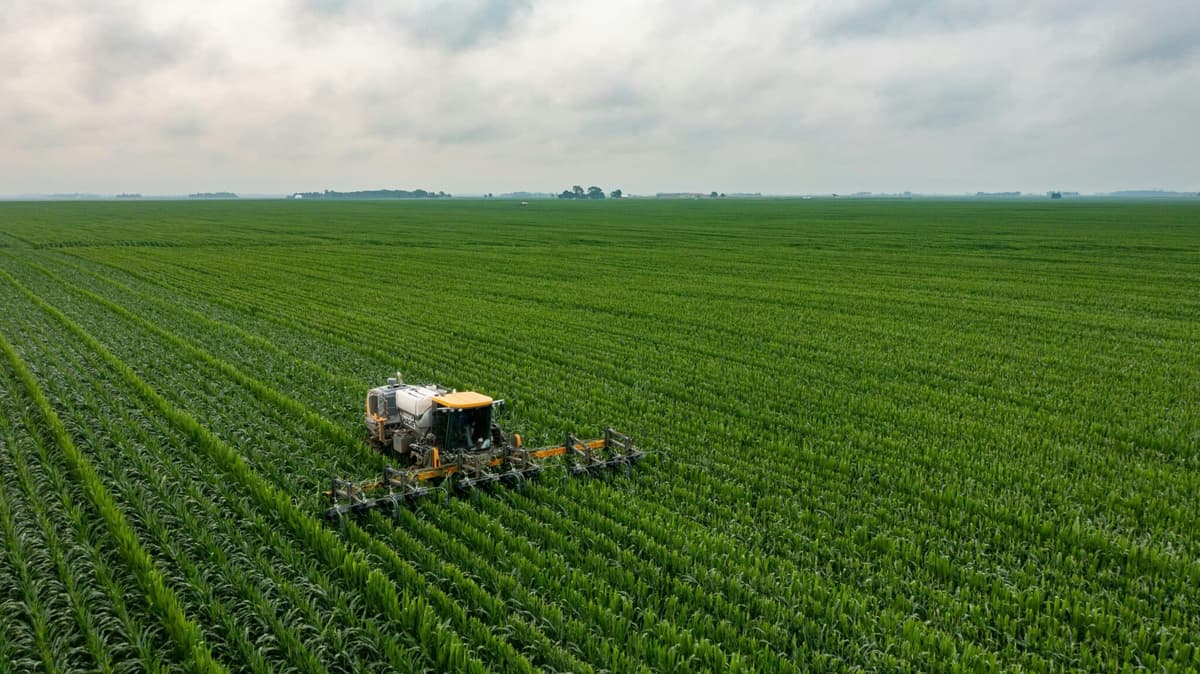
Precision Agriculture Funding in 2025 Reached $668M — But the Distribution Tells a More Complicated Story
Key Takeaways
- •Four late‑stage deals captured 47% of 2025 funding
- •October alone accounted for $180 M across eight rounds
- •Autonomous robotics attracted the most capital in precision ag
- •Series A/B firms face a “middle squeeze” for follow‑on funding
- •Investors favor hardware‑enabled data platforms over pure‑software solutions
Pulse Analysis
The 2025 funding snapshot reveals a classic barbell pattern in precision agriculture: a flurry of early‑stage seed rounds, a handful of blockbuster late‑stage financings, and a thin middle layer. iGrow Intelligence tracked 37 equity rounds totaling $668 M, yet three Series D deals—Ecorobotix, Solinftec and BeeWise—plus GINT’s $98 M Series C contributed nearly half of that sum. This concentration underscores investors’ appetite for proven, scalable technologies that can demonstrate field‑level economics, especially as labor shortages pressure growers to adopt automation.
Mid‑stage companies, typically navigating the transition from pilot projects to commercial roll‑outs, encountered the toughest environment. Series A and B firms reported limited follow‑on capital, a “middle squeeze” that forces many to stretch runway or seek strategic partnerships. Meanwhile, autonomous robotics and data‑analytics firms that bundle hardware with actionable insights attracted the bulk of investment. The market’s shift away from pure‑software platforms reflects a growing belief that tangible field hardware, paired with robust data pipelines, offers clearer paths to revenue and defensible market positions.
Looking ahead to 2026, the funding dynamics suggest that today’s late‑stage winners could become acquisition targets for agribusiness OEMs, while the current Series A/B cohort may need to prove commercial traction to secure exits. Founders should prioritize building hardware that generates high‑quality data, positioning themselves for both venture growth and potential M&A. VCs, in turn, are likely to double down on integrated solutions, rewarding startups that can demonstrate both field performance and scalable software monetisation.
Precision Agriculture Funding in 2025 Reached $668M — But the Distribution Tells a More Complicated Story
Comments
Want to join the conversation?