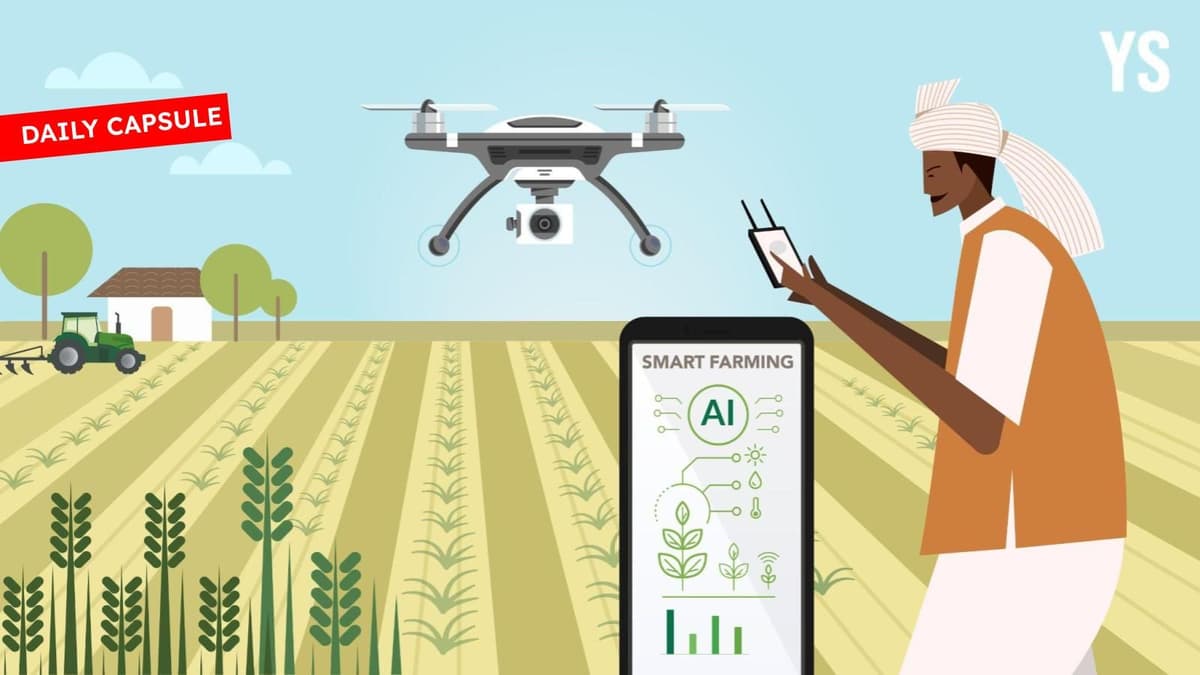
AI Is Making Farming More Precise; Meet Companies Building Circular Economy
Companies Mentioned
Why It Matters
AI boosts agricultural resilience and yields, while circular‑economy startups turn waste into jobs and revenue, addressing climate and livelihood challenges simultaneously.
Key Takeaways
- •AI climate control lets strawberries grow year‑round at 45 °C
- •Cropin partners with SatLeo Labs to fuse thermal satellite data with AI
- •Phool converts temple flower waste into charcoal‑free incense products
- •Code Effort recycles cigarette butts, tackling a toxic global litter issue
- •Circular‑economy startups create jobs while cleaning complex Indian waste streams
Pulse Analysis
Artificial intelligence is reshaping Indian agriculture beyond experimental pilots. By integrating satellite‑derived thermal imagery with machine‑learning models, platforms like Cropin can forecast disease hotspots, optimize irrigation and even predict market demand. Farmers such as Purple Farms’ Brahmjyot Singh Khalsi now grow strawberries year‑round despite peak summer temperatures of 45 °C, a feat once limited by climate. This data‑led approach reduces input waste, stabilizes yields and positions India’s agribusiness for export‑grade quality.
Parallel to the farm, a wave of circular‑economy ventures is converting what was once landfill into revenue streams. Phool harvests temple flower offerings, drying them into charcoal‑free incense and wellness products, while Code Effort tackles the world’s most littered item—cigarette butts—by upcycling them into raw material for construction. Plannex Recycling tackles the hardest waste streams, from tires to solar panels, creating skilled jobs in under‑served communities. These models prove that environmental remediation can be financially sustainable, attracting impact investors seeking measurable social returns.
The convergence of AI and circular‑economy innovation signals a broader shift toward tech‑enabled sustainability. Google’s talks with Marvell to build more efficient AI inference chips could accelerate analytics for both precision farming and waste‑processing platforms, lowering compute costs and expanding real‑time decision making. Meanwhile, high‑profile auctions like the Titanic life‑jacket sale—£670,000 (≈$850,000)—highlight growing appetite for unique, story‑driven assets, underscoring the market’s willingness to pay premium prices for rarity and narrative. Together, these trends suggest a fertile ground for investors and policymakers aiming to blend profitability with planetary stewardship.
AI is making farming more precise; Meet companies building circular economy
Comments
Want to join the conversation?
Loading comments...