"Buyers Can Acquire Systems that Would Cost Millions to Purchase New, at a Fraction of Replacement Cost"
Companies Mentioned

Why It Matters
The sale offers buyers industrial‑grade controlled‑environment agriculture (CEA) assets at a fraction of new‑equipment cost, accelerating adoption of indoor farming. It also signals a growing secondary market for high‑tech agri‑equipment as the sector consolidates.
Key Takeaways
- •500+ lots include LED lights, chillers, generators, and packaging equipment
- •Equipment originally valued at millions now available at replacement‑cost levels
- •Eden Green’s closure follows $50 million investment and $40 million expansion
- •SecondBloom previously handled Bowery Farming’s large‑scale CEA liquidation
Pulse Analysis
The Eden Green liquidation underscores a maturing indoor‑farming ecosystem where high‑cost capital equipment can change hands through secondary markets. Buyers ranging from emerging vertical farms to traditional growers can acquire institutional‑grade LED arrays, climate controllers, and fertigation systems for a fraction of the original price, dramatically lowering entry barriers. This dynamic mirrors trends in other technology‑intensive sectors, where used‑equipment platforms accelerate adoption by reducing upfront CAPEX and extending the useful life of sophisticated hardware.
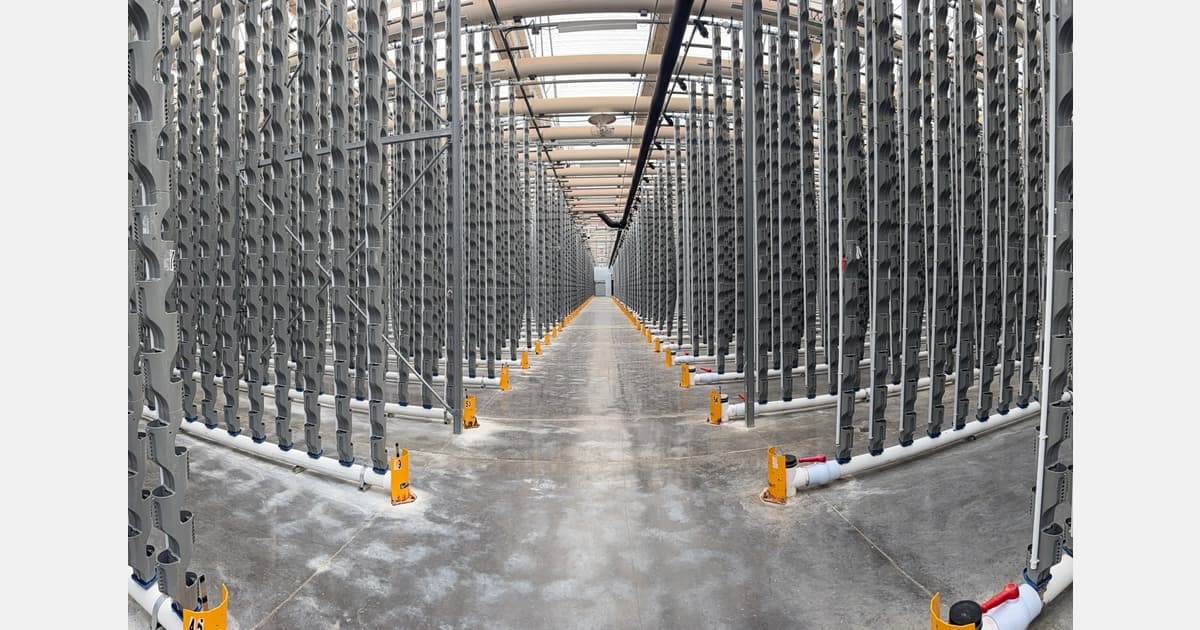
Beyond price, the auction provides a rare glimpse into the scale and sophistication of modern controlled‑environment agriculture. The listed assets—such as 560‑unit LED wall packages, 300‑ton chillers, and 330,000‑site vertical grow towers—represent the kind of infrastructure that typically requires multi‑year planning and deep pockets. By making these components available, SecondBloom is effectively redistributing capacity that can be repurposed for new crops, regional food‑security projects, or research initiatives, thereby fostering a more resilient and diversified supply chain.
Industry observers see this liquidation as a bellwether for the sector’s consolidation phase. As larger players streamline operations and smaller operators seek cost‑effective upgrades, the demand for pre‑owned CEA equipment is likely to rise. Investors and lenders are also paying close attention, as the ability to liquidate assets quickly can improve balance‑sheet flexibility for farms facing market volatility. In the longer term, a robust secondary market may encourage manufacturers to design equipment with modularity and resale value in mind, further driving innovation and sustainability in indoor agriculture.
"Buyers can acquire systems that would cost millions to purchase new, at a fraction of replacement cost"
Comments
Want to join the conversation?
Loading comments...