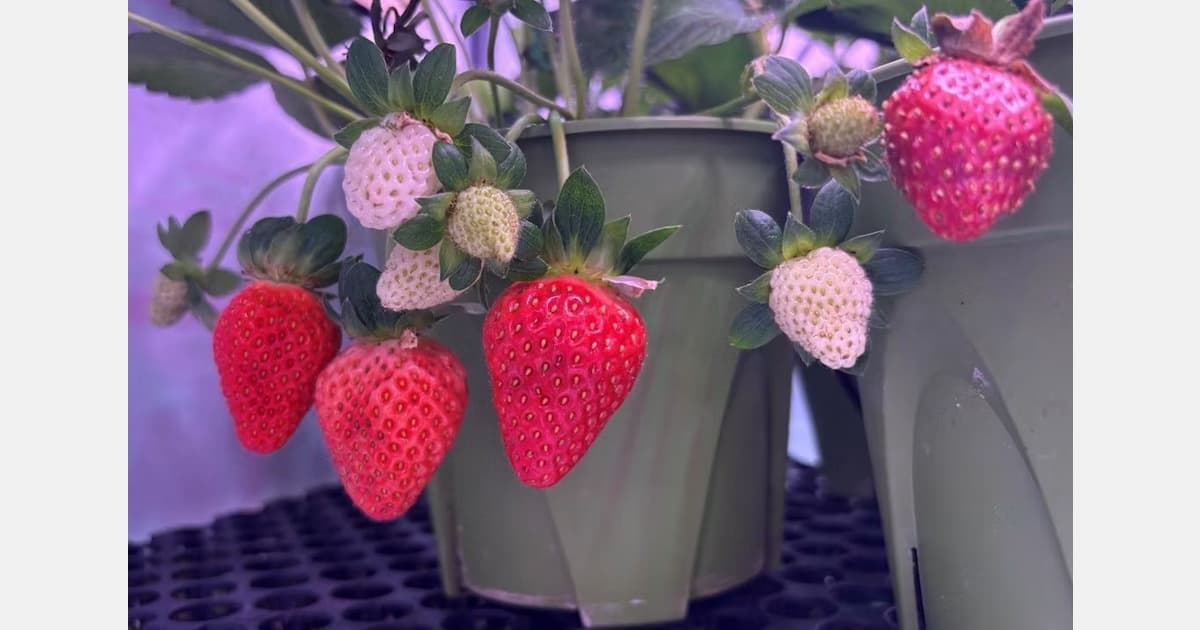
CEA Transforms Malaysian Strawberry Farming
Companies Mentioned
Why It Matters
The solution proves that high‑value crops can be grown year‑round in non‑traditional climates, opening new revenue streams and enhancing food security for Malaysia and the region.
Key Takeaways
- •BerryGood uses Siemens PLCs to run recipe‑based climate control.
- •Temperature, humidity, light, and nutrients are adjusted per growth stage.
- •Real‑time HMI dashboards detect deviations early for corrective action.
- •Modular chambers enable stepwise scaling without redesigning the entire farm.
- •Vertical CEA cuts import dependence and stabilizes strawberry quality locally.
Pulse Analysis
Controlled‑environment agriculture is reshaping how tropical nations produce premium crops. In Malaysia, where heat and humidity traditionally limit strawberry cultivation, BerryGood’s vertical farm leverages Siemens’ automation platform to create a climate‑neutral micro‑environment. By decoupling production from weather, the farm can maintain optimal growing conditions year‑round, delivering fruit that rivals imported varieties in taste and appearance while eliminating the long cold‑chain logistics that erode quality.
The technical backbone consists of Siemens programmable logic controllers that execute precise, stage‑specific recipes. Early‑growth plants receive cooler temperatures and high humidity, while fruiting stages see a threefold increase in light intensity and a calibrated rise in nutrient conductivity. Operators monitor every parameter through intuitive human‑machine interfaces, which flag anomalies instantly and trigger corrective loops before yields suffer. This data‑driven approach transforms farming from an art of intuition into a repeatable engineering process, boosting both consistency and productivity.
Beyond the farm gate, the model carries significant market implications. By producing strawberries locally, Malaysia can reduce its dependence on costly imports, improve supply chain resilience, and offer consumers fresher produce. Although the upfront capital for lighting, climate control and digital infrastructure is substantial, the scalability of modular chambers allows growers to expand incrementally, aligning investment with demand. As more high‑value crops adopt CEA, the technology promises to redefine agricultural economics across Southeast Asia, positioning the region as a hub for sustainable, high‑quality food production.
CEA transforms Malaysian strawberry farming
Comments
Want to join the conversation?
Loading comments...