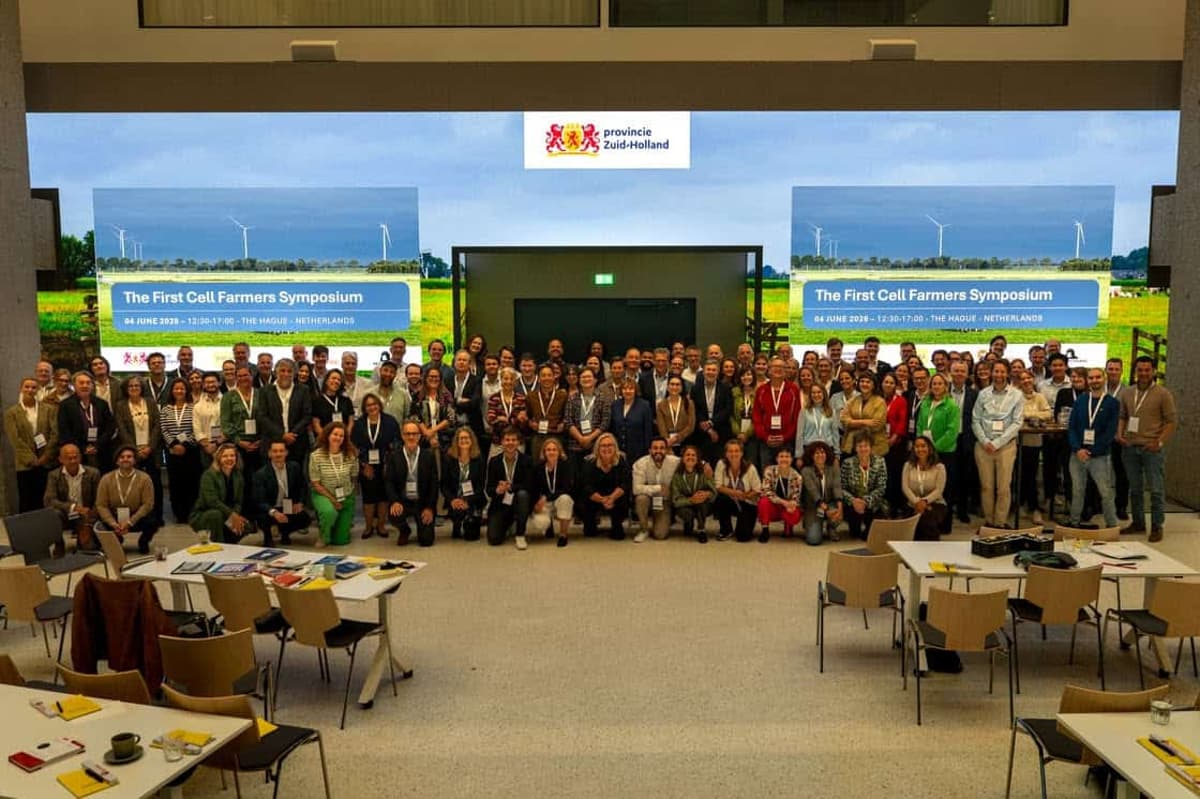
Cell Farmers Symposium Draws Cross-Sector Crowd in The Hague
Companies Mentioned
Why It Matters
By positioning farmers as active partners in cellular agriculture, the symposium accelerates adoption of lab‑grown food and safeguards rural economies, shaping the future of the global food supply chain.
Key Takeaways
- •Inaugural symposium gathered farmers, scientists, policymakers to discuss cellular agriculture
- •RespectFarms positioned farmers as active partners, not passive observers
- •Manifesto signed committing to integrate cellular cultivation into traditional farms
- •Event announced as first of annual series to shape future food systems
- •Panel highlighted regulatory, research, and market pathways for cell‑based meat
Pulse Analysis
Cellular agriculture is moving from niche labs to mainstream agriculture, but its success hinges on farmer buy‑in. The Hague’s first Cell Farmers Symposium demonstrated that industry leaders recognize this, convening a cross‑sector audience to bridge the gap between biotech innovators and the people who till the land. By framing farmers as co‑creators rather than obstacles, the event underscored a shift toward collaborative value chains that could accelerate commercialization of cultivated meat and dairy.
The agenda reflected the complexity of the transition. Speakers from Sartorius and Aleph Farms detailed technical breakthroughs, while regulatory consultant Hannah Lester outlined emerging policy frameworks in Europe. Wageningen University provided scientific validation, and a farmer panel voiced practical concerns about infrastructure, cost and market access. The workshop, led by RespectFarms co‑founder Ralf Becks, produced a manifesto that commits participants to keep the dialogue alive and to develop concrete pathways for integrating cell‑based products into existing supply chains.
Looking ahead, the symposium’s pledge to become an annual gathering signals a sustained effort to align technology, policy and on‑the‑ground agriculture. For investors and agribusinesses, this creates a clearer roadmap for funding and scaling cellular food ventures. For rural communities, it offers a potential new revenue stream that could revitalize farms facing declining margins. As regulatory clarity improves and consumer acceptance grows, the collaborative model championed in The Hague may become the blueprint for a resilient, diversified food system worldwide.
Cell Farmers Symposium Draws Cross-Sector Crowd in The Hague
Comments
Want to join the conversation?
Loading comments...