Coming Soon: Facilities That Also Happen to Be Farms
Why It Matters
Indoor farming redefines facility utilization, delivering sustainable food while creating stable, community‑linked revenue streams for property owners. Its success could accelerate urban food resilience and reshape commercial leasing strategies.
Key Takeaways
- •Area 2 Farms profits from CSA subscriptions in Arlington warehouse.
- •Uses soil‑based compost mix, not hydroponics, for 20 vegetable varieties.
- •Rotating “Silo” system balances light exposure, reduces building CO₂ load.
- •Franchising plan adds Fairfax site, aims national footprint.
- •Indoor farms cut food‑miles, lower emissions, recycle water and nutrients.
Pulse Analysis
The rise of Controlled Environment Agriculture (CEA) reflects a broader urban shift toward localizing food production. By eliminating the average 1,500‑mile journey that fresh produce travels, indoor farms slash transportation emissions and mitigate the risk of supply chain disruptions. LED lighting, climate‑controlled environments, and water‑recycling technologies enable year‑round yields, positioning vertical farms as a strategic response to food deserts and growing consumer demand for pesticide‑free, high‑quality produce.
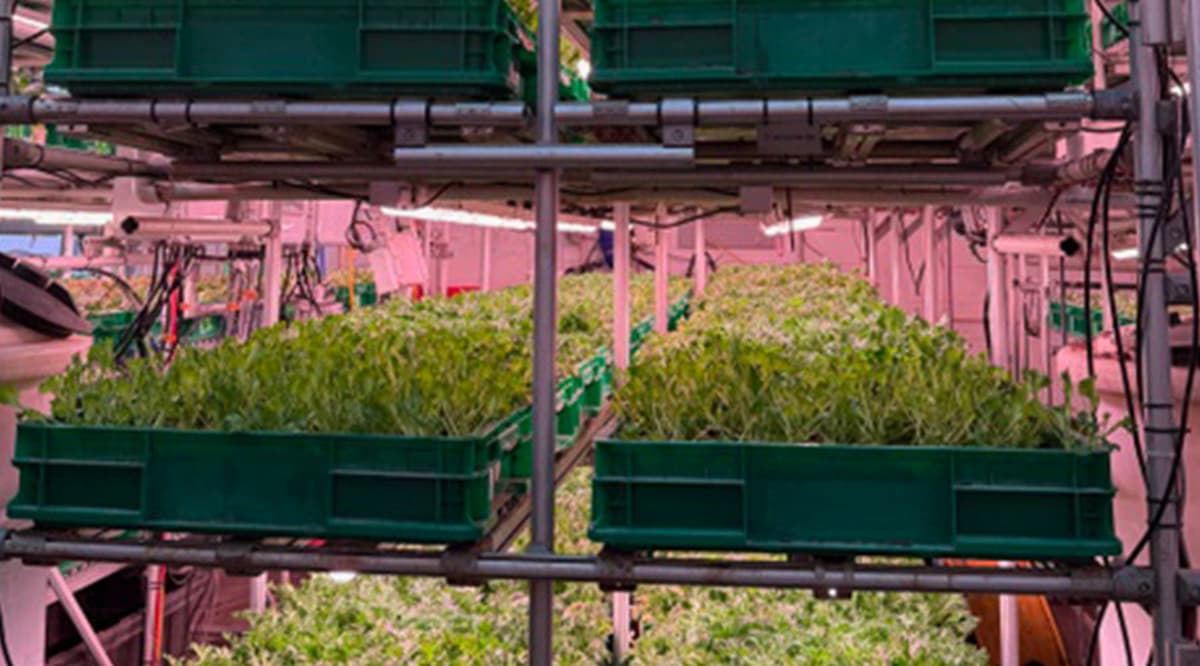
Area 2 Farms exemplifies a pragmatic CEA approach that blends high‑tech automation with low‑tech soil cultivation. Its “Silo” system rotates trays between light and darkness, allowing plants to respire naturally and reducing the building’s carbon‑dioxide load. By sourcing nutrients from composted coconut shells, vegetable waste, and worms, the farm sidesteps costly hydroponic solutions while maintaining organic certification. The subscription‑based CSA model creates a predictable cash flow, and the company’s recent franchising initiative—starting with a new Fairfax facility—demonstrates scalability without sacrificing community engagement.
For real‑estate investors and facility managers, vertical farms represent a novel tenant class that can generate steady income and enhance building sustainability credentials. However, the sector still grapples with high energy consumption, especially for lighting, and the capital intensity of retrofitting existing structures. Successful operators like Area 2 Farms mitigate these challenges through efficient water reuse, renewable‑sourced energy, and lean soil‑based inputs. As franchising expands and technology improves, indoor agriculture could become a mainstream component of mixed‑use developments, offering both financial returns and a tangible contribution to urban food security.
Coming Soon: Facilities That Also Happen to be Farms
Comments
Want to join the conversation?
Loading comments...