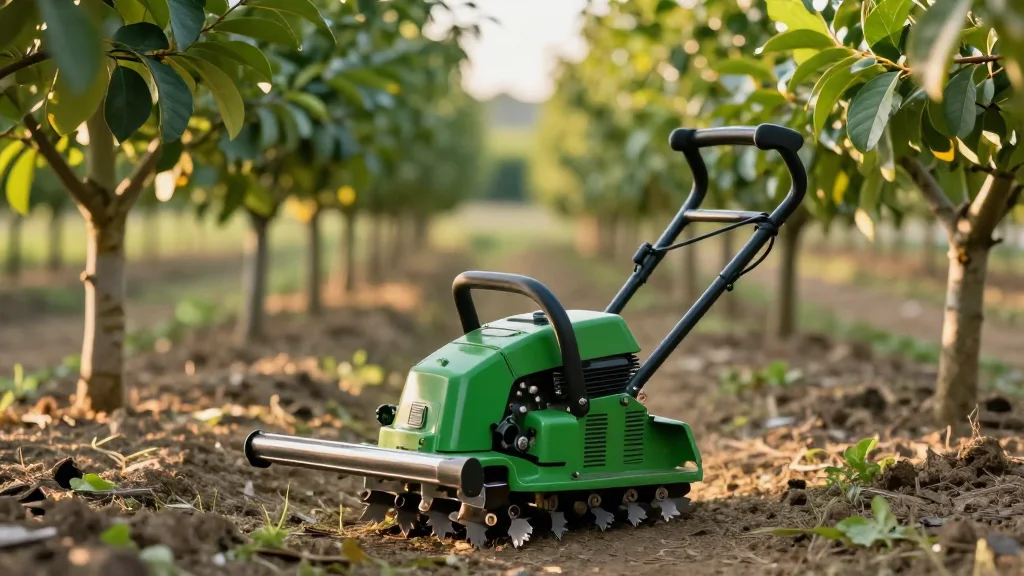
Dimensionless Numbers for Evaluating Mechanization in Agroforestry Systems Based on UN SDG Indicators
Why It Matters
The framework offers a data‑driven tool for matching farm equipment to agroforestry contexts, advancing both productivity and SDG‑aligned sustainability. It informs policymakers and manufacturers about the size and design attributes needed for eco‑friendly mechanization.
Key Takeaways
- •Five dimensionless indicators assess energy, adaptability, row operation, compaction, ecological balance
- •Smaller machines, especially coastal brushcutters, outperform larger equipment in family‑farm agroforestry
- •Dimensional analysis links UN SDG metrics to mechanization suitability
- •Study excludes labor costs, limiting full sustainability assessment
- •Framework guides manufacturers toward eco‑friendly, size‑appropriate farm machinery
Pulse Analysis
Agroforestry’s promise of higher biodiversity and carbon sequestration hinges on tools that respect forest‑like dynamics while easing labor for smallholders. Traditional mechanization often ignores the irregular spacing and multi‑layered canopies of these systems, leading to soil compaction and reduced yields. By anchoring machine evaluation to the United Nations Sustainable Development Goals, the new study bridges environmental objectives with practical farm economics, offering a roadmap for equipment that can thrive in the nuanced terrain of family‑run farms.
The authors employed dimensional analysis—a physics‑rooted technique that reduces complex phenomena to pure numbers—to craft five dimensionless indicators: energy efficiency, dimensional adaptability, operation over tree rows, productive compaction, and productive‑ecological balance. Applying these metrics to three machines across two agroforestry configurations highlighted stark performance gaps. The coastal brushcutter, a compact, low‑mass device, consistently scored higher on energy use and adaptability, while larger tractors suffered penalties for compaction and poor maneuverability among tree rows. This quantitative lens transforms vague sustainability claims into comparable scores, enabling stakeholders to rank equipment objectively.
For equipment manufacturers and development agencies, the findings signal a shift toward designing lighter, modular machines tailored to the spatial constraints of agroforestry. Policymakers can leverage the indicator set to incentivize investments that meet SDG targets, such as responsible consumption and climate action. However, the omission of labor metrics suggests future research must integrate operator effort and cost to capture the full sustainability picture. As the sector scales, blending these dimensionless scores with socioeconomic data will be crucial for delivering truly sustainable mechanization solutions.
Dimensionless Numbers for Evaluating Mechanization in Agroforestry Systems Based on UN SDG Indicators
Comments
Want to join the conversation?
Loading comments...