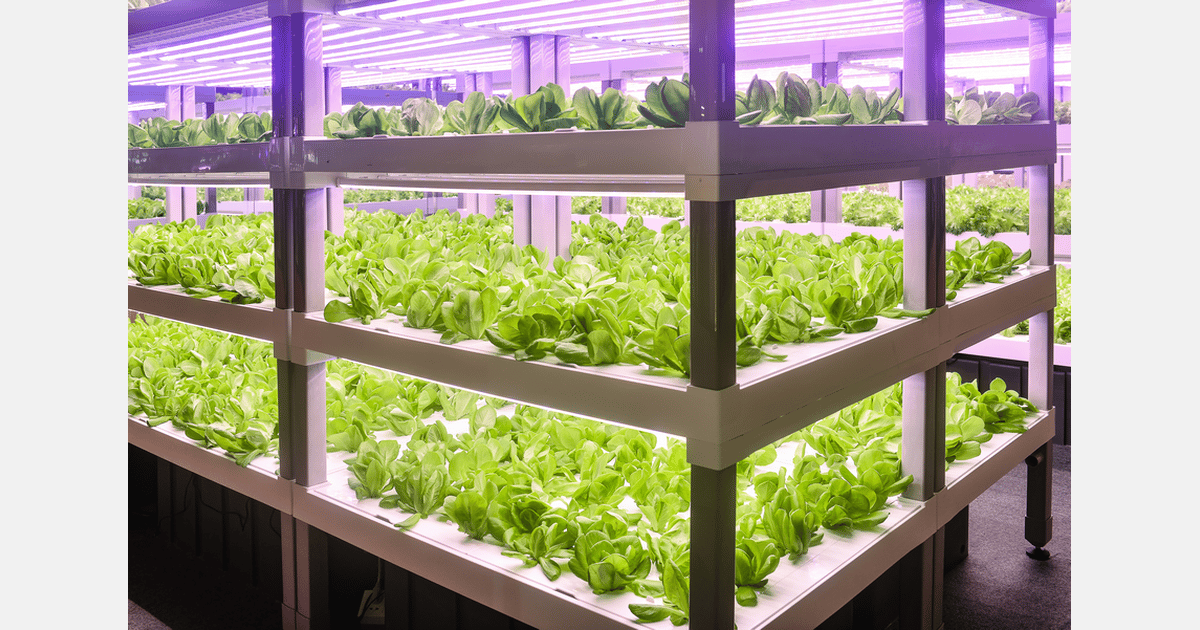
Effects of Using Solar Daylighting to Offset LED Lighting in Vertical Farming
Why It Matters
Daylight augmentation can lower energy intensity of vertical farms, but only becomes financially attractive in markets with premium power costs or strong carbon pricing, influencing investment decisions and sustainability strategies.
Key Takeaways
- •Light‑pipe optical efficiency ranges from 45% to 75% depending on sun angle
- •Daylight‑only mode cuts yield 17% despite 27%–29% electricity savings
- •Hybrid daylight‑LED strategies keep yield, reduce energy use by up to 14%
- •PWM dimming with UV‑IR filtering achieves 6.32 kWh kg⁻¹, 14% lower than LEDs
- •Viability hinges on high electricity or carbon prices due to CAPEX constraints
Pulse Analysis
Vertical farms rely on artificial illumination to replace sunlight, driving electricity demand that can account for up to 60% of operating costs. While LEDs have become the industry standard because of their spectral tunability and low heat output, their energy intensity remains a barrier to profitability, especially in regions with high power rates. Integrating natural daylight through roof‑mounted collectors offers a theoretical route to cut that burden, but practical implementation must contend with variable sun angles, shading, and the need to maintain consistent photon flux for optimal plant growth.
The 2026 techno‑economic study by Ceccanti et al. modeled a three‑tier container farm in Dubai using a light‑pipe (LP) system that channels sunlight via a straight duct and a tilting, aluminum‑coated mirror. Ray‑tracing simulations reported LP optical efficiencies between 45% and 75% depending on solar position. Hybrid configurations that combined daylight with LED supplementation preserved the benchmark yield while lowering specific electric energy consumption to 6.32 kWh kg⁻¹—a 14% improvement over a fully LED setup. However, the capital outlay for the LP hardware outweighed the electricity savings unless electricity or carbon prices are unusually high.
From a market perspective, the study suggests that daylight‑augmented vertical farms will be most attractive in jurisdictions with premium electricity tariffs or aggressive carbon‑pricing schemes, such as parts of the Middle East, Europe, and California. Investors should weigh the higher upfront cost against longer‑term sustainability goals and potential regulatory incentives for reduced grid demand. Future research could improve LP efficiency through adaptive optics or hybrid fiber‑optic conduits, further narrowing the cost gap with LEDs. Until such advances materialize, most commercial operators will likely continue to rely on LEDs as the primary light source.
Effects of using solar daylighting to offset LED lighting in vertical farming
Comments
Want to join the conversation?
Loading comments...