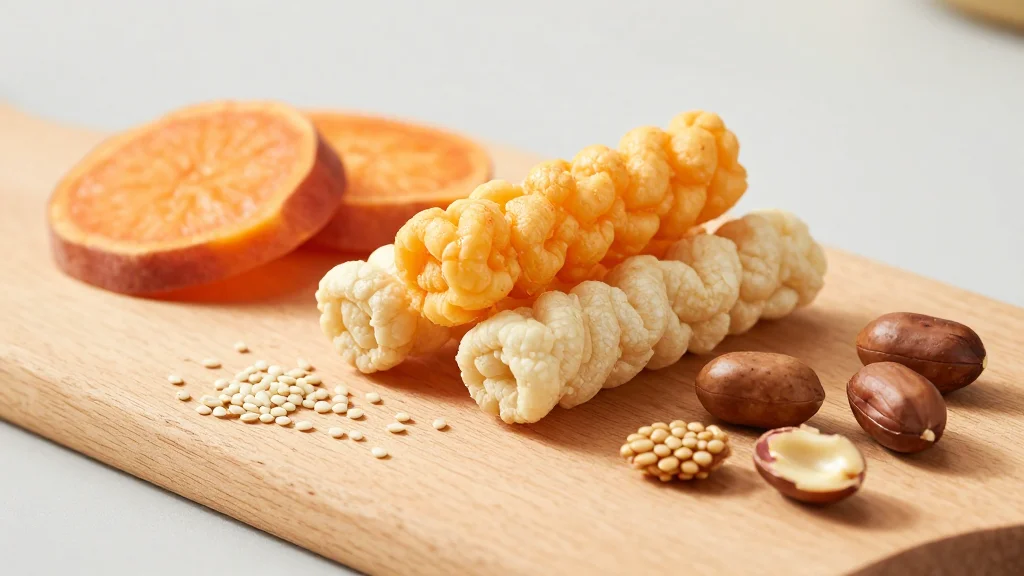
Harnessing Underutilized Food Crops for Sustainable Extruded Snack Production: A Scoping Review
Companies Mentioned
Why It Matters
The review demonstrates that underutilized crops can diversify snack formulations and boost nutrition, but uneven data hampers scalable adoption across the snack industry.
Key Takeaways
- •Quinoa appears in most extruded snack studies.
- •Bambara groundnut boosts protein but yields limited shelf-life data.
- •OFSP enrichment targets provitamin A retention in snacks.
- •Sesame seed inclusion reduces expansion while improving oxidative stability.
- •Reporting gaps hinder standardization of extrusion severity metrics.
Pulse Analysis
The global extruded snack market remains heavily dependent on wheat, corn, and rice, which drives commodity price volatility and limits nutritional diversity. Incorporating underutilized crops such as quinoa, Bambara groundnut, orange‑fleshed sweet potato, and sesame seed offers a pathway to more sustainable supply chains and higher‑value nutrition profiles, aligning with consumer demand for functional foods and environmentally responsible ingredients.
The scoping review identified 42 studies that systematically evaluated these crops across a range of extrusion conditions. Quinoa‑based snacks were the most frequently examined, with researchers emphasizing expansion indices, bulk density, and texture. Bambara groundnut formulations focused on protein enrichment, often using mixture designs to balance expansion and hydration metrics. OFSP studies prioritized provitamin A retention, while sesame seed inclusion consistently lowered expansion but enhanced oxidative stability through lower peroxide values. However, the literature reveals fragmented reporting—especially around extrusion severity, microstructure imaging, and antinutritional factors—making cross‑study comparisons difficult.
For snack manufacturers, the findings signal both opportunity and caution. Leveraging these alternative ingredients can differentiate product lines and meet clean‑label aspirations, yet successful scale‑up requires standardized process descriptors and robust sensory‑structure linkages. Future research should adopt uniform reporting frameworks, quantify energy input, and align outcomes with crop‑specific health targets, such as provitamin A for OFSP or lipid oxidation control for sesame. By closing these data gaps, the industry can accelerate the transition from experimental batches to commercially viable, nutritionally superior extruded snacks.
Harnessing underutilized food crops for sustainable extruded snack production: a scoping review
Comments
Want to join the conversation?
Loading comments...