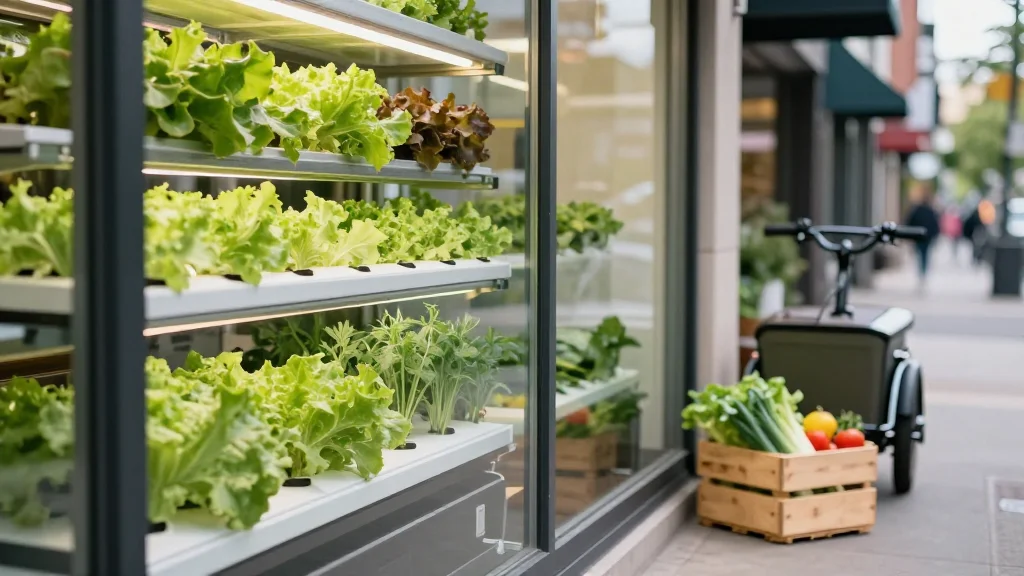
How LocalDutch's Urban Farm Shops Cut Food Miles and Carbon
Companies Mentioned
Why It Matters
Shortening food‑miles slashes greenhouse‑gas emissions while strengthening local economies, a win‑win for sustainability and resilience. The approach demonstrates a scalable pathway for urban centers to meet climate targets without sacrificing food quality.
Key Takeaways
- •Urban farm shops locate food production within 5 km of consumers
- •Average food miles drop from 1,200 km to under 30 km
- •Carbon emissions cut by roughly 70% per kilogram of produce
- •Shops use renewable energy and closed-loop water recycling
- •Model creates new revenue streams for local growers and retailers
Pulse Analysis
Food‑miles have become a benchmark for measuring the environmental impact of our meals, with studies linking long‑distance transport to higher carbon footprints. Urban agriculture, once a niche hobby, is now emerging as a commercial solution that re‑localizes supply chains. LocalDutch’s urban farm shops embody this shift, positioning vertical farms and hydroponic plots inside city districts so that produce travels only a few kilometres before reaching shoppers. This proximity not only trims emissions but also reduces spoilage, delivering fresher items to consumers.
The operational blueprint combines renewable‑energy‑powered LED lighting, sensor‑driven climate control, and a closed‑loop water system that recirculates up to 95% of the water used. By partnering with regional growers, the shops source seeds and inputs locally, further shrinking the logistical footprint. Early pilots report a 70% reduction in carbon per kilogram of lettuce compared with conventional field‑grown equivalents, and food‑mile calculations show a drop from roughly 1,200 km to under 30 km. These efficiencies translate into lower operating costs and a compelling value proposition for retailers seeking sustainable differentiation.
For investors and policymakers, LocalDutch offers a tangible case study of how urban food production can align climate objectives with economic growth. The model dovetails with European Green Deal goals and U.S. climate‑resilient agriculture initiatives, suggesting fertile ground for public‑private partnerships and funding incentives. As cities grapple with supply‑chain disruptions and carbon‑reduction mandates, scaling the urban farm shop concept could reshape the food landscape, making low‑carbon, locally sourced produce the new norm.
How LocalDutch's Urban Farm Shops cut food miles and carbon
Comments
Want to join the conversation?
Loading comments...