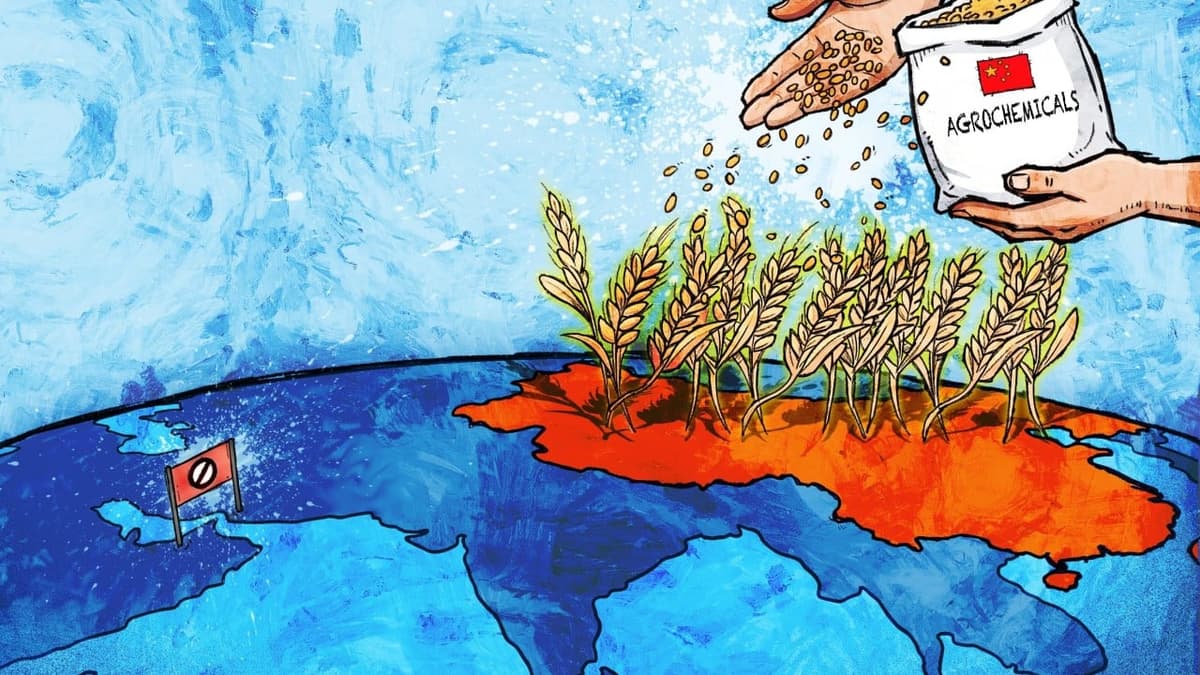
How the Middle East Crisis Is Expanding China’s Agrochemical Influence
Why It Matters
Supply‑chain shocks could reshape the global agro‑chemical landscape, giving China a larger export share and influencing food‑price stability worldwide.
Key Takeaways
- •China produces roughly one‑third of global fertilizer output
- •China supplies about 70% of raw materials for chemical pesticides
- •Middle East turmoil disrupts supply chains, increasing demand for Chinese agrochemicals
- •Chinese farmers continue spring ploughing unaffected by regional conflict
- •China targets MENA markets to expand fertilizer and pesticide footprint
Pulse Analysis
The war in the Middle East has sent ripples through agricultural supply chains, as the region supplies a sizable share of nitrogen‑based fertilizers and phosphate rock used worldwide. Export bottlenecks, port closures, and heightened geopolitical risk have left farmers from Europe to Africa scrambling for alternatives, raising concerns about crop yields and price volatility. Historically, the area has been a critical node for both raw inputs and finished agro‑chemical products, so any prolonged disruption threatens to tighten global food‑security margins at a time when demand is already climbing.
China’s agro‑chemical sector is uniquely positioned to capitalize on this turmoil. The country produces roughly one‑third of the world’s fertilizer and controls about 70 % of the raw materials needed for synthetic pesticides, giving it a built‑in supply advantage. State‑backed firms have accelerated export programs, offering competitive pricing and guaranteed delivery amid the uncertainty. Moreover, Beijing is deepening ties with Middle Eastern governments, investing in joint ventures and securing long‑term contracts that lock in raw‑material access, effectively turning a crisis into a growth catalyst for Chinese producers.
The shift has broader market implications. As Chinese fertilizers and pesticides gain market share, Western and Russian suppliers may lose footholds, prompting policy debates in the United States and the European Union about strategic import dependence. Analysts warn that over‑reliance on a single source could expose food systems to new risks if China tightens export controls. Nonetheless, the immediate effect is lower input costs for many growers, which could temper food‑price inflation in the short term while reshaping the competitive landscape of the global agro‑chemical industry.
How the Middle East crisis is expanding China’s agrochemical influence
Comments
Want to join the conversation?
Loading comments...