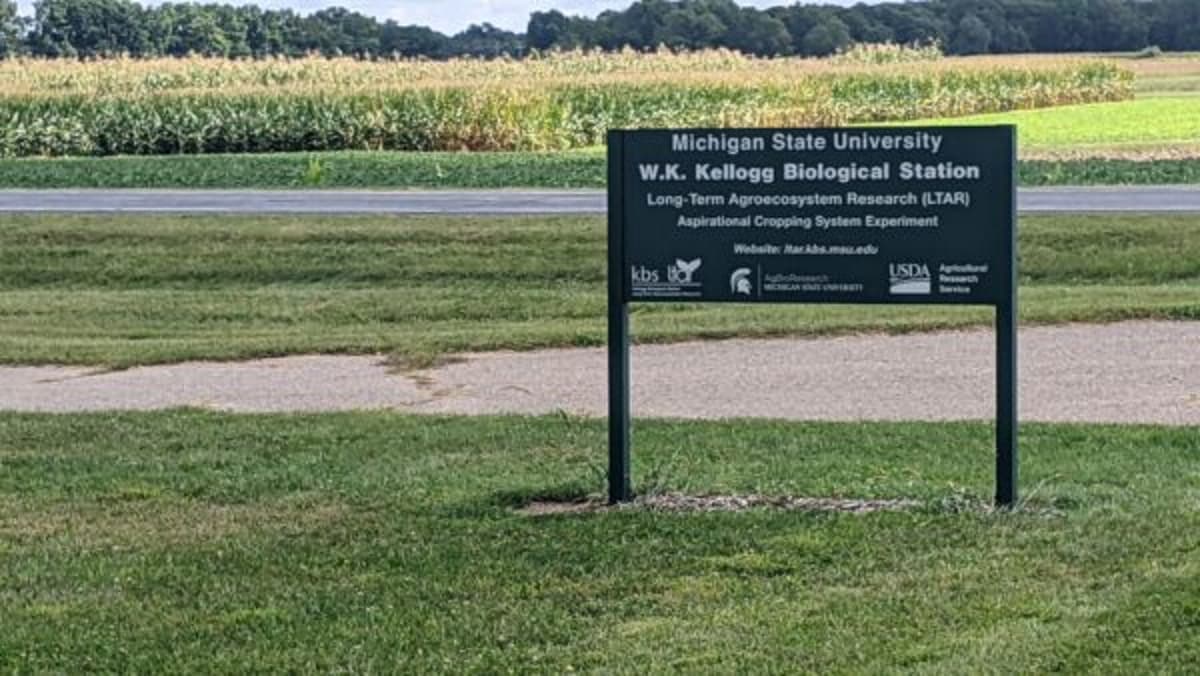
Long-Term Crop Research Studying Ways to Lower Input Costs and Improve Soil Health
Why It Matters
Cutting synthetic fertilizer lowers input costs and greenhouse‑gas emissions, directly improving Midwest farm margins. The research offers a replicable pathway for profitable, climate‑smart agriculture across the United States.
Key Takeaways
- •Aspirational system uses ~1/3 of conventional nitrogen fertilizer.
- •Cover crops and no‑till improve nutrient efficiency and lower costs.
- •Profit gap between diversified and conventional rotations has narrowed over five years.
- •New roadmap guides research on diversification, precision inputs, and soil health.
Pulse Analysis
Long‑term agroecosystem research (LTAR) sites like Michigan State’s Kellogg Biological Station serve as living laboratories for the Upper Midwest’s row‑crop producers. By maintaining continuous, multi‑decade experiments, scientists can isolate the effects of management choices—such as reduced tillage, cover‑crop mixes, and diversified rotations—on both yields and ecosystem services. This depth of data is rare in a sector that typically relies on short‑term field trials, giving stakeholders confidence that observed cost savings and soil‑health gains are durable over time.
The recent findings from the aspirational corn system illustrate how strategic input reductions translate into tangible economic benefits. Farmers adopting the system report using roughly one‑third the nitrogen fertilizer of conventional corn, a shift that directly trims a major expense line item that can represent up to 15 % of total production costs. Coupled with the nitrogen‑capturing power of legumes and the moisture‑conserving effects of no‑till, the diversified rotation—adding wheat, forages and canola—has narrowed the profitability gap with traditional monocultures over the past five years. These outcomes align with broader industry goals of lowering greenhouse‑gas footprints while maintaining competitive margins.
Looking ahead, the co‑produced roadmap positions LTAR sites to accelerate research on precision inputs, livestock integration and systems‑level modeling. By linking on‑farm stakeholder insights with federal funding, the USDA‑backed network can scale successful practices beyond Michigan to other corn‑belt states. As climate variability intensifies, the ability to fine‑tune nutrient cycling and improve soil organic matter will become a competitive advantage, making the LTAR model a cornerstone for sustainable, profitable agriculture in the United States.
Long-term crop research studying ways to lower input costs and improve soil health
Comments
Want to join the conversation?
Loading comments...