Loopworm Says Its Silkworm-Based Feed Ingredients Are Now Carbon Negative
Why It Matters
Carbon‑negative animal feed gives pet, aquaculture and livestock producers a tangible tool to reduce supply‑chain emissions and satisfy growing regulatory and consumer sustainability demands.
Key Takeaways
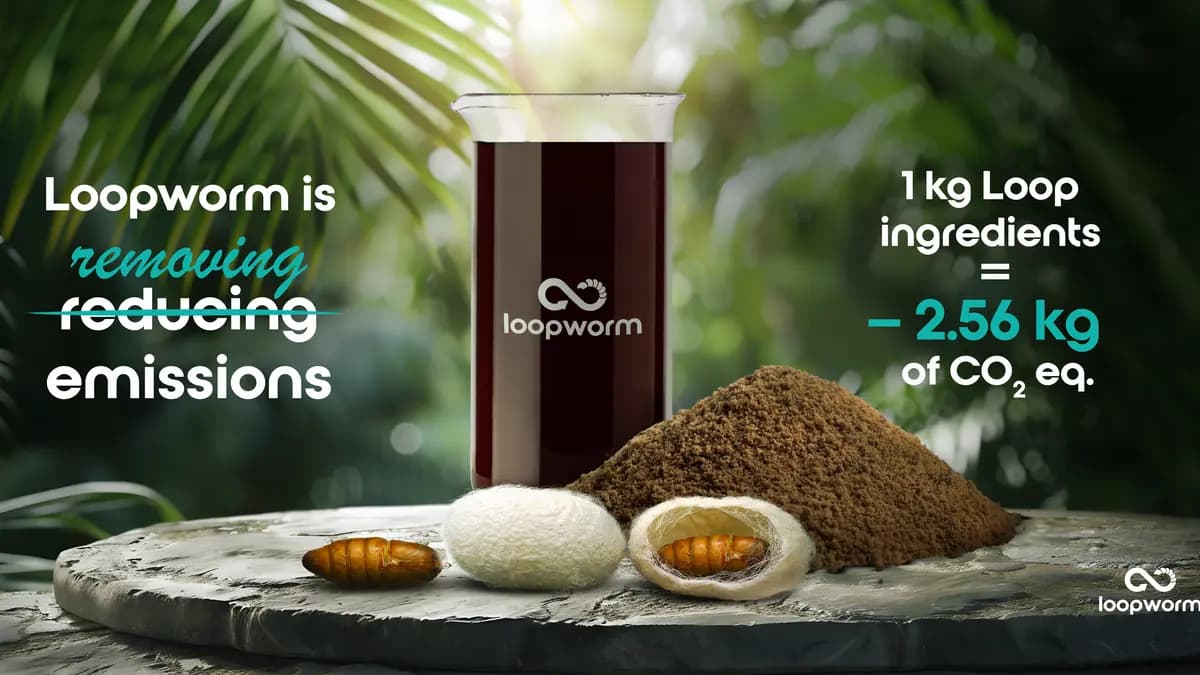
- •LoopMeal and LoopOil remove 2.56 kg CO₂e per kilogram produced.
- •Independent LCA shows silkworm feed is carbon‑negative versus soy/fish.
- •Results meet ISO 14040/44 standards using SimaPro ReCiPe methodology.
- •Carbon‑negative feed aids pet, aquaculture firms in Scope 3 reporting.
- •Loopworm already sells in EU and Japan, meeting strict regulations.
Pulse Analysis
Insect‑based proteins are rapidly emerging as a climate‑friendly alternative to traditional animal feed ingredients. Loopworm’s silkworm‑derived LoopMeal and LoopOil have now been validated by a rigorous life‑cycle assessment (LCA) performed by PwC India. Using the SimaPro platform and ReCiPe midpoint methodology, the study measured 18 environmental impact categories and confirmed a net removal of 2.56 kg CO₂e per kilogram of product. This carbon‑negative profile contrasts sharply with soymeal, soy oil, fishmeal and fish oil, which typically generate positive greenhouse‑gas emissions and contribute to deforestation and marine ecosystem stress.
The audit‑ready data from the LCA equips feed manufacturers with concrete metrics for sustainability reporting, a growing requirement under Scope 3 emissions disclosures, B Corp certification, and EU Deforestation‑Free regulations. By offering a nutritionally comparable yet environmentally superior ingredient, Loopworm enables pet food, aquaculture and livestock formulators to de‑risk product development and future‑proof their supply chains. The company’s ability to quantify its impact also facilitates transparent communication with investors and consumers increasingly focused on climate‑positive sourcing.
With established market presence in the EU and Japan—regions known for stringent feed safety and environmental standards—Loopworm is positioned to capitalize on the broader shift toward low‑carbon protein sources. As regulators tighten carbon accounting and retailers demand greener product portfolios, the demand for verifiable, carbon‑negative feed inputs is likely to accelerate. Loopworm’s LCA results not only differentiate its offerings but also set a benchmark for the emerging insect‑protein sector, potentially spurring further innovation and adoption across the global animal nutrition market.
Loopworm says its silkworm-based feed ingredients are now carbon negative
Comments
Want to join the conversation?
Loading comments...