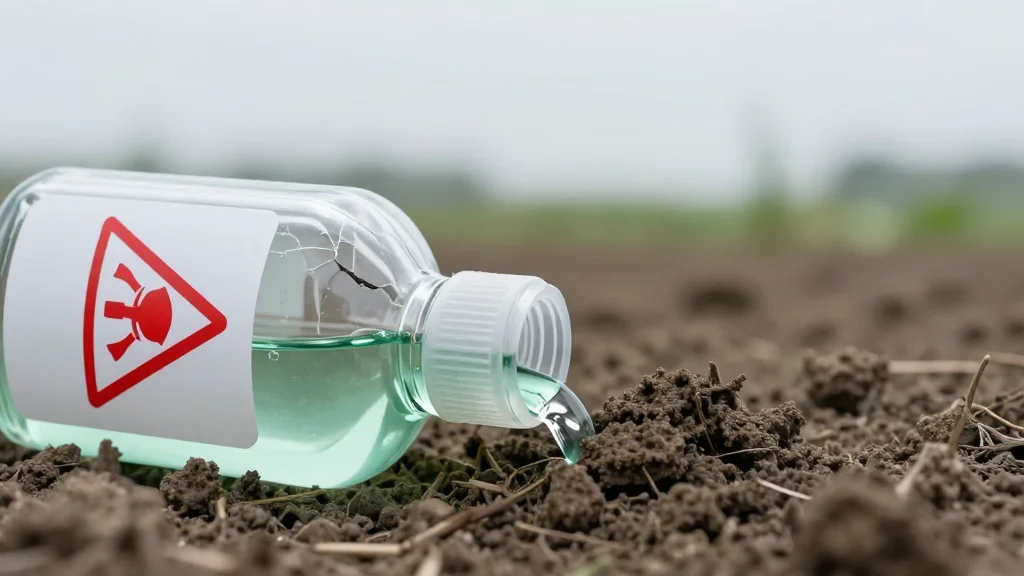
Nationwide Ban Soon on Herbicide Paraquat Dichloride over Toxicity Concerns, Health Risks
Why It Matters
Eliminating Paraquat addresses a major public‑health hazard, reducing deaths and chronic disease linked to exposure, while reshaping India’s agro‑chemical market and forcing a shift toward safer, albeit pricier, weed‑management solutions.
Key Takeaways
- •Expert panel recommends nationwide ban on Paraquat Dichloride.
- •Over 1,500 licence holders could be affected by the prohibition.
- •Imports hit 20,786 t in 2022‑23; sales recovered to 105,000 t in 2023‑24.
- •Alternatives may raise cultivation costs 2‑10×; non‑herbicide methods 10‑100×.
- •Telangana and Odisha already imposed temporary bans, urging permanent prohibition.
Pulse Analysis
Paraquat Dichloride, a non‑selective herbicide prized for its low cost and rapid action, has become a flashpoint in India’s agricultural policy. The chemical is widely used across tea, rubber, coffee, cotton, and staple cereals, yet its toxicity profile mirrors that of the most hazardous pesticides banned worldwide, including in the United States, European Union and China. Recent medical research underscores a grim link to fatal poisoning, kidney failure, lung fibrosis and even Parkinson’s disease, prompting a wave of public‑health advocacy that has intensified pressure on regulators.
The impending ban threatens to upend a market that supports more than 1,500 licensed distributors and manufacturers. Trade data reveal a sharp rise in imports—from 8,598 tonnes in 2019‑20 to 20,786 tonnes in 2022‑23—while domestic sales, after a dip, rebounded to roughly 105,000 tonnes in the 2023‑24 season. States such as Telangana and Odisha have already exercised their authority to impose 60‑day restrictions, signaling a coordinated push toward permanent prohibition. For farmers, the loss of Paraquat means turning to alternative herbicides or integrated weed‑management practices that can inflate input costs anywhere from two to ten times, with non‑chemical methods potentially costing tens to hundreds of times more.
Beyond immediate health benefits, the ban could catalyze a broader shift toward sustainable agriculture in India. Researchers and agri‑tech firms are racing to develop bio‑herbicides and precision‑spraying technologies that mitigate both cost and environmental impact. Policymakers will need to balance short‑term economic strain against long‑term gains in worker safety, public health savings, and compliance with emerging global standards. As the nation navigates this transition, the Paraquat decision may serve as a benchmark for future pesticide regulation, reinforcing the principle that market viability must align with societal well‑being.
Nationwide ban soon on herbicide Paraquat Dichloride over toxicity concerns, health risks
Comments
Want to join the conversation?
Loading comments...