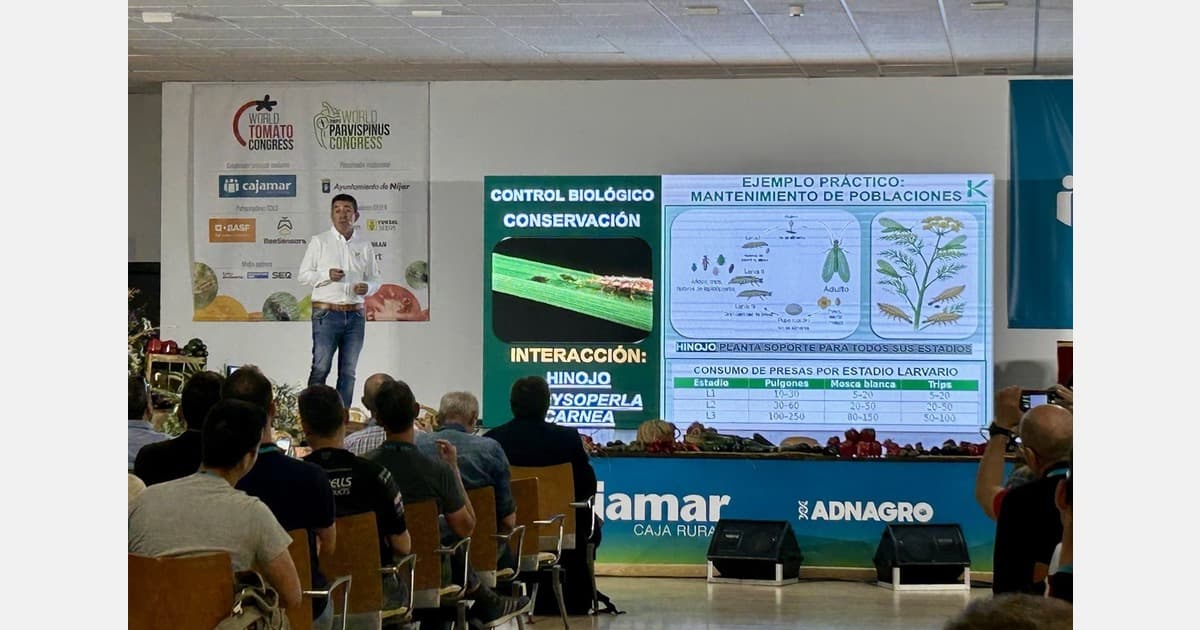
New Strategies for the Effective Biological Control of Thrips Parvispinus
Why It Matters
Thrips parvispinus is intensifying damage in high‑value horticulture, and effective biocontrol offers growers a pesticide‑free alternative amid active‑ingredient shortages. Koppert’s new sachet could set a market benchmark for integrated pest‑management efficacy.
Key Takeaways
- •Koppert unveiled Limonica Ulti‑Mite, a slow‑release predatory mite sachet
- •Thrips parvispinus pressure rising across horticultural crops worldwide
- •Biocontrol protocol now includes reservoir plants and early‑season releases
- •Active material shortages push growers toward sustainable biological solutions
- •Koppert's Expo Levante presentation emphasizes knowledge transfer for growers
Pulse Analysis
Thrips parvispinus has emerged as a formidable threat to leafy vegetables, berries and ornamental crops, feeding on plant tissue and transmitting viruses that can decimate yields. Traditional chemical controls are losing traction due to resistance development and tightening regulations on pesticide residues. Consequently, growers are turning to biological control agents that can suppress thrips populations while preserving beneficial insects and meeting consumer demand for residue‑free produce.
Koppert’s four‑stage protocol—farm preparation, reservoir plant installation, precise pest identification, and timed releases—represents a holistic approach that integrates cultural practices with biological agents. The centerpiece, Limonica Ulti‑Mite, leverages a proprietary slow‑release matrix to maintain a steady supply of predatory mites, extending their activity window and reducing re‑application frequency. This technology not only targets Thrips parvispinus but also offers cross‑control of whiteflies, delivering a dual‑pest solution that can streamline growers’ integrated pest‑management (IPM) programs and lower overall input costs.
The broader industry impact is significant. As active ingredient inventories shrink and new invasive pests appear, the adoption of reliable biocontrol products like Limonica Ulti‑Mite can accelerate the shift toward sustainable agriculture. Early‑season deployment aligns with the preventive mindset advocated by IPM, helping farms avoid costly outbreaks before they materialize. Koppert’s emphasis on knowledge transfer at high‑visibility events such as Expo Levante reinforces the educational component essential for widespread adoption, positioning the company as a catalyst for greener, more resilient horticultural production.
New strategies for the effective biological control of Thrips parvispinus
Comments
Want to join the conversation?
Loading comments...